Medicine Is Beginning to Move From Treating Disease to Predicting, Preventing, and Precisely Targeting It
For most of modern medical history, healthcare has followed a familiar pattern.
You develop symptoms.
You visit a healthcare professional.
Tests are performed.
A diagnosis is made.
Treatment begins.
That model has saved millions of lives, but emerging research suggests the next era of medicine may look very different.
Instead of waiting for disease to appear, scientists are increasingly asking whether we can identify risk earlier.
Instead of giving the same treatment to thousands of people, researchers are learning how to select therapies based on an individual’s biology.
Instead of simply managing some diseases for decades, new technologies are beginning to raise an even more ambitious possibility:
What if we could repair the underlying biological problem?
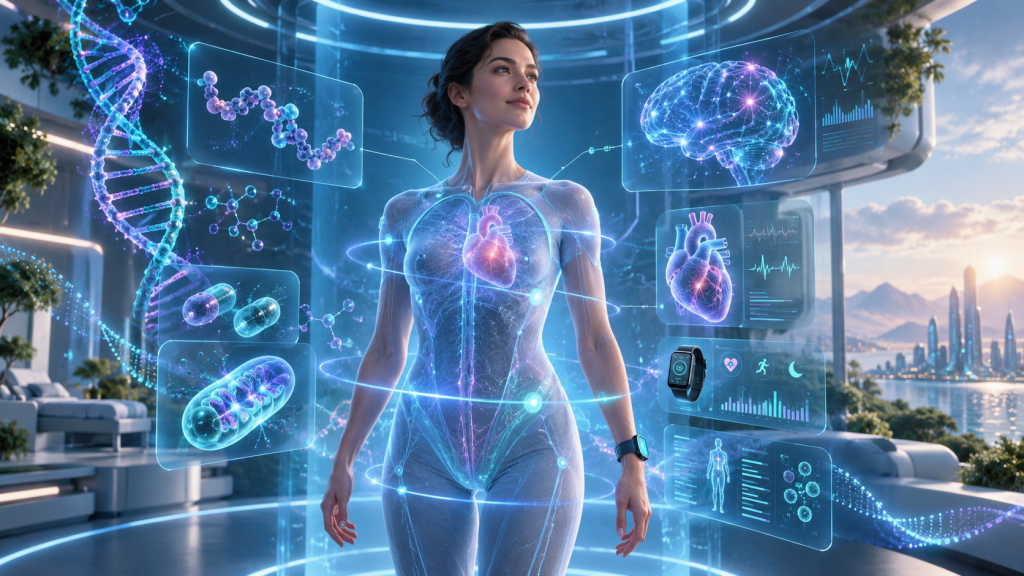
From artificial intelligence and precision medicine to peptide therapeutics, gene editing, programmable cells, personalized cancer vaccines, and advanced metabolic treatments, several previously separate areas of science are beginning to converge.
The future of healthcare may not be defined by one breakthrough.
It may be defined by what happens when all of these breakthroughs begin working together.
Healthcare Is Becoming More Personal
Medicine has traditionally relied heavily on averages.
Researchers study thousands of people and determine which treatments work for the largest percentage of patients.
That approach remains enormously valuable.
But anyone who has ever taken a medication knows that individuals do not always respond like the “average patient.”
One person may respond beautifully to a medication.
Another may experience significant side effects.
A third may receive almost no benefit.
Why?
Because humans are biologically different.
Our genetics, metabolism, immune systems, microbiomes, environments, behaviors, medical histories, and thousands of other variables influence how our bodies respond.
Emerging precision medicine attempts to understand those differences.
Instead of asking:
What treatment usually works for this disease?
Future clinicians may increasingly ask:
What treatment is most likely to work for this particular person?
That is a subtle change in language with enormous implications.
Your Biology May Help Determine Your Treatment
Imagine two people diagnosed with the same cancer.
Today, they may already receive very different treatments depending on the molecular characteristics of their tumors.
As genomic sequencing and biomarker testing become more sophisticated, this concept could expand dramatically.
Future treatment decisions may incorporate information about:
- Genetic variants
- Tumor mutations
- Protein expression
- Hormone signaling
- Immune system activity
- Metabolic characteristics
- Previous treatment response
- Continuous health data
- Environmental exposures
Artificial intelligence may eventually help physicians analyze all of this information simultaneously.
A 2026 review in npj Precision Oncology described AI as a potential tool for improving patient selection, predicting treatment responses, identifying biomarkers, and even assisting with drug discovery. Researchers also emphasized that privacy, bias, regulation, and appropriate oversight remain significant challenges.
In other words:
The technology is becoming powerful enough to ask increasingly personalized medical questions.
The challenge now is learning how to answer them safely.
Artificial Intelligence May Become a Medical Copilot
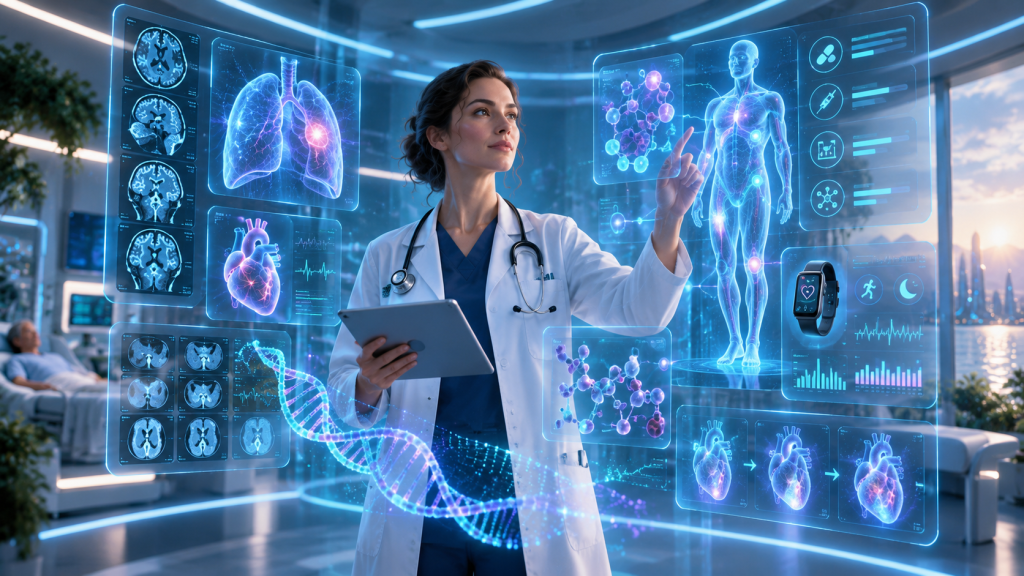
Artificial intelligence will probably not replace physicians.
But it could dramatically change what physicians are able to see.
A human clinician can review a patient’s laboratory results, medical history, imaging, medications, and symptoms.
An advanced AI system may eventually be able to simultaneously analyze:
- Years of electronic medical records
- Genetic information
- Medical imaging
- Pathology
- Wearable device data
- Medication responses
- Population-level research
- New scientific literature
The goal is not simply to produce more information.
It is to recognize patterns humans might miss.
AI systems may eventually help identify subtle changes associated with disease before obvious symptoms appear.
They may assist radiologists in finding abnormal patterns.
They may help oncologists identify treatments most likely to work against a particular tumor.
They may even help researchers design new drugs.
The FDA is already considering how generative AI-enabled medical devices should be evaluated, including questions involving risk assessment, premarket evaluation, and ongoing monitoring.
That tells us something important.
This is no longer purely theoretical technology.
Healthcare systems and regulators are actively preparing for it.
Gene Editing Is Moving From Science Fiction Toward Medicine
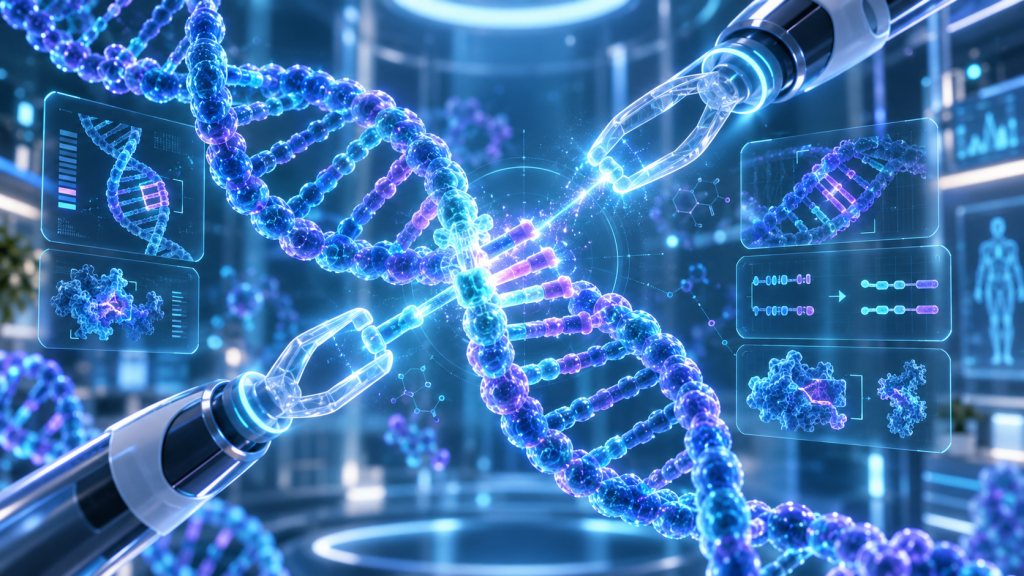
Perhaps no area better illustrates how rapidly medicine is changing than gene editing.
For decades, physicians have treated diseases caused by genetic mutations without being able to alter the mutation itself.
Gene-editing technologies such as CRISPR have changed that conversation.
Instead of simply managing downstream symptoms, scientists can potentially modify the biological instructions contributing to disease.
Newer technologies go beyond traditional CRISPR cutting.
Researchers are developing:
- Base editing
- Prime editing
- RNA editing
- Epigenetic editing
- More precise genome-writing technologies
A 2026 review of precision gene editing described the field as shifting from adding genes toward increasingly targeted genomic repair. Researchers also highlighted the possibility of highly individualized approaches tailored to rare disease-causing mutations.
We are beginning to move from:
“How do we treat this genetic disease?”
toward:
“Can we correct the biological error causing it?”
That is an extraordinary shift.
Gene Therapy Is Already Reaching Patients
This future is not entirely hypothetical.
The FDA has already approved numerous cellular and gene therapies, and regulators reported nearly 50 approvals over roughly the previous decade by early 2026.
In March 2026, the FDA approved the first gene therapy for severe leukocyte adhesion deficiency type I, a rare inherited immune disorder.
In July 2026, the FDA expanded approval of the CRISPR-based therapy Casgevy to children as young as age two with certain forms of sickle cell disease or transfusion-dependent beta thalassemia.
The regulatory system itself is beginning to adapt.
In June 2026, the FDA issued draft guidance intended to help developers use existing knowledge to streamline development of certain genome-editing gene therapies.
For patients with rare genetic diseases, this could become particularly important.
Instead of developing one drug for millions of people, medicine may eventually develop therapies for extremely small groups of patients.
In some situations, perhaps even one patient.
The Rise of the “N-of-1” Therapy
Traditional pharmaceutical development requires enormous patient populations.
But what happens when a genetic disorder affects only 50 people?
Or 10?
Or one?
Emerging research is beginning to explore individualized therapies, sometimes described as N-of-1 medicine.
Imagine sequencing a child’s genome, identifying a unique disease-causing mutation, designing a therapy specifically around that mutation, and creating a regulatory pathway that allows treatment to happen quickly enough to matter.
That concept would have sounded almost impossible not long ago.
Today, regulators are actively considering frameworks for individualized therapies directed at specific genetic conditions.
This could fundamentally change what “rare disease treatment” means.
Cells Themselves May Become Medicines
Another remarkable area of research involves living medicines.
CAR-T therapy provided one of the first major demonstrations of this concept.
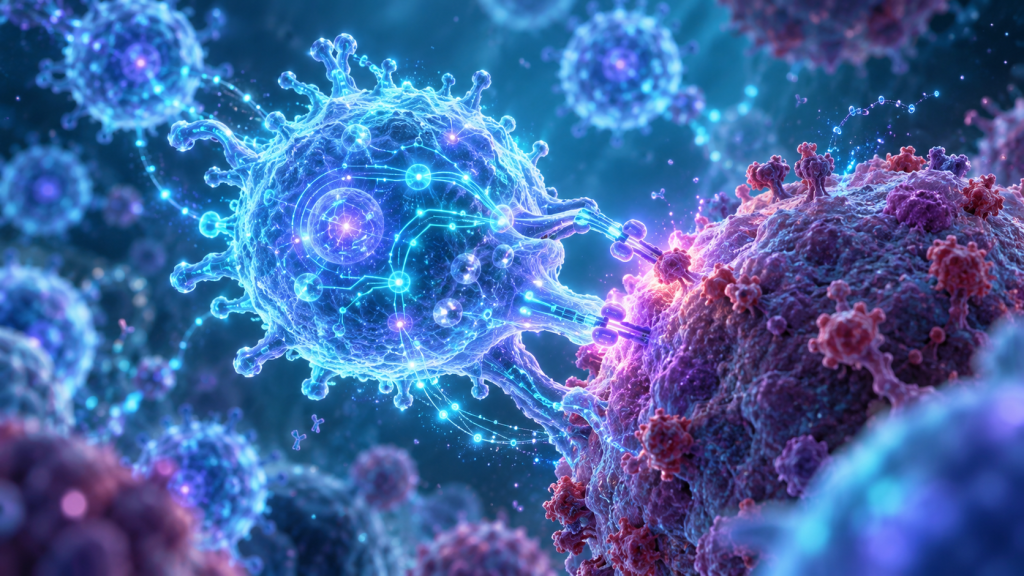
Doctors collect a patient’s immune cells, genetically modify them to recognize certain cancer cells, multiply those cells, and return them to the patient.
The treatment is not simply a chemical compound.
The treatment is a living cell programmed to perform a task.
Researchers are now asking:
What else could we program cells to do?
A 2026 Nature Reviews Genetics article described next-generation cell therapies designed to recognize disease-specific signals and respond in real time. Researchers are developing synthetic genetic circuits that could allow engineered cells to release therapeutic molecules, destroy specific targets, or activate only when particular biological conditions are present.
Future cells might potentially be engineered to:
- Detect cancer
- Release medication
- Control inflammation
- Replace damaged cells
- Regulate immune activity
- Respond to specific disease signals
Instead of taking medicine several times per day, we may someday be able to introduce cells capable of producing treatment when the body needs it.
That idea represents a completely different model of medicine.
Cancer Treatment Is Becoming Increasingly Individualized
Cancer is not one disease.
Even two tumors occurring in the same organ can have dramatically different genetic characteristics.
That realization has fueled precision oncology.
One particularly exciting area involves personalized cancer vaccines.
Researchers can sequence an individual’s tumor, identify mutations unique to that cancer, and potentially design a vaccine intended to teach the immune system to recognize those abnormalities.
The emerging field has generated substantial scientific and commercial interest as researchers study personalized mRNA cancer vaccines alongside other immunotherapies.
The long-term vision is compelling.
Instead of asking only:
Where is the cancer located?
Doctors may increasingly ask:
What molecular vulnerabilities does this specific cancer have?
That information could determine which combination of treatments a patient receives.
Metabolic Medicine Is Becoming Much More Sophisticated
One of the clearest examples of changing healthcare is happening right now in obesity and metabolic disease.
For decades, weight management was often reduced to advice about calories and exercise.
Those factors absolutely matter.
But newer treatments have demonstrated how powerfully hormones and brain signaling influence appetite, metabolism, and body weight.
GLP-1 medicines changed the conversation.
Then came dual-receptor therapies.
Now researchers are exploring medicines affecting three or more pathways simultaneously.
The implications extend well beyond weight loss.
Researchers are studying metabolic therapies in connection with cardiovascular disease, liver disease, kidney disease, sleep apnea, inflammation, addiction, neurological disease, and other conditions.
The broader lesson may be even more important:
Changing one biological signaling pathway can influence multiple interconnected systems throughout the body.
That is helping researchers think differently about chronic disease.
Peptide Medicine Could Become a Much Larger Part of Healthcare
Peptides fit naturally into this future because the body already relies on peptide signaling to coordinate countless biological functions.
Researchers are investigating peptide-related therapies involving:
- Metabolism
- Muscle preservation
- Mitochondrial function
- Cardiovascular health
- Inflammation
- Tissue repair
- Neurological signaling
- Hormone regulation
- Immune activity
Modern peptide engineering can also modify naturally occurring molecules so that they remain active longer or interact differently with receptors.
The future may include increasingly sophisticated molecules designed to activate several biological pathways simultaneously.
Instead of one molecule, one receptor, and one effect, scientists may increasingly design therapies around networks of biological signaling.
That could make medicine significantly more precise.
It also makes careful clinical research even more important.
Medicine May Shift From Treatment to Early Intervention
One of the biggest changes may not involve a particular drug at all.
It may involve timing.
Today, healthcare often intervenes after something has already gone wrong.
Future healthcare may increasingly detect disease much earlier.
Wearable devices already measure:
- Heart rate
- Heart rhythm
- Oxygen saturation
- Sleep
- Physical activity
- Temperature
- Glucose in some patients
Future devices may monitor far more.
Imagine continuous or frequently updated measurements involving:
- Inflammatory markers
- Hormones
- Metabolic changes
- Cardiovascular signals
- Neurological patterns
- Cancer biomarkers
Instead of discovering disease during an annual physical, algorithms may detect subtle changes months or years earlier.
The FDA’s Breakthrough Devices Program illustrates how rapidly medical-device innovation is developing. By June 30, 2026, the agency reported 1,320 Breakthrough Device designations and 210 associated marketing authorizations.
The future doctor’s visit might begin before you ever realize something is wrong.
Your “Digital Baseline” Could Matter More Than Population Averages
Healthcare currently relies heavily on normal ranges.
Your laboratory result is compared against measurements from thousands of other people.
But what if your personal normal matters just as much?
Imagine your resting heart rate normally sits at one level.
Your inflammatory markers remain stable.
Your sleep follows a predictable pattern.
Your glucose response looks consistent.
Then something changes.
Artificial intelligence might detect a subtle shift from your personal baseline, even if your numbers still fall within the population’s “normal” range.
This could create an entirely different form of preventive healthcare.
Your own historical biology becomes part of the diagnostic tool.
Drug Discovery Could Become Much Faster
Developing a new medicine has traditionally required years of screening potential compounds.
Artificial intelligence is increasingly being used to help researchers identify promising molecular structures, predict how molecules may interact with biological targets, and prioritize compounds for laboratory testing.
That does not eliminate clinical trials.
A computer prediction cannot establish whether a drug is safe and effective in humans.
But it may dramatically improve the early stages of research.
AI could help scientists answer:
Which molecule should we test first?
Instead of testing millions of possibilities randomly, researchers may increasingly narrow the search computationally.
The result could be shorter development cycles and entirely new classes of therapies.
Medicine Could Become More Preventive
Perhaps the most important future development is also the least futuristic.
Healthcare may gradually become better at preventing disease.
Imagine combining:
Genetics
Blood biomarkers
Wearable data
Lifestyle information
Medical history
Artificial intelligence
A system could theoretically identify someone whose cardiovascular risk is rising years before a heart attack occurs.
Or detect metabolic changes before diabetes develops.
Or recognize molecular signals of cancer while a tumor is still extremely small.
Healthcare would become less about repairing damage and more about preserving health.
But Innovation Creates New Risks
Every medical breakthrough creates new questions.
Artificial intelligence raises concerns involving:
- Privacy
- Bias
- Data ownership
- Transparency
- Medical responsibility
Genetic medicine raises questions involving:
- Long-term safety
- Unintended genetic changes
- Access
- Cost
- Ethical boundaries
Personalized treatments could create enormous benefits but also enormous inequalities if only wealthy patients can obtain them.
Continuous health monitoring could detect disease earlier.
It could also produce anxiety, false alarms, unnecessary testing, or extraordinary amounts of sensitive medical data.
Technology does not automatically create better healthcare.
How we use technology matters.
Access May Become the Biggest Challenge
There is another question that receives far less attention than the scientific breakthroughs themselves.
Who gets access?
A therapy capable of curing a disease has limited public-health impact if only a tiny number of people can afford it.
Some advanced gene and cell therapies require extraordinarily complex manufacturing, specialized medical centers, and significant healthcare resources.
Healthcare innovation therefore cannot focus exclusively on scientific possibility.
The future also requires innovation in:
- Manufacturing
- Insurance
- Healthcare delivery
- Regulation
- Pricing
- Clinical infrastructure
- Patient education
The biggest breakthrough may sometimes be figuring out how to make an existing breakthrough available to everyone who needs it.
The Future Will Probably Be a Combination of Technologies
The most interesting possibility is not AI.
Or gene therapy.
Or peptides.
Or cell therapy.
Or wearable technology.
It is the combination.
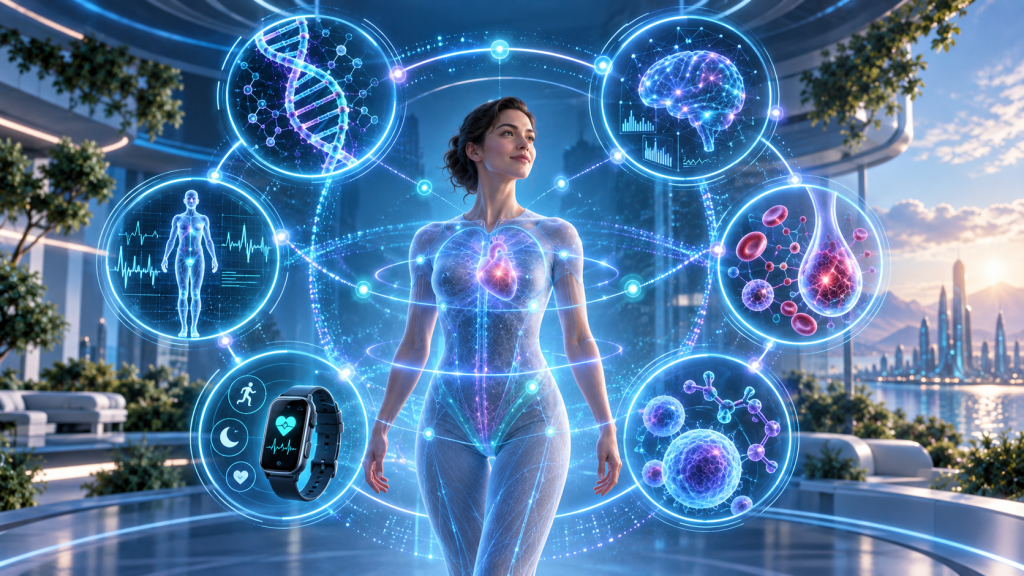
Imagine a healthcare system where:
Your wearable technology identifies a subtle change.
Artificial intelligence recognizes a pattern associated with a particular disease.
Blood testing discovers an abnormal biomarker.
Genetic sequencing identifies why you are susceptible.
A personalized medication or peptide therapy targets the biological pathway involved.
An engineered cell therapy provides longer-lasting control.
Your health data continuously measures whether the treatment is working.
Each technology strengthens the others.
That ecosystem may represent the real future of medicine.
Healthcare Could Become Proactive Instead of Reactive
The difference can be summarized simply.
Traditional Medicine
Disease → Symptoms → Diagnosis → Treatment
Emerging Medicine
Risk Detection → Prediction → Prevention → Personalized Intervention → Continuous Monitoring
We are nowhere near completing that transition.
But pieces of the system already exist.
And every year, more pieces are connecting.
What Should We Be Watching?
Several questions may define the next decade of healthcare.
- Can AI reliably detect disease earlier than humans?
- Can gene editing safely correct more inherited disorders?
- Will personalized cancer vaccines become routine?
- Can engineered cells become programmable medicines?
- Will metabolic medications influence diseases beyond obesity and diabetes?
- Can peptide therapies target increasingly complex biological systems?
- Can wearable technology detect disease before symptoms appear?
- Can advanced treatments become affordable enough for widespread use?
These are not questions from a science-fiction novel.
Researchers are actively trying to answer them.
A Healthcare Revolution Built on Better Questions
For generations, medicine asked:
How do we treat disease?
The next generation of researchers is asking something bigger.
Can we prevent it?
Can we predict it?
Can we personalize treatment?
Can we repair the biological cause?
Can we detect disease before symptoms appear?
Can we help people stay healthier longer?
Some of today’s most exciting ideas will undoubtedly fail.
Others will evolve.
And a few may fundamentally change medicine.
That uncertainty is precisely why emerging healthcare research is so fascinating.
The Future Is Already Beginning
There probably will not be one morning when we wake up and discover that “the future of medicine” has arrived.
It will happen gradually.
One new cancer therapy.
One genetic disease corrected.
One AI tool incorporated into clinical care.
One biomarker discovered.
One peptide engineered.
One disease detected earlier.
One patient whose outcome changes because medicine understood their biology better than it could a decade earlier.
Eventually, those individual advances begin to form something much larger.
Healthcare is moving toward a world that is increasingly predictive, personalized, precise, and preventive.
And perhaps the most exciting possibility is this:
The greatest medical advances of the next generation may not simply help us live longer.
They may help us remain healthier for more of the years we already have.
The Peptide Perspectives View
At Peptide Perspectives, peptides are our starting point, but they are part of a much larger story.
Peptide science intersects with metabolism.
Metabolism intersects with mitochondrial biology.
Mitochondrial biology intersects with aging.
Genetics influences nearly all of it.
Artificial intelligence may help researchers understand those relationships in ways that were previously impossible.
That interconnected science is where some of the most exciting healthcare discoveries are happening.
Our goal is to follow those discoveries with curiosity without confusing possibility with proof.
We will explore emerging research.
We will listen to real-world experiences.
We will examine promising ideas.
And we will be equally willing to talk about uncertainty, failure, risk, and hype.
Because understanding the future of healthcare requires more than asking:
“Is this exciting?”
We also need to ask:
“What does the evidence actually tell us?”
That is the conversation we want to have.
Welcome to Peptide Perspectives.
Where emerging research meets real-world experience.
Medical and Research Disclaimer
Peptide Perspectives provides educational information about emerging science, healthcare research, medications, biotechnology, and patient experiences. Content is not intended to diagnose, treat, cure, or prevent disease and should not be considered medical advice.
Many technologies and therapies discussed in this article remain investigational. Early laboratory findings or clinical research do not guarantee that an experimental therapy will ultimately be demonstrated to be safe or effective. Medical decisions should be made in consultation with appropriately licensed healthcare professionals.