
Research goal: Women’s Hormonal & Reproductive Health | Peptide Perspectives Stacking & Synergy Series
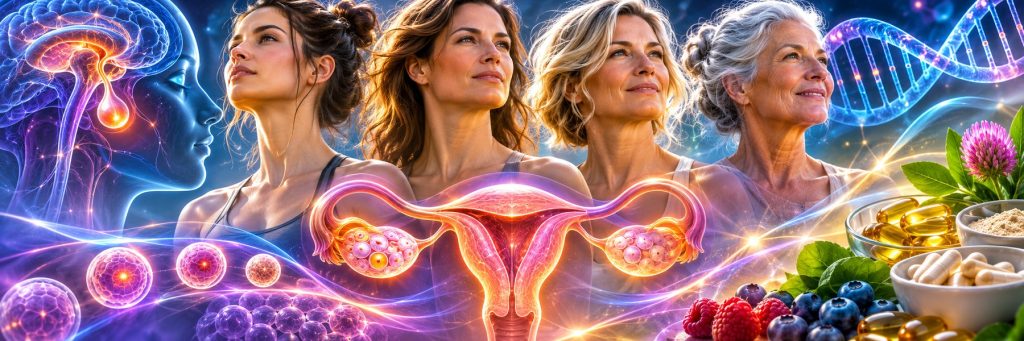
Women’s hormonal health is not one biological setting that needs to be kept at a single ideal level. It is a changing, coordinated system that supports ovulation, pregnancy, metabolic health, bone maintenance, sleep, and many other functions. The signals that help someone become pregnant in their twenties or thirties may be very different from those relevant to unpredictable cycles during perimenopause or hot flashes after menopause.
Peptides are central to that conversation. Gonadotropin-releasing hormone (GnRH), kisspeptin, oxytocin, and growth hormone-related peptides participate in different hormonal networks. Some are part of established medical treatments; others are being studied as ways to understand reproductive or neuroendocrine signaling. Their biological roles make the science interesting, but do not mean that adding multiple peptides creates general-purpose “hormonal balance.”
The important distinction: selected GnRH and hCG protocols have demonstrated value in supervised fertility medicine. Kisspeptin has encouraging human egg-maturation research. None of the experimental stacks examined here has established efficacy for broad women’s wellness, menopause symptom relief, or healthy aging.
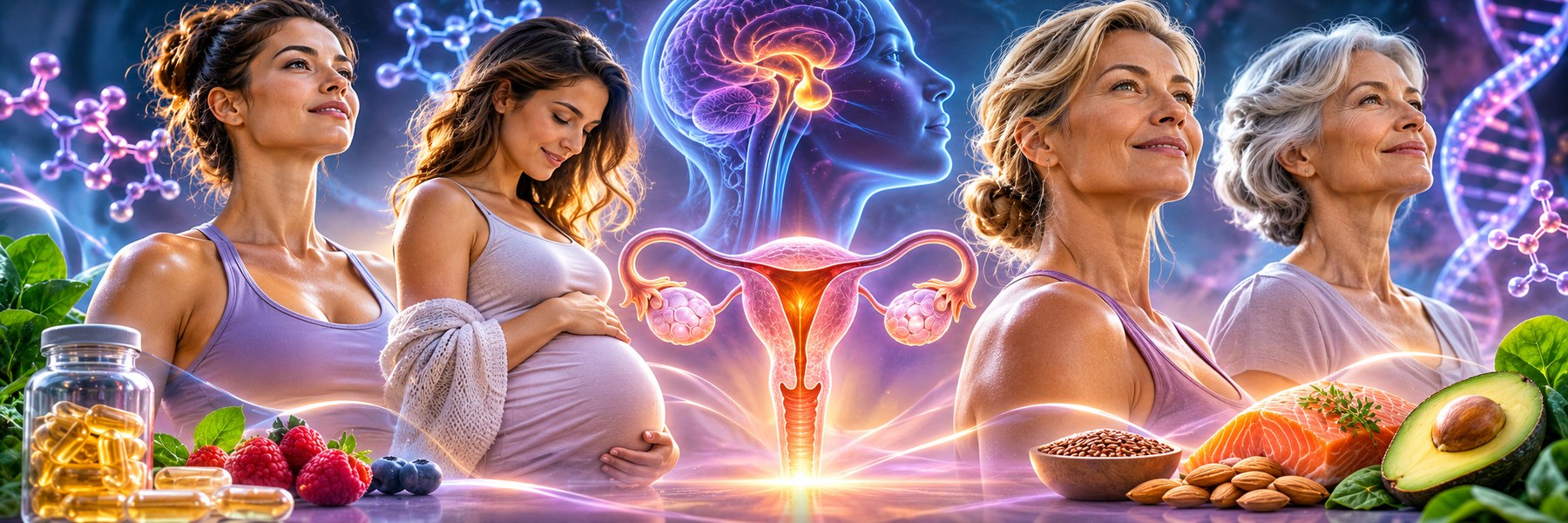
1. The big picture: hormonal goals change across life stages
Reproductive years. The menstrual cycle depends on coordinated signals between the brain, pituitary gland, and ovaries. Someone seeking pregnancy may need an evaluation of ovulation, ovarian reserve, sperm factors, fallopian tubes, or other causes of infertility. Someone not seeking pregnancy may instead prioritize manageable periods, contraception, or symptoms of an endocrine condition such as polycystic ovary syndrome (PCOS). The same intervention may be helpful for one goal and inappropriate for another.
Pregnancy and postpartum. hCG is naturally produced during pregnancy, while oxytocin has established roles in labor and milk ejection. This does not justify self-administered peptide combinations during pregnancy or lactation. Safety and treatment decisions require obstetric supervision.
Perimenopause. Ovarian hormone output often becomes more variable as follicles decline. Cycles can change, and sleep disruption, hot flashes, or mood symptoms may occur. The most useful care is guided by specific symptoms and health risks, not a promise to restore a youthful hormone profile.
Menopause and later life. The priorities may shift toward hot-flash relief, genitourinary comfort, bone health, cardiovascular risk, muscle preservation, and sleep. Evidence-based menopause hormone therapy, when appropriate, has a much stronger foundation for vasomotor symptoms than experimental peptide stacks. Its benefits and risks depend on the person, formulation, timing, and medical history (The Menopause Society position statement; ACOG overview).
This is why “more hormone stimulation” is not a coherent universal wellness strategy: a mechanism useful for timed ovulation can be unnecessary, ineffective, or risky at another life stage.
2. The biology: a conversation among brain, pituitary, and ovaries
The hypothalamic-pituitary-ovarian (HPO) axis starts in the hypothalamus. Pulses of GnRH help prompt the pituitary to release luteinizing hormone (LH) and follicle-stimulating hormone (FSH). Those hormones influence ovarian follicle development and production of estrogen and progesterone. At midcycle, an LH surge triggers final egg maturation and ovulation. Feedback from ovarian hormones changes what the brain and pituitary release.
Kisspeptin acts upstream, helping regulate the GnRH neurons that organize reproductive hormone signaling. Researchers have studied kisspeptin-54 as an alternative trigger for egg maturation during in vitro fertilization (IVF), including in people at risk of ovarian hyperstimulation syndrome (OHSS). Importantly, studies of a particular kisspeptin-54 preparation cannot be assumed to apply to every online product labeled kisspeptin-10.
hCG acts downstream, binding the LH receptor and mimicking aspects of LH action. Fertility clinics use hCG for selected egg-maturation triggers. GnRH agonists and antagonists are used for different, protocol-specific purposes, such as preventing premature ovulation or producing a timed release of gonadotropins. Continuous GnRH agonist exposure can suppress rather than increase pituitary output, demonstrating why timing and dosing context matter.
Oxytocin belongs to another neuroendocrine network. It is involved in uterine contraction, milk ejection, and aspects of social and stress-related signaling. Its central behavioral effects in human studies are variable; it is not a validated general hormone-balancing drug.
Growth hormone (GH) signaling, through the pituitary and IGF-1, is distinct from the HPO axis. GH may interact with metabolism and reproductive physiology, but raising GH does not reliably correct an estrogen deficiency, improve ovulation, or treat menopause symptoms.
3. Peptide combinations and research approaches
A. GnRH analogs + hCG: established roles, but only in selected fertility protocols
This is the most clinically grounded combination category, though it is not one universal regimen. During assisted reproduction, a GnRH antagonist may help prevent premature LH surges while ovarian follicles are stimulated using gonadotropins. hCG can then be used as a final maturation trigger. Other protocols use GnRH agonists differently; some cycles employ a GnRH agonist trigger, and a carefully selected dual-trigger approach may involve both a GnRH agonist and hCG.
The goal is a timed reproductive event, not long-term hormone optimization. Clinical decisions depend on ovarian response, anticipated embryo transfer, OHSS risk, and the reproductive specialist’s protocol. In higher-risk patients, a GnRH agonist trigger with a freeze-all strategy is often preferred to minimize OHSS risk. Adding hCG can increase that risk and is not routinely appropriate (ESHRE 2025 ovarian stimulation update; ASRM OHSS guidance).
Potential advantage: precise management of the timing of egg maturation in appropriately selected medical settings. Limitation: the regimen may be inappropriate outside assisted reproduction and can cause ovarian hyperstimulation or other complications.
B. Kisspeptin + hCG: two levels of the same reproductive axis
Kisspeptin can trigger upstream reproductive hormone release; hCG acts more directly on ovarian LH receptors. The complementary locations in the axis provide an interesting mechanistic rationale for research, but that does not demonstrate an advantage from combining the two. More signaling is not necessarily better: excessive or mistimed stimulation can undermine safety and outcomes.
In a 2014 clinical study, kisspeptin-54 triggered egg maturation in women undergoing IVF. A 2015 phase 2 study investigated kisspeptin-54 in women at high risk for OHSS (2014 clinical study; 2015 study). These are encouraging findings for kisspeptin-based reproductive medicine, not evidence that a kisspeptin + hCG stack enhances routine fertility or well-being.
Potential advantage: future, individualized trigger strategies. Limitation: combination efficacy and safety remain unestablished, and the specific peptide isoform matters.
C. Kisspeptin + oxytocin: reproductive and neuroendocrine signals
Kisspeptin informs gonadotropin pathways, while oxytocin participates in labor physiology and complex brain-body responses. That creates an intriguing hypothesis about interacting reproductive and emotional pathways, particularly in translational neuroendocrinology. It is not an established treatment for infertility, libido, mood, intimacy, or menopause symptoms.
Oxytocin’s effects depend on dose, route, biological context, and the outcomes being studied. Its approved obstetric use should not be generalized to intranasal or experimental combinations. Potential advantage: identifying how reproductive and social-neuroendocrine systems communicate. Limitation: no validated clinical stack, with particular caution during pregnancy or for anyone with uterine or reproductive risks.
D. CJC-1295 + ipamorelin: growth hormone stimulation is not ovarian hormone replacement
CJC-1295 is investigated for growth hormone-releasing hormone receptor signaling; ipamorelin acts through a ghrelin receptor pathway. Community discussions describe the combination as a way to influence GH and IGF-1. However, neither compound nor the combination has demonstrated reliable improvements in menopause symptoms, ovarian function, fertility, or female hormonal balance.
Risks include glucose dysregulation, fluid retention, possible changes in insulin sensitivity, and uncertainty about long-term exposure. FDA also notes safety-information gaps and concerns involving compounded CJC-1295 and ipamorelin, including impurities and immunogenicity (FDA safety list).
Potential research interest: separate GH physiology. Limitation: there is no established clinical basis to use this stack for menopause or reproductive wellness.
E. Kisspeptin-based trigger research and carefully selected ovarian stimulation: a more meaningful clinical comparator
Rather than inventing another wellness stack, a more useful comparison is kisspeptin-54 as a researched final-maturation trigger within monitored IVF protocols, against standard hCG or GnRH agonist-trigger approaches. The question is whether researchers can achieve adequate egg maturation with a favorable OHSS profile. This is a testable, patient-specific endpoint, not a claim of hormone rejuvenation.
An investigational kisspeptin receptor agonist, MVT-602, has also undergone early human endocrine studies, demonstrating that this pathway remains an active field of reproductive research (MVT-602 human endocrine study). These findings do not establish commercially available kisspeptin products as effective self-directed fertility treatments.
F. Menopause hormone therapy + bone and nutrition support: an evidence-grounded comparator, not an experimental peptide stack
For eligible women with bothersome vasomotor symptoms, clinician-prescribed estrogen-based menopause hormone therapy has established benefits; people with a uterus generally need appropriate endometrial protection when using systemic estrogen. Local vaginal therapies may be considered for genitourinary symptoms. Protein adequacy, resistance training, and calcium or vitamin D adequacy address other dimensions of healthy aging without implying that a nutritional supplement can replace hormones.
The research interest here is precision: treating symptoms and protecting health with an intervention shown to work for that specific purpose. Hormone therapy is not automatically suitable for everyone and requires assessment of contraindications and individual risks (ACOG).
4. Comparing the research approaches
| Approach | Biological pathway | Evidence level | Principal limitation |
|---|---|---|---|
| GnRH analog protocols with hCG | Pituitary timing and ovarian LH receptor signaling | Established use in selected medically supervised fertility cycles | OHSS risk, timing, and protocol dependence; not general wellness care |
| Kisspeptin + hCG | Upstream GnRH activation plus downstream ovarian LH receptor | Individual kisspeptin human fertility trials; combination experimental | No demonstrated added clinical benefit or safety as a stack |
| Kisspeptin + oxytocin | Reproductive signaling and neuroendocrine communication | Mechanistic rationale; no validated stack trials | Context-dependent effects; uncertain reproductive outcomes |
| CJC-1295 + ipamorelin | GH/IGF-1 signaling | Small GH-related studies; no established female reproductive benefit | Glucose, fluid, peptide quality, and long-term safety questions |
| Kisspeptin-based IVF trigger research | Controlled reproductive-axis signaling | Human egg-maturation research | Specific to monitored assisted reproduction, not broad hormonal wellness |
| Menopause hormone therapy plus nutrition | Estrogen/progestogen pathways and bone/muscle support | Established symptom benefit in selected patients | Risk-benefit assessment and individual contraindications |
How to interpret the table: Hormone changes, egg maturation, live birth, hot-flash frequency, bone fractures, and quality of life are different outcomes. A compound that changes LH or GH levels cannot be assumed to improve all of them.
5. Complementary nutrients and supplements: where they may fit
A useful supplement strategy begins with the person’s nutritional needs, health status, reproductive plans, and any medications. The evidence for correcting a deficiency is generally stronger than the evidence for taking extra amounts when levels are already adequate.
| Nutrient or supplement | Potential role | What the research supports | Key cautions |
|---|---|---|---|
| Vitamin D | Bone, muscle, immune function | Correction of deficiency; supports bone-health plans | Excess can cause hypercalcemia; not a proven broad fertility enhancer |
| Calcium | Bone mineral maintenance | Adequate intake helps preserve skeletal health | Excess supplements can cause adverse effects; food-first when feasible |
| Magnesium | Neuromuscular and enzymatic function | Most helpful when intake is inadequate; symptom evidence mixed | Kidney disease changes supplement safety; excess causes GI symptoms |
| Omega-3 fatty acids | Essential fatty acids and cardiometabolic support | Useful as part of an overall dietary pattern; reproductive benefits uncertain | High-dose products can interact with medicines; not hormone therapy |
| Iron | Hemoglobin and oxygen transport | Essential when deficient, especially with heavy menstrual bleeding or during pregnancy | Avoid routine high-dose use without assessment; iron excess is harmful |
| Myo-inositol | Insulin signaling, PCOS research | Some metabolic signals, but inconsistent fertility and live-birth evidence | International PCOS guidance considers its use for infertility experimental |
| Folate / folic acid | Neural-tube development | Strong evidence for adequate preconception folic acid intake | Required amount depends on medical circumstances; not a fertility peptide substitute |
| Vitamin B12 | Red blood cell and neurological function | Important when deficient or dietary intake is low | Deficiency should be properly evaluated |
| Protein | Muscle, bone, recovery | Adequate daily intake and resistance exercise support healthy aging | Needs may be individualized in kidney disease |
| Creatine | Strength and repeated high-intensity exercise | Human performance evidence; possible support for midlife training | Not a proven estrogen or progesterone modifier; discuss with clinician when kidney concerns exist |
The 2023 international PCOS guideline allows individualized consideration of inositol for some metabolic measures but calls inositol fertility treatment experimental because evidence for ovulation, clinical pregnancy, and live birth remains uncertain (PCOS guideline; systematic review).
During pregnancy planning, established prenatal nutrition deserves greater attention than speculative hormone stacks. For menopause, adequate protein, resistance exercise, and an appropriate bone-health plan can address several important health outcomes even when peptide-based hormone manipulation has no demonstrated benefit.
6. Why one “women’s hormonal stack” cannot fit every stage
The special challenge is that fertility medicine and general hormonal wellness have different goals. Fertility protocols intentionally create or prevent specific hormonal events, sometimes over days. Menopause care often addresses symptoms and risks related to a sustained life-stage transition. PCOS care may involve ovulatory, metabolic, dermatologic, or psychological goals. A regimen chosen to produce mature eggs in IVF should not be repurposed as an anti-aging intervention.
Likewise, replacing or modulating one hormone does not necessarily correct the whole system. GnRH acts differently when delivered in pulses compared with continuously. hCG can support timed ovarian processes but can also contribute to OHSS. Kisspeptin may stimulate upstream signaling, but that does not guarantee improved pregnancy outcomes. Growth hormone secretion is not the same as estrogen or progesterone replacement. Oxytocin’s obstetric role cannot establish general emotional or reproductive benefits outside that indication.
What would true combination benefit require?
A credible study would compare the combination against each component alone and an appropriate standard-of-care group, in clearly defined populations. Researchers would need to track clinically meaningful outcomes, not just hormone levels: mature oocytes and live birth in fertility studies; validated hot-flash and sleep scores for menopause; bone density or fractures for skeletal health; and metabolic or quality-of-life outcomes where appropriate. It would also need to measure OHSS, ovarian cysts, blood pressure, glucose changes, thrombotic events, pregnancy outcomes, and longer-term safety.
Without that evidence, a “multi-pathway” theory remains a hypothesis rather than a reason to stack products.
Safety: reproductive hormones are unusually sensitive to timing and context
Fertility medications can cause ovarian enlargement and ovarian hyperstimulation syndrome, which may involve abdominal swelling, nausea, rapid weight change, fluid shifts, or serious complications. Severe abdominal pain, breathing difficulty, or markedly reduced urine output after fertility treatment requires urgent evaluation. Medication choice, trigger timing, and embryo-transfer strategy should be handled by a fertility specialist.
Possible pregnancy, breastfeeding, hormone-sensitive conditions, abnormal uterine bleeding, clotting history, and endocrine disorders all change treatment decisions. Products sold as research peptides may also have uncertain identity, purity, sterility, or bioavailability. “Natural” supplements can interact with medications and may be inappropriate during pregnancy. OTC hormones and unapproved peptides should not replace reproductive endocrinology or menopause care.
These are reasons for more precise research, not reasons to abandon promising pathways. The strongest next-generation treatments will be ones that select the right target for the right person and demonstrate meaningful benefits with acceptable safety.
7. Explore the compounds on Peptide Perspectives
Continue with the site’s compound profiles: Kisspeptin, hCG, Gonadorelin, CJC-1295 (No DAC), CJC-1295 with DAC, Ipamorelin, and CJC-1295/Ipamorelin Blend. For oxytocin and other specific GnRH analogs, use the Peptide Directory until their individual profile URLs have been confirmed.
The bigger possibility
Hormonal research is becoming more sophisticated, especially in fertility medicine, where kisspeptin pathways could lead to more individualized stimulation and maturation strategies. Meanwhile, evidence-based menopause treatment and life-stage-specific nutrition already offer meaningful ways to support comfort, strength, and long-term health.
The future is not one universal peptide stack. It is a better understanding of which biological pathway matters at which life stage, and careful testing of interventions that improve outcomes people actually care about.
Medical and research disclaimer: This article provides educational research information, not personalized treatment advice. Investigational peptide combinations are not validated for broad women’s hormonal wellness. Pregnancy, fertility treatment, menstrual changes, menopause symptoms, and endocrine conditions should be assessed by qualified clinicians. Do not use the comparisons as dosing instructions or replace prescribed therapies with research compounds.