
Peptide Perspectives | Stacking & Synergy Series | Research goal: Sexual Health & Libido
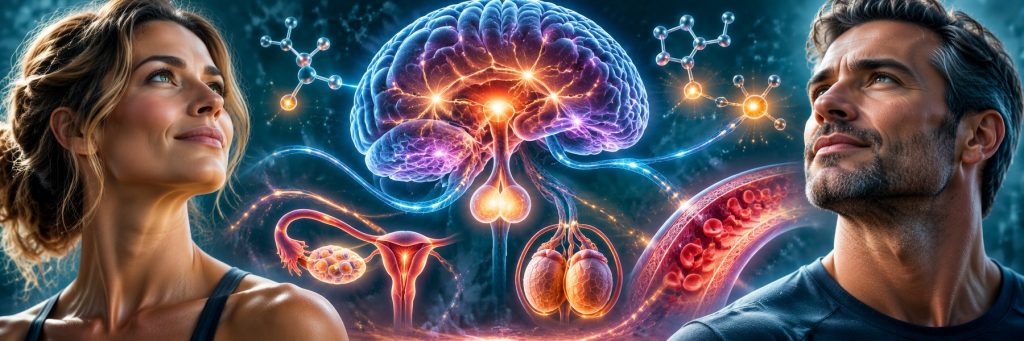
Sexual wellness involves much more than a single hormone or a single measure of physical performance. Desire begins with motivation and emotional context. Arousal involves coordinated brain, autonomic nervous system, hormonal, and vascular responses. Erectile function depends on blood flow and healthy tissue. Sexual satisfaction also reflects comfort, intimacy, expectation, communication, and the broader circumstances of a person’s life.
That complexity makes sexual wellness a fascinating area for peptide research. Compounds such as bremelanotide (PT-141), kisspeptin, and oxytocin act on different signaling systems. Researchers are increasingly interested in how these systems interact. Yet an important distinction frames this article: individual compounds may have clinical or preliminary research evidence, but the experimental peptide stacks discussed below have not been established as safe or effective treatments.
The most clinically developed peptide in this group is bremelanotide, FDA-approved as Vyleesi for acquired, generalized hypoactive sexual desire disorder (HSDD) in premenopausal women, when distressing low desire is not attributable to another medical or psychiatric condition, relationship difficulty, or medication. It is not approved for men, postmenopausal women, erectile dysfunction, or general sexual performance enhancement. Its labeling includes a temporary increase in blood pressure, decreased heart rate, and important cardiovascular contraindications.
1. The Big Picture: Desire, Arousal, Function, and Satisfaction
A low libido is not necessarily the same problem as difficulty with an erection, genital arousal, or orgasm. Identifying the relevant goal changes which research and treatments matter.
Sexual desire is interest or motivation. It can be influenced by reward networks, relationship context, sleep, depression, medication effects, endocrine disorders, and stress. Desire can be spontaneous or responsive to pleasurable experiences.
Sexual arousal combines mental engagement with physiological changes, including autonomic signaling and genital blood flow. Someone may feel mentally interested but experience limited genital response, or have physiological arousal without a matching subjective desire.
Erectile function requires adequate vascular relaxation, nitric oxide signaling, intact nerves, and healthy erectile tissue. Erectile difficulty can sometimes be an early indicator of cardiovascular or metabolic disease, not merely a testosterone problem.
Sexual satisfaction encompasses comfort, connection, pleasure, absence of pain, and personal expectations. It cannot be reliably inferred from a hormone test or a single physiological reading.
The most useful approach is therefore targeted: identify the outcome that matters, investigate contributors, and choose interventions supported for that specific problem rather than adding more compounds to the same stack.
2. Biological Pathways: How Sexual Responses Are Coordinated
Melanocortin signaling and motivation
PT-141, or bremelanotide, activates multiple melanocortin receptors, including those relevant to central nervous system signaling. It differs from sildenafil or tadalafil, which work primarily through the nitric oxide–cyclic GMP pathway in erectile tissues. Despite its receptor activity, the precise mechanism responsible for bremelanotide’s clinical improvement in HSDD remains incompletely understood.
Kisspeptin and reproductive neuroendocrinology
Kisspeptin influences hypothalamic GnRH signaling and downstream pituitary LH/FSH release. Research also suggests effects on brain processing of sexual stimuli. In a randomized crossover trial involving 32 men with HSDD who completed study visits, kisspeptin altered sexual-processing networks and increased measured penile tumescence during a laboratory task. In another small study, 32 premenopausal women with HSDD completed visits, and kisspeptin influenced sexual and attraction-related brain processing. These findings are intriguing, but a short research infusion is not proof of a durable treatment or a safe combination protocol.
Oxytocin and interpersonal context
Oxytocin participates in social processing, attachment, childbirth, lactation, and neuroendocrine responses. Its possible sexual effects are context-dependent, and human trials have not established intranasal oxytocin as a reliable treatment for low desire, orgasm difficulties, or erectile dysfunction. Importantly, the presence of oxytocin activity in the body does not demonstrate that administering more oxytocin creates greater intimacy or sexual pleasure.
Nitric oxide, arteries, and genital blood flow
Nitric oxide facilitates smooth muscle relaxation and increased genital blood flow. PDE5 inhibitors such as sildenafil and tadalafil have substantially stronger clinical evidence for erectile dysfunction than investigational neuropeptide combinations. These medicines do not automatically treat low desire, and they require cardiovascular and medication screening.
Emotional regulation, hormones, and comfort
Stress, anxiety, depression, chronic pain, pelvic-floor dysfunction, and sleep problems may affect sexual interest and arousal. Estrogen changes can contribute to genitourinary symptoms around menopause; testosterone deficiency can matter in selected patients but should not be assumed from symptoms alone. Addressing an underlying factor often has more predictable value than trying to override it with multiple experimental signals.
3. Research Combinations: What Is Being Proposed, and What Is Actually Known?
Stack 1: PT-141 + Oxytocin
Proposed rationale: A melanocortin agonist might influence central sexual motivation while oxytocin affects social and emotional processing. In theory, these pathways could complement each other.
What evidence supports it? Bremelanotide has randomized phase 3 evidence for its specific approved indication. Intranasal oxytocin has smaller, inconsistent sexual-wellness findings. There is no established controlled clinical evidence that combining the two improves desire, arousal, orgasm, or satisfaction more than either alone.
Important concerns: Adding another neuroactive peptide does not eliminate bremelanotide’s risks: nausea, flushing, headache, blood-pressure elevation, and possible focal hyperpigmentation. Unknown effects on mood and autonomic signaling make any proposed combination harder to monitor.
Stack 2: Kisspeptin + Oxytocin
Proposed rationale: Kisspeptin influences reproductive and sexual-stimulus processing; oxytocin may influence social salience and emotional context. Researchers could test whether these functions interact in meaningful ways.
What evidence supports it? Human kisspeptin studies provide proof of biological activity, including neural-response changes in laboratory conditions. Oxytocin’s clinical sexual effects remain uncertain. No validated combination treatment has emerged. These peptides also influence complex endocrine systems, so a seemingly complementary target is not necessarily a beneficial effect.
Important concerns: Unknown hormonal timing, delivery route, sex-specific effects, pregnancy considerations, and possible psychological variability. A study showing an fMRI change cannot establish improvement in a person’s ongoing relationships or sexual satisfaction.
Read: Kisspeptin and Oxytocin.
Stack 3: PT-141 + Kisspeptin
Proposed rationale: Melanocortin and kisspeptin pathways may influence different aspects of central sexual motivation and reproductive signaling.
What evidence supports it? Both compounds have individual human research findings, but only bremelanotide has a specific FDA-approved HSDD indication. Their combination has no demonstrated clinical efficacy or established safety profile. The fact that two substances affect sexual-processing pathways does not mean their effects will add together.
Important concerns: Cardiovascular effects associated with bremelanotide, possible endocrine changes, uncertainty about interactions, and the inability to separate a response from an adverse effect if several agents are started together.
Read: PT-141 and Kisspeptin.
Stack 4: Oxytocin + Selank
Proposed rationale: Selank has been investigated for anxiety-related signaling, while oxytocin is involved in social and emotional processing. Some communities speculate that reducing distress might improve sexual comfort or responsiveness.
What evidence supports it? Selected Selank studies address anxiety-related outcomes rather than sexual dysfunction. Oxytocin evidence for sexual health is inconsistent. There are no controlled human trials demonstrating an effective sexual-wellness stack using these two peptides.
Important concerns: Distinguish reduced anxiety from improved sexual function. Social context, sedation, altered attention, mood, and product-quality uncertainties could complicate both response and safety assessment. Anxiety, relationship distress, and trauma-related symptoms deserve appropriate support rather than experimental self-medication.
Additional approach 5: PT-141 versus PDE5 inhibitors
This is an informative comparison, not a validated peptide stack. Bremelanotide addresses a specific central-desire indication in premenopausal women. Sildenafil and tadalafil have established indications for erectile dysfunction and work mainly through vascular signaling. A patient with preserved desire but unreliable erections may need a fundamentally different workup than someone with distressing low desire and normal vascular function.
Some small historical bremelanotide studies examined erectile outcomes in men, but that did not produce an approved indication. Never assume combining a centrally acting drug with a vascular drug is safe because their mechanisms differ. Blood pressure, interacting medications, and cardiovascular health must be reviewed.
Additional approach 6: Treat the underlying contributor before adding compounds
In many cases, the strongest complementary strategy is not another peptide. Depending on the person, targeted options can include medication review; evaluation of sleep, diabetes, blood pressure, depression, hormones, pelvic pain, and relationship factors; evidence-based psychosexual counseling; or approved treatment for diagnosed erectile dysfunction, genitourinary syndrome of menopause, or HSDD when appropriate.
This is often the most rational meaning of a personalized sexual-wellness ‘stack’: coordinating interventions that address different documented needs rather than combining experimental neuropeptides.
4. Comparing the Compounds and Research Approaches
| Combination or approach | Main biological interest | Human evidence | Key limitation |
|---|---|---|---|
| PT-141 + oxytocin | Melanocortin motivation and social processing | PT-141 approved for narrowly defined HSDD; pairing untested | BP effects, nausea, unknown interactions |
| Kisspeptin + oxytocin | Reproductive signaling and emotional context | Small kisspeptin trials; pair unvalidated | fMRI responses are not long-term outcomes |
| PT-141 + kisspeptin | Distinct central sexual-signaling pathways | Individual peptide evidence only | No combination efficacy or safety data |
| Oxytocin + Selank | Stress/social signaling | Limited, indirect individual data | No established sexual-function effect |
| PDE5 inhibitor for diagnosed ED | NO–cGMP vascular pathway | Established human trials and guidelines | Does not necessarily improve desire; contraindications |
| Underlying-cause treatment | Medical, psychological, relational or hormonal drivers | Condition-dependent established treatments | Requires assessment rather than a universal stack |
Evidence matters more than the number of pathways targeted. A compound could measurably change brain activation, hormone release, or vessel diameter while leaving patient-important outcomes unchanged. A credible study must measure distress, desire, erection quality, comfort, and satisfaction directly.
5. Complementary Supplements: What Might Help and What Remains Uncertain?
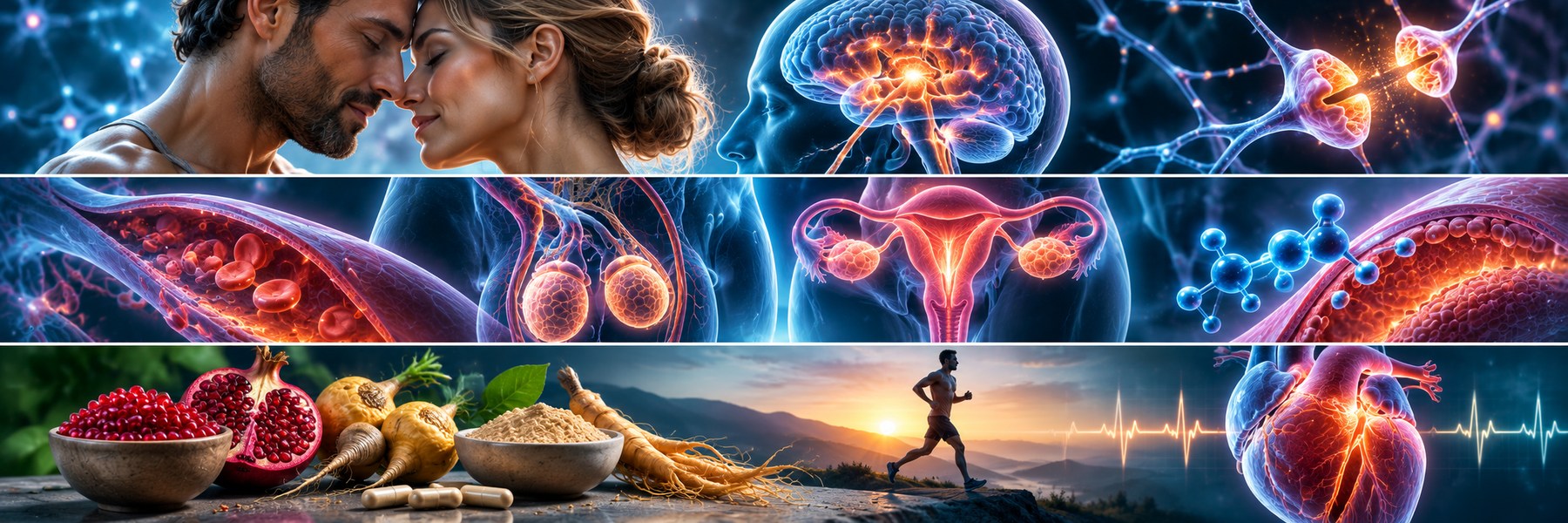
Supplement claims are especially easy to overstate in sexual wellness because improvements may result from correcting a deficiency, improved cardiovascular health, expectation effects, or changes in stress rather than a direct libido-enhancing mechanism.
| Supplement | Proposed role | Human evidence and limitations | Safety considerations |
|---|---|---|---|
| L-citrulline | Nitric oxide precursor through arginine metabolism | Small studies and indirect vascular rationale; not a substitute for ED treatment | May add to blood-pressure lowering, especially with medications |
| L-arginine | Nitric oxide substrate | Meta-analyses suggest small average erectile-function benefits in selected groups | GI effects and interactions with hypotensive drugs or PDE5 inhibitors |
| Maca | Botanical traditionally studied for libido | Small trials, inconsistent results; mechanism not established as hormone replacement | Product quality and standardization vary |
| Panax ginseng | Fatigue and sexual-function research | Reviews suggest at most modest or uncertain clinical effects | May interact with anticoagulants and glucose-lowering medicines |
| Zinc | Normal reproductive and endocrine physiology | Most compelling when deficiency is present | Excess intake can cause copper deficiency and other adverse effects |
| Vitamin D | General health and endocrine function | Correct deficiency when indicated; routine supplementation is not a proven libido treatment | Excess dosing risks hypercalcemia |
| Magnesium | Normal neuromuscular and metabolic function | Indirect support, particularly when deficient; no robust direct libido benefit | Excess supplemental magnesium can cause diarrhea; kidney disease changes safety |
| Omega-3 fatty acids | Cardiometabolic and vascular support | Not established as a direct sexual-performance treatment | Bleeding considerations and product variability at high doses |
| Protein, exercise and sleep | Energy, cardiovascular health, recovery, body image | Stronger general-health foundation than peptide stacks | Requires individualized goals, especially with chronic disease |
L-citrulline and L-arginine are among the more biologically plausible supplements for circulation-related erectile symptoms. However, a supplement that changes nitric-oxide availability is not equivalent to an approved PDE5 inhibitor. European urology guidelines characterize supplement effects as small or clinically uncertain overall.
Maca and Panax ginseng have generated interest in small human studies, but differences in extract quality, populations, and outcomes limit the strength of the conclusions.
Zinc and vitamin D should be discussed primarily as nutrients required for normal physiological function. Supplementing someone who is not deficient does not reliably create a sexual-health benefit.

6. Special Focus: Desire, Arousal, and Erectile Function Need Different Solutions
Consider three hypothetical examples:
Person A: Low desire but preserved physical function. They report little sexual interest and distress about the change. The appropriate evaluation includes mood, medications, relationship context, endocrine symptoms, and medical contributors. A therapy targeting penile blood flow is unlikely to address the central problem by itself.
Person B: Normal desire but unreliable erections. They may have a vascular, neurological, psychological, or medication-related issue. Cardiovascular risk assessment, a focused clinical evaluation, and evidence-based erectile-dysfunction treatment may be more relevant than an experimental desire-focused peptide.
Person C: Interest and physiological arousal are present, but sex is uncomfortable. Menopause-related genitourinary symptoms, pelvic-floor dysfunction, skin disorders, medication effects, or chronic pain may be responsible. Increasing desire signals would not correct the underlying source of discomfort.
These are not mutually exclusive categories, and they are not diagnostic substitutes. They illustrate why one universal ‘sexual wellness stack’ is unlikely to serve everyone.
What a meaningful combination trial would need
Future trials should compare each agent alone, the combination, and placebo, with standardized diagnostic criteria and separate outcomes for desire, arousal, erectile function, distress, and satisfaction. They would need clinically meaningful measures, adequate follow-up, blinding, reproductive and cardiovascular monitoring, and clear adverse-event reporting.
There is genuine promise in studying multiple neuroendocrine pathways. But until these studies exist, a theoretical synergy remains a hypothesis, not a treatment benefit.
7. Safety: Why PT-141 and Unvalidated Combinations Require Particular Care
Bremelanotide’s FDA indication is specific. Vyleesi is for acquired, generalized HSDD in premenopausal women when the condition is not due to other medical, psychiatric, relationship, or medication factors. It is not approved for men or postmenopausal women, and it is not intended to enhance sexual performance.
Blood pressure and cardiovascular risk: Bremelanotide can temporarily increase systolic and diastolic blood pressure and reduce heart rate. The FDA reports average maximum increases of about 6 mmHg systolic and 3 mmHg diastolic, with effects generally resolving within 12 hours. It is contraindicated in people with uncontrolled hypertension or known cardiovascular disease, and the label discourages use in those at high cardiovascular risk. A temporary effect can still be consequential in susceptible people.
Other adverse effects: Nausea is common, along with flushing, headache, vomiting, and injection-site reactions. Focal skin or mucosal darkening may occur and can persist. Bremelanotide also slows gastric emptying and may affect the absorption of certain oral drugs, particularly oral naltrexone.
Additional peptide uncertainties: There is no validated safe dose, frequency, route, or monitoring protocol for PT-141 + oxytocin, kisspeptin combinations, or oxytocin + Selank. Combining ingredients makes it difficult to identify which causes an effect or adverse event. Unregulated research products can have uncertainties involving identity, purity, sterility, and concentration.
Blood-pressure interactions: L-citrulline, L-arginine, and medications acting on the nitric-oxide pathway may alter blood pressure. Sildenafil and tadalafil have important medication contraindications, particularly with nitrates. No one should assume mixing vascular supplements, PDE5 inhibitors, and experimental neuropeptides is harmless.
Pregnancy, reproductive hormones and personal context: Kisspeptin and oxytocin are relevant to reproductive physiology. Experimental uses are not pregnancy-safe by default, and unwanted endocrine consequences cannot be ruled out. Individuals with pelvic pain, trauma histories, cardiovascular conditions, or relationship distress may need an approach that does not involve stimulating neuroendocrine pathways.
Medical review is especially important for persistent new erectile problems, which can reveal underlying cardiovascular or metabolic disease; severe pelvic or sexual pain; sudden libido changes; and medication-related symptoms.
8. Where Research Is Heading
Three directions are particularly compelling.
More specific central-desire therapies. Bremelanotide demonstrates that a centrally acting peptide can help a defined clinical population. Future candidates could aim for more targeted pathways, more predictable responses, or fewer gastrointestinal and cardiovascular adverse effects.
Kisspeptin-based neurobehavioral research. Small human trials show that reproductive peptides can alter responses to sexual stimuli in controlled settings. The next step is determining whether such effects translate into sustained, clinically meaningful improvements in daily life without disrupting reproductive hormones.
Integrated treatment tailored to the actual problem. The future may involve combining behavioral care, sexual-medicine evaluation, cardiovascular treatment, pelvic health care, and carefully studied pharmacology. The best combinations will be chosen because each component addresses a measured need, not because they contain the greatest number of experimental peptides.
9. Explore the Compounds
Continue with the dedicated Peptide Perspectives research profiles:
- PT-141 (Bremelanotide) — melanocortin signaling, FDA-approved HSDD indication, and cardiovascular precautions.
- Oxytocin — social and reproductive neuroendocrine signaling.
- Kisspeptin-10 — hypothalamic-reproductive pathways and human sexual-brain research; distinguish study formulations from commercial products.
- Selank — anxiety-related research and why sexual-wellness applications remain speculative.
- Full Peptide Directory — browse additional research profiles.
Selected Evidence and Further Reading
- FDA 2026 Vyleesi (bremelanotide) prescribing information. Official indication, contraindications, and safety precautions.
- Mills et al., JAMA Network Open (2023): Kisspeptin in men with HSDD. Small randomized crossover trial of sexual brain processing and tumescence.
- Thurston et al., JAMA Network Open (2022): Kisspeptin in women with HSDD. Small randomized crossover trial of attraction and sexual brain processing.
- European Association of Urology: Management of Erectile Dysfunction. Clinical approaches and interpretation of supplement evidence.
- DailyMed: Sildenafil prescribing information. Vascular drug contraindications, including nitrates.
- Oxytocin neuropharmacology and reproductive research (2026). Emerging research, with human clinical uncertainty.
Medical and editorial disclaimer: This article is for education and research literacy only. It does not recommend using or combining investigational peptides, provide a treatment protocol, or replace individualized medical advice. FDA approval applies to specific pharmaceutical products and indications, not to research-grade versions or experimental stacks. Consult a qualified healthcare professional about diagnosis, cardiovascular risk, medication interactions, and treatment options.