
Peptide Perspectives | Peptide Stacking & Synergy Series | Research goal: Liver Health & Detoxification Pathways
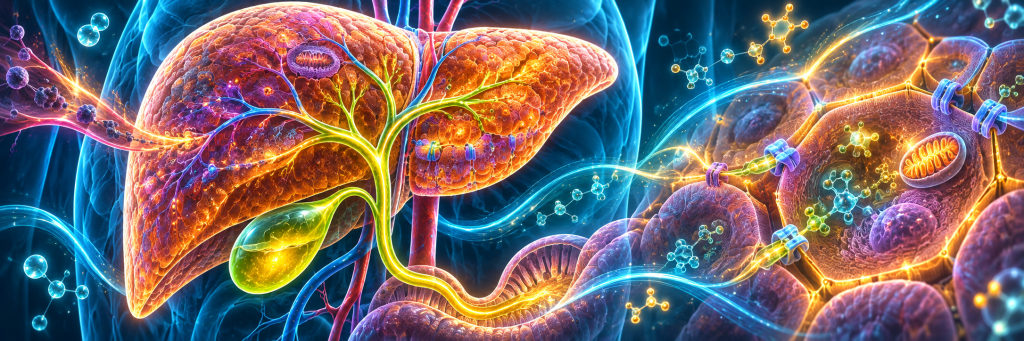
The liver is not a passive filter waiting for a detox product. It is an extraordinarily active metabolic organ that packages fats, regulates glucose, processes medications, synthesizes proteins, produces bile, and helps manage chemical exposures. Its cells are also rich in mitochondria, the structures that help generate energy for these demanding jobs.
That makes liver health an intriguing target for the next generation of peptide research. Could compounds that influence mitochondrial membrane integrity, metabolic signaling, and cellular stress responses complement one another? Could glutathione-related nutrients offer additional support? And how does that theoretical potential compare with actual treatments for metabolic dysfunction-associated steatotic liver disease (MASLD) and its inflammatory, fibrosing form, metabolic dysfunction-associated steatohepatitis (MASH)?
The answers are not all at the same stage. Semaglutide now has an FDA-approved indication for eligible adults with noncirrhotic MASH and F2–F3 fibrosis, and resmetirom is another approved option in this group. Tirzepatide has encouraging Phase 2 MASH results. In contrast, none of the peptide stacks discussed below has demonstrated human efficacy as a liver-disease treatment. FDA MASH announcement · Resmetirom label
1. The Big Picture: What Are We Trying to Protect?
Liver injury can have very different causes. MASLD is associated with cardiometabolic risk, insulin resistance, and excess fat accumulation in liver cells. MASH includes hepatocyte injury and inflammation and can progress to fibrosis. Other causes of elevated liver enzymes include medications, viral hepatitis, alcohol-related injury, autoimmune conditions, biliary disease, and concentrated herbal supplements. The right intervention depends on the underlying problem.
A distinction that matters: liver enzymes (ALT and AST) are signs of cell injury, not a complete measure of liver function or scarring. Normal enzymes do not rule out significant fibrosis. Conversely, mildly elevated enzymes do not prove that someone needs a “detox” stack. A clinical assessment may involve platelet counts and FIB-4 risk assessment, elastography, metabolic risk review, medication history, and additional testing when indicated.
2. The Biological Pathways: Metabolism, Mitochondria, and Antioxidant Defense
Metabolic traffic and fat accumulation
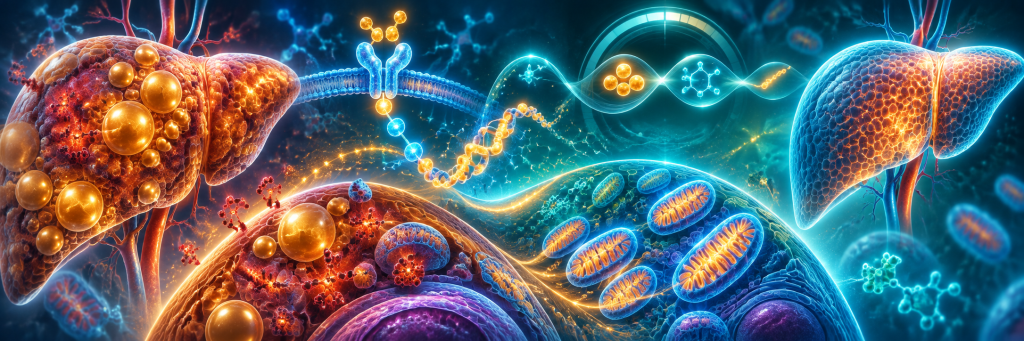
The liver decides whether to store, oxidize, or export incoming fatty acids. When nutrient surplus and insulin resistance persist, fat may accumulate in hepatocytes. This can increase vulnerability to cellular stress, although liver fat alone is not equivalent to MASH or fibrosis.
Mitochondrial energy and membrane integrity
Mitochondria help liver cells oxidize fuels and generate ATP. Their membranes, electron-transport system, and reactive oxygen species are closely linked. Excess oxidative stress may amplify injury, but reactive oxygen species also function as normal signaling molecules. Suppressing every oxidative signal is neither possible nor necessarily desirable.
Glutathione and redox balance
Glutathione (GSH) is a tripeptide made from glutamate, cysteine, and glycine. It supports antioxidant systems and participates in conjugation reactions that help the body process certain reactive compounds. NAC supplies cysteine for glutathione synthesis and is a well-established antidote for acetaminophen poisoning under medical supervision. That strong clinical evidence should not be generalized to routine NAC or glutathione use for chronic fatty liver.
Inflammatory signaling and fibrosis
Persistent injury can activate inflammatory pathways and hepatic stellate cells, leading to extracellular matrix deposition and fibrosis. A drug may reduce liver fat or ALT without reversing fibrosis. Clinical studies therefore need to assess histology, validated imaging or fibrosis measures, and ultimately liver-related events, not just oxidative stress markers.
3. Peptide Stacks Researchers Are Exploring
Stack 1: MOTS-C + SS-31 (elamipretide)
Rationale: MOTS-C is a mitochondria-derived peptide investigated for cellular stress responses and metabolism-associated signaling, including AMPK-related pathways in experimental models. SS-31, also called elamipretide, interacts with mitochondrial cardiolipin and has been researched for effects on membrane organization and energy metabolism. Their mechanisms are sufficiently different to justify a controlled combination experiment.
What evidence supports: Each compound has its own research literature, but the combination has not been shown to reverse MASLD, improve liver fibrosis, or protect human liver function. SS-31 has a narrowly defined FDA-approved indication for muscle strength in eligible people with Barth syndrome, not for general liver protection.
Limitations: Increased mitochondrial markers in animals cannot predict clinical benefit in MASH. Human liver-specific dosing, combination exposure, safety, and interactions are not established. See MOTS-C and SS-31.
Stack 2: Ovagen + SS-31
Rationale: Ovagen is described in bioregulator literature as a short peptide associated with liver-focused research. Pairing a proposed tissue-associated regulator with a mitochondria-targeting peptide is conceptually attractive.
What evidence supports: Direct, independently replicated human evidence that Ovagen restores liver tissue or improves MASH outcomes is not established. A proposed cellular mechanism should not be presented as a proven liver-specific effect. Compound identification, sequence verification, and reproducibility are especially important in this literature.
Limitations: Neither an established clinical regimen nor controlled combination trials are available. See Ovagen research directory search and SS-31.
Stack 3: MOTS-C + Humanin
Rationale: Both are mitochondria-associated peptides, but they are studied in different types of cellular stress and metabolic signaling. MOTS-C research often emphasizes metabolic adaptation; Humanin research has examined stress resistance and cell-survival pathways.
What evidence supports: Primarily mechanistic and preclinical findings. These do not establish that administering both compounds reduces liver fat or prevents fibrosis in people.
Limitations: Humanin’s cell-survival effects are biologically complex, potentially including unwanted protection of abnormal cells under some circumstances. Safety of simultaneous exposure is unknown. See MOTS-C and Humanin directory search.
Stack 4: SS-31 + Humanin
Rationale: SS-31 is studied for mitochondrial membrane processes; Humanin is researched for survival and cellular stress responses. Targeting both might change how liver cells respond to metabolic stress.
What evidence supports: A mechanistic hypothesis, not a validated liver-treatment strategy. The existence of one approved use for SS-31 does not validate its use with Humanin or demonstrate anti-fibrotic activity.
Limitations: Unknown pharmacokinetic interactions, long-term cellular effects, and no controlled clinical trials evaluating this combination for liver disease.
Stack 5: MOTS-C + glutathione-related nutritional support
Rationale: This compares experimental metabolic peptide signaling with a normal, well-characterized antioxidant system. In principle, providing sufficient nutritional substrates for glutathione and addressing a genuine nutrient deficiency could support normal liver biochemistry.
What evidence supports: Glutathione is essential to liver physiology, and NAC is clinically effective in a specific toxicology setting. There is no controlled evidence that adding NAC, oral glutathione, or injectable glutathione to MOTS-C improves MASH outcomes.
Limitations: This is best viewed as a research concept and nutritional comparison, not a recommended protocol. Higher or injectable antioxidant exposure is not automatically advantageous.
Additional comparator: Semaglutide or tirzepatide as separate metabolic therapies
Semaglutide and tirzepatide are not presented here as a stack with experimental peptides. They serve as examples of treatments studied with actual liver outcomes. Semaglutide and tirzepatide should not be combined with each other to create a multi-incretin stack.
4. Comparing the Research Approaches
| Combination or comparator | Main pathways | Level of evidence | What remains unknown |
|---|---|---|---|
| MOTS-C + SS-31 | Metabolic stress signaling + mitochondrial membranes | Individual mechanistic/preclinical work; no validated liver combination | Human MASH efficacy, fibrosis effects, interactions |
| Ovagen + SS-31 | Proposed liver bioregulation + mitochondrial function | Limited bioregulator literature; theoretical pairing | Verified human benefit, compound identity, safety |
| MOTS-C + Humanin | Mitochondria-associated signaling and cell survival | Preclinical/mechanistic | Human liver outcomes and long-term safety |
| SS-31 + Humanin | Membrane processes and stress responses | Experimental hypothesis | Human combination efficacy and safety |
| MOTS-C + glutathione-related support | Cellular metabolism and antioxidant capacity | Glutathione physiology established; pairing untested | Whether antioxidant support adds measurable liver benefit |
| Semaglutide alone | GLP-1 signaling and systemic metabolic risk | Phase 3 clinical evidence; FDA-approved MASH indication for eligible adults | Long-term liver-event outcomes still under study |
| Tirzepatide alone | GIP/GLP-1 signaling and metabolic risk | Phase 2 MASH histology trial | Larger confirmatory trials and long-term events |
| Resmetirom alone | Thyroid hormone receptor-β in liver | FDA accelerated approval for eligible noncirrhotic MASH | Confirmatory long-term clinical outcomes |
5. Supplements: Which Ones Make Sense, and for What Purpose?
| Supplement | Biological role and evidence | Important caution |
|---|---|---|
| NAC | Cysteine precursor for glutathione; established acetaminophen-poisoning treatment; insufficient evidence as routine MASLD therapy | Nausea, medication interactions, and different medical versus supplement uses |
| Glutathione | Central endogenous antioxidant and conjugation-related tripeptide; oral formulations can affect glutathione markers in some studies | Better biomarkers do not prove reversal of fibrosis; injectable use is not an established liver wellness strategy |
| Choline | Required for phosphatidylcholine synthesis and export of liver triglycerides; correcting inadequacy is important | Excess supplementation may cause odor, hypotension, and other adverse effects; not a proven MASH cure |
| Omega-3 fatty acids | Useful for elevated triglycerides in appropriate patients; liver-fat findings vary | Not an established anti-fibrotic MASH treatment; high-dose products may have bleeding or atrial-fibrillation concerns in some groups |
| Milk thistle / silymarin | Laboratory antioxidant interest; conflicting and generally unconvincing histologic human studies | Variable supplement quality; should not replace proven care |
| Alpha-lipoic acid | Metabolic cofactor and antioxidant research; limited high-quality liver-specific outcomes | May lower glucose; no established fibrosis benefit |
| Vitamin E | Selected trials suggest MASH histologic benefits in some adults without diabetes | High-dose use requires clinician review of bleeding and other risks; not appropriate for everyone |
| Coffee | Observational associations with lower liver-related risk | Association does not establish causality; avoid excessive caffeine if contraindicated |
| Protein and adequate nutrition | Supports overall health and helps prevent malnutrition or muscle loss during weight reduction | Needs individualization with advanced liver disease and other conditions |
NAC and glutathione are related, but not interchangeable. NAC can help the body replenish its own glutathione supply. Oral glutathione, liposomal glutathione, and injectable glutathione have different exposure and evidence questions. None has been demonstrated to provide the same MASH outcomes as an approved therapy. See AASLD acetylcysteine overview and EASL MASLD guideline.

6. The Clinical Benchmark: What GLP-1 Research Has Actually Shown
The most persuasive evidence is not a change in a mitochondrial laboratory assay. It is a controlled trial showing that patients experience meaningful improvements in disease activity or fibrosis.
Semaglutide: Phase 3 evidence and FDA approval
In the ESSENCE trial, at 72 weeks, 63% of semaglutide participants versus 34% of placebo participants had resolution of MASH without worsening fibrosis. 37% versus 22% had improvement in fibrosis without worsening MASH. These findings supported an FDA accelerated approval in August 2025 for selected adults with noncirrhotic MASH and F2–F3 fibrosis, in conjunction with lifestyle measures. Research continues to establish reductions in cirrhosis progression, transplantation, and other long-term events. FDA announcement · ESSENCE trial
Tirzepatide: Encouraging Phase 2 histology
In the 52-week SYNERGY-NASH trial, MASH resolution without fibrosis worsening was observed in approximately 44%, 56%, and 62% of participants in the three tirzepatide groups, compared with 10% on placebo. Improvement in fibrosis without worsening MASH occurred in approximately 51–55% versus 30% on placebo. These data are encouraging but do not mean tirzepatide has the same liver-specific regulatory status or evidence base as semaglutide. SYNERGY-NASH trial
Resmetirom: A different, liver-directed pathway
Resmetirom is a thyroid hormone receptor-β agonist with FDA accelerated approval for eligible adults with noncirrhotic MASH and F2–F3 fibrosis. It underscores an important point: a medication does not have to be a peptide to influence a relevant liver pathway or produce meaningful trial outcomes. FDA label
These are single-agent clinical comparators, not an invitation to combine approved metabolic medications with untested peptide mixtures.
7. Major Safety Issue: “Liver Support” Products Can Injure the Liver
The liver processes many supplements, herbs, and medication ingredients. “Natural,” “antioxidant,” and “detox” are marketing terms, not safety certifications.
Concentrated turmeric/curcumin supplements have been implicated in clinically apparent liver injury, sometimes severe. Green-tea extracts, particularly concentrated preparations marketed for weight loss, also have documented hepatotoxicity. These risks are not the same as eating ordinary culinary turmeric or drinking typical amounts of green tea. NIH LiverTox: turmeric · NIH LiverTox: green tea
Other concerns include multiple-ingredient blends, inaccurate labeling, contaminants, interactions with prescription medications, and injectable research peptides with uncertain identity, sterility, immunogenicity, and purity. Taking several interventions simultaneously makes it difficult to identify the cause of an abnormal laboratory result.
Seek prompt medical assessment for jaundice, dark urine, pale stools, intense itching, persistent vomiting, right-upper-abdominal pain, or unexplained severe fatigue. Do not assume these symptoms are evidence that a supplement is “working” or that toxins are being released.
People who already have elevated liver enzymes, chronic liver disease, cirrhosis, take multiple medications, or have a history of liver injury should not self-prescribe experimental peptide stacks or high-dose antioxidant combinations.
8. Could Mitochondrial Protection and Antioxidants Work Better Together?
It is a credible research question. In a controlled laboratory setting, pairing a mitochondrial membrane-targeting compound with a metabolic signal modulator could reveal complementary effects. But biological complementarity is not clinical synergy.
A persuasive research program would need: verified chemical identities; dose-ranging and toxicity studies; clear evidence of delivery to liver tissue; randomized groups receiving each component alone, the combination, and placebo; measures of liver fat and fibrosis; long-term monitoring for off-target effects; and eventually clinical outcomes such as cirrhosis, decompensation, transplant, or mortality.
Researchers should also test whether a combination provides incremental benefit, rather than simply overlapping effects or creating more toxicity. Reduced oxidative stress markers without improved liver outcomes would be insufficient.
Meanwhile, clinicians already have evidence-supported tools: evaluation for fibrosis, nutritional and activity interventions, treatment of obesity or diabetes when appropriate, management of cardiovascular risk, reduced alcohol exposure, and FDA-approved treatments for selected MASH populations.
9. Explore the Compounds
- MOTS-C: Mitochondrial-derived metabolic signaling.
- SS-31 (elamipretide): Mitochondrial membrane research.
- Humanin: Mitochondrial stress and survival signaling research.
- Ovagen: Experimental short-peptide bioregulator literature.
- Semaglutide: GLP-1 therapy with MASH clinical trial evidence.
- Tirzepatide: GIP/GLP-1 therapy with Phase 2 MASH findings.
- Glutathione directory search: Endogenous redox biology and supplement research.
Profile links use the site’s usual directory structure. Where a precise profile destination has not been verified, the link opens a directory search rather than claiming a confirmed peptide page.
The Bigger Picture
Healthy liver biology depends on an interconnected network of energy metabolism, antioxidant defenses, immune signaling, and tissue remodeling. This makes peptide research exciting, but it also makes simplistic “detox stack” claims difficult to justify.
The most promising future approach may involve combining different biological targets. The strongest present approach is to distinguish promising hypotheses from interventions that have demonstrated benefits in people. For someone with suspected MASLD or MASH, establishing the diagnosis, evaluating fibrosis risk, and selecting evidence-based care are more important than increasing the number of experimental compounds.
Educational and research-focused content only. This article does not recommend or provide dosing protocols for unapproved peptide combinations. It is not medical advice and is not a substitute for individual evaluation by a qualified clinician.