
Peptide Perspectives | Stacking & Synergy Series | Research goal: Immune Support
1. The Big Picture: Immune Resilience Is Not the Same as Immune Stimulation
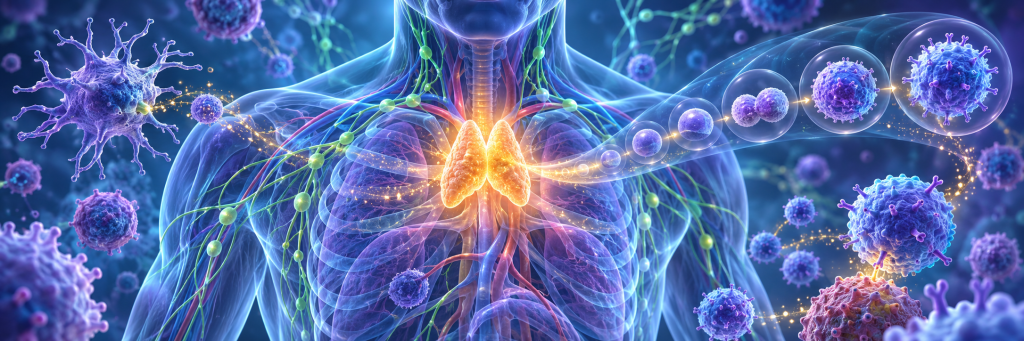
The immune system is not a single switch that can simply be turned up. It is a coordinated network of barriers, cells, chemical messengers, tissues, and memory responses. Its job is to recognize threats, respond proportionately, remember selected pathogens, and then resolve the response without unnecessarily damaging healthy tissue.
This complexity makes immune-related peptides an intriguing research area. Thymosin alpha-1, Thymogen (also called Thymagen), Vilon, and LL-37 have been studied for different reasons, from T-cell regulation to gene-associated signaling and antimicrobial defense. Their mechanisms invite questions about complementarity. Might one peptide influence T-cell communication while another addresses surface defense or innate immune signaling? Could multiple pathways be studied together?
The essential qualification is that none of the combinations in this article is a clinically validated immune-support regimen. Mechanistic complementarity does not establish efficacy, and a stronger immune response is not automatically a healthier one. The more useful goal is immune competence: appropriate responses to real threats, supported by intact barriers, nutrition, vaccination, sleep, and medical care when needed.
This article differs from our earlier Immune Balance Stack, which focused on chronic inflammation and autoimmune disease. Here we examine normal host defense, thymus-associated biology, and nutritional adequacy, while recognizing that immune-active compounds may be particularly risky in autoimmune illness and after transplantation.
2. The Biological Pathways: Four Layers of Defense
The thymus and T-cell development
The thymus is especially active early in life, helping immature T cells develop and undergo selection so they can recognize pathogens without reacting excessively to the body’s own tissues. It generally becomes smaller and more fat-rich with age. This process, often called thymic involution, has motivated research into thymic peptides and age-associated immune changes.
A peptide that modifies T-cell-associated markers is not necessarily capable of rebuilding the thymus, preventing infections, or improving vaccine protection. Those are separate, testable clinical outcomes.
Innate immunity and antimicrobial barriers
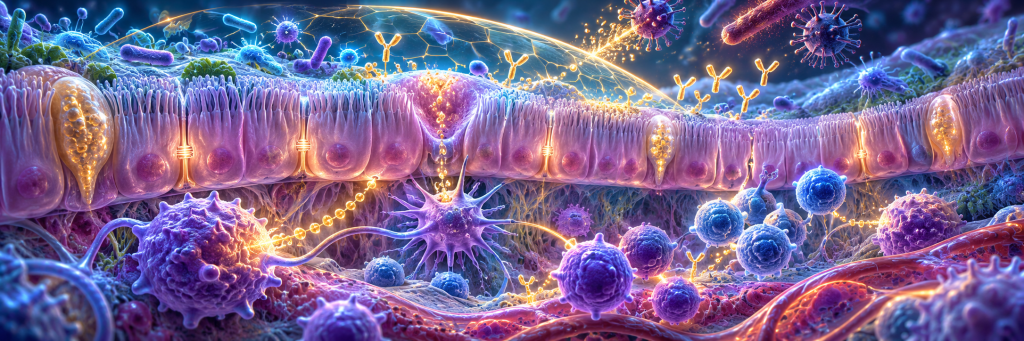
Skin and mucosal surfaces are the first contact points for many microbes. Epithelial cells, macrophages, neutrophils, complement proteins, and naturally produced antimicrobial peptides contribute to immediate defense. LL-37 is a human cathelicidin that can interact with microbial membranes and modify immune signaling. But its actions depend on context: some responses may be protective, while others can promote inflammation.
Adaptive immunity and memory
B cells make antibodies; T-cell populations coordinate responses or destroy infected cells. Regulatory pathways prevent excessive activity. Effective vaccination uses this adaptive capacity to establish protection against selected pathogens. An increase in a laboratory immune marker is not equivalent to improved real-world protection.
Nutrition, metabolism, and recovery
Immune cells need energy, protein, and adequate vitamins and minerals. Deficiencies in nutrients such as zinc, vitamin D, vitamin C, selenium, folate, and vitamin B12 can compromise normal immune function. Above-adequate intake, however, rarely translates into proportionally stronger protection. A balanced diet, consistent sleep, physical activity, and age-appropriate vaccines remain more established foundations than experimental peptide stacks.
3. Peptide Stacks Researchers Are Exploring
Stack 1: Thymosin Alpha-1 + Thymogen
Research concept: Pairing a more extensively studied thymic immunomodulator with a short-chain peptide investigated for immune-regulatory gene and cellular responses.
Thymosin Alpha-1 (thymalfasin) has been studied in humans, especially in specific clinical situations such as sepsis and selected infectious or immune-compromised states. Research has examined T-cell activity, antigen presentation, and immune regulation. Thymogen/Thymagen is a Glu-Trp dipeptide associated with a smaller, less independently replicated research literature.
The complementary hypothesis is that thymosin alpha-1 influences broad immune-cell signaling while Thymogen may affect other cellular-regulation pathways. Yet both are discussed in relation to T-cell activity, so their effects could overlap rather than add.
A major reality check comes from the large 2025 randomized TESTS study of thymosin alpha-1 in sepsis: 28-day mortality was approximately 23.4% with the peptide versus 24.1% with placebo, with no statistically significant overall benefit. Some earlier smaller studies reported positive findings, but the larger trial illustrates why changing immune signaling does not guarantee better outcomes.
Bottom line: A biologically interesting pair, not a demonstrated combination. There are no controlled human data showing that adding Thymogen improves thymosin alpha-1 outcomes.
Stack 2: Thymosin Alpha-1 + Vilon
Research concept: Combining immune-cell regulation with a dipeptide investigated in thymic bioregulation and cellular gene-expression models.
Vilon is the Lys-Glu dipeptide often discussed in the bioregulator literature. Researchers have explored its relationship to cell growth, gene-expression-associated mechanisms, and aspects of immune aging. The strongest claims often originate from limited experimental programs rather than independently reproduced, modern clinical trials.
The proposed advantage is targeting different scales of biology, including cell communication and intracellular regulation. The central problem is that we do not know whether these effects would be complementary in humans, relevant at realistic exposures, or safe together. There is no validated treatment protocol and no convincing evidence that the combination reduces infection rates or improves immune competence.
Bottom line: Mechanistic speculation with major evidence gaps, particularly for Vilon and for the pair itself.
Stack 3: Thymosin Alpha-1 + LL-37
Research concept: Thymus-associated immunomodulation combined with innate antimicrobial signaling.
LL-37 is an endogenous antimicrobial peptide with activities involving microbial membranes, chemotaxis, and cytokine-related pathways. It is scientifically attractive because it connects early host defense and broader immune communication.
Yet LL-37 is a particularly poor candidate for simple “more is better” assumptions. It can bind self-derived nucleic acids and participate in immune activation. In psoriasis, LL-37 can act as an autoantigen and contribute to inflammatory signaling; research has also examined related mechanisms in lupus. That makes its behavior tissue-, dose-, and disease-dependent. Evidence from studying LL-37 produced naturally by the body cannot automatically validate injecting or applying an externally supplied preparation.
Pairing LL-37 with another immune-active peptide could introduce unpredictable immune activation, irritation, or inflammatory effects. No controlled human combination trials establish improved antimicrobial protection from the stack.
Bottom line: Valuable research questions in innate–adaptive immune communication, but one of the higher-concern combinations because immune activation can become counterproductive.
Stack 4: Thymogen + Vilon
Research concept: Studying two short-chain thymic bioregulators together.
Thymogen is Glu-Trp; Vilon is Lys-Glu. Their compact structures have generated hypotheses about intracellular signaling and gene-regulatory interactions. Researchers may ask whether they act on distinct processes or simply reproduce similar immune-related effects.
The evidence is too thin to answer. Claims about direct DNA interactions and rejuvenated thymic function are not equivalent to demonstrated clinical effects. Manufacturing identity, purity, stability, exposure, and tissue distribution would have to be characterized before interpreting any combined biological response.
Bottom line: Highly exploratory. The pairing has no validated immune-health benefit, established human dosing, or adequate long-term safety evidence.
Stack 5: Thymosin Alpha-1 + Thymulin
Research concept: Contrasting two thymus-associated signals with differing physiological roles.
Thymulin is a zinc-dependent thymic nonapeptide complex associated with immune regulation and thymic physiology. Unlike using two peptides presumed to be interchangeable, this hypothesis highlights different aspects of thymus-associated signaling.
But a mechanistic difference alone does not establish synergy. Zinc status and thymulin biology could matter more than simply increasing exposure to multiple peptides. Well-controlled human studies would be required to show real benefits and rule out unwanted immune shifts.
Bottom line: Relevant as a research comparator, not as an endorsed regimen.
Stack 6: Thymosin Alpha-1 + Nutritional Repletion
Research concept: Comparing experimental immunomodulation with correction of real nutrient deficiencies.
This is not a validated peptide stack either, but it is an especially useful research comparison. A person with inadequate zinc, vitamin D, or protein intake may experience compromised normal immune function. Correcting the deficiency addresses a known biological requirement. Adding thymosin alpha-1 to an already well-nourished person has a far less certain rationale.
A rigorous study could compare nutritional optimization alone, a peptide alone, the combination, and placebo, while tracking actual infections or vaccine responses rather than isolated immune-cell counts.
Bottom line: Nutritional correction has a clearer evidence-based role; additive benefit from any peptide remains unproven.
4. Comparing the Research Combinations
| Combination | Proposed complementary mechanisms | Evidence level | Main limitation |
|---|---|---|---|
| Thymosin Alpha-1 + Thymogen | Broader thymic immunomodulation plus dipeptide cellular signaling | Alpha-1 has human studies; combination untested | Overlapping T-cell pathways and limited Thymogen replication |
| Thymosin Alpha-1 + Vilon | Immune communication plus short-chain bioregulator mechanisms | Largely theoretical as a pair | No demonstrated human immune outcome benefit |
| Thymosin Alpha-1 + LL-37 | Adaptive regulation plus innate antimicrobial signaling | LL-37 mechanistic evidence; combination untested | Possible inflammatory and autoimmune activation |
| Thymogen + Vilon | Two short-chain cellular-regulatory hypotheses | Very limited | Uncertain targets, exposure, safety, and interaction |
| Thymosin Alpha-1 + Thymulin | Distinct thymus-associated processes | Mechanistic; combination unvalidated | Zinc dependence and uncertain clinical relevance |
| Thymosin Alpha-1 + nutritional repletion | Immune signaling plus essential nutrient adequacy | Stronger rationale for correcting deficiencies; combination untested | No established incremental peptide benefit |
None of the combinations has convincingly shown fewer infections, improved vaccine response, reduced hospitalization, or better long-term immune function in controlled human combination trials.
5. Complementary Vitamins, Minerals, and Supplements

The most effective supplement strategy is not to consume the greatest number of products. It is to identify genuine nutritional gaps, choose formulations matched to a defined goal, and evaluate potential adverse effects.
Vitamin D
Vitamin D contributes to normal innate and adaptive immune function. Correcting deficiency is appropriate, particularly for people with low measured levels or increased deficiency risk. Clinical trials of routine high-dose supplementation in people without deficiency have not established broad protection against infections. Excessive intake can cause hypercalcemia and kidney complications.
Zinc
Zinc supports immune-cell development, barrier integrity, and normal wound healing. Oral zinc may modestly shorten the duration of a common cold in some studies when started early, but evidence varies by product and outcome. Chronic excessive zinc can impair copper absorption, cause anemia, and interfere with normal immune function. Intranasal zinc has been associated with loss of smell and should be avoided.
Vitamin C
Vitamin C contributes to antioxidant defense, epithelial barriers, and immune-cell functions. Routine supplementation does not reliably prevent the common cold in the general population, although some studies show shorter illness duration. Adequate dietary intake is the priority; very high doses may cause digestive symptoms and can be problematic for some people with kidney-stone risk.
Selenium
Selenium is needed for antioxidant enzymes and aspects of thyroid and immune physiology. Deficiency matters, but excess supplementation can cause toxicity, including gastrointestinal, hair, nail, and neurological symptoms. Broad routine supplementation for infection prevention is not established.
Probiotics
Selected probiotic strains have been studied for upper respiratory symptoms, gastrointestinal infections, and gut-associated immune effects. Results are strain-, dose-, and population-specific; a favorable study of one organism does not establish a class-wide benefit. Probiotics may rarely cause invasive infection in severely immunocompromised or critically ill patients.
Beta-glucans
Yeast-derived beta-1,3/1,6-glucans are being studied for innate immune recognition and respiratory-health outcomes. A meta-analysis of 13 trials reported potentially favorable effects on upper respiratory infection measures but emphasized heterogeneity. A small 2026 randomized study also found changes in selected mucosal immune markers. Different beta-glucan structures and preparations are not interchangeable.
Protein, vitamin A, B12, folate, and iron when indicated
Energy and protein sufficiency support immune-cell production and recovery. Vitamin A helps maintain epithelial defenses. Folate and B12 contribute to cell division and blood-cell formation, and iron is necessary for many immune processes, although excessive iron is not beneficial. Deficiencies should be diagnosed and addressed appropriately. Iron supplementation without a demonstrated need is not a generic immune-support strategy.
| Nutrient or supplement | Evidence-supported role | Limitations and cautions |
|---|---|---|
| Vitamin D | Correcting deficiency and supporting normal immune physiology | Extra intake above sufficiency has inconsistent infection benefits; toxicity at high intake |
| Zinc | Correcting deficiency; possible shorter cold duration with selected oral formulations | Copper depletion, GI effects, drug interactions; avoid intranasal products |
| Vitamin C | Nutrient adequacy; modest effects on cold duration in some studies | Does not reliably prevent routine infections |
| Selenium | Correcting deficiency, antioxidant enzyme function | Narrower safety margin; excess causes toxicity |
| Probiotics | Strain-specific gut and selected respiratory outcomes | Not interchangeable; caution in severe immunosuppression |
| Yeast beta-glucans | Emerging human respiratory symptom data | Heterogeneous trials and formulation differences |
| Protein and other micronutrients | Essential nutritional foundation when intake is inadequate | Extra intake beyond adequacy is not automatically beneficial |
6. The Special Question: When Do Immune Effects Overlap?
A common assumption behind stacking is that two compounds acting on different immune pathways must be complementary. In practice, immune systems behave as networks, not independent modules.
Thymosin alpha-1 may alter antigen-presentation or T-cell-related activity. Short-chain thymic peptides are hypothesized to affect other cellular responses. LL-37 can recruit immune cells and alter innate signaling. Together, such changes could be additive, neutral, or harmful, depending on the tissue, pathogen, underlying illness, and baseline immune state.
Immune stimulation means enhancing selected activities. Immune regulation means adjusting responses according to physiological context. Immune resilience means preserving the capacity to respond appropriately, recover, and maintain protection. These three goals should not be confused.
A therapy that increases an immune marker may also increase inflammatory symptoms, interfere with immune tolerance, or be unsuitable for a transplant recipient taking immunosuppressants. In people with autoimmune disease, uncontrolled immune activation may worsen rather than improve outcomes. This is why we should not apply the conclusions of this immune-support article as a treatment plan for autoimmune conditions.
Safety considerations for experimental thymic and antimicrobial peptides
Insufficient combination data: There are no established safe or effective human regimens for the proposed stacks, and monitoring multiple immune-active compounds would complicate adverse-event attribution.
Manufacturing and identity: Compounded or research-market peptides may differ in exact chemical form, purity, residual solvents, aggregation, and concentration. FDA has specifically identified potential immunogenicity, peptide-related impurities, and inadequate safety information for compounded thymosin alpha-1 preparations.
LL-37 and inflammation: Antimicrobial activity does not mean LL-37 is uniformly protective. Its interaction with self-nucleic acids in psoriasis illustrates how an innate-defense peptide may contribute to immune pathology.
Complex medical situations: Extra care is required with autoimmune disease, organ transplantation, immune-suppressing medications, cancer treatment, pregnancy, or diagnosed immune deficiency. Such settings require specialist-directed care, not self-directed experimental stacks.
Supplement interactions: Excess zinc can cause copper deficiency; selenium can be toxic; high-dose vitamin D can cause hypercalcemia; probiotics may be unsuitable for some immunocompromised patients. Even apparently simple stacks increase the number of variables that clinicians must assess.
Replacing proven prevention: No research peptide replaces vaccination, appropriate medical treatment of infection, good nutrition, sleep, or other established preventive care.
7. Where the Science Is Heading: How Would We Prove a Better Stack?
Future researchers could test whether distinct immune pathways produce additive benefits, but robust experimental design is essential. An ideal study would define a specific population, confirm chemical identity and manufacturing quality, compare each single agent with the combination and placebo, and monitor both efficacy and immune-related harms.
The most meaningful outcomes would include laboratory-confirmed infection rates, severity, vaccine responses, functional recovery, and adverse effects rather than only cytokines or lymphocyte percentages. Trial follow-up would need to be long enough to detect delayed immune consequences.
A particularly valuable direction is precision immune support: identifying when a person has a correctable deficiency, impaired vaccine response, a specific disease-associated immune problem, or normal function that does not require additional stimulation.
Another promising research direction is learning from endogenous antimicrobial peptides without assuming that administering larger amounts of them is the right therapeutic strategy. Understanding the timing and tissue-specific actions of LL-37 and thymic peptides may reveal more selective future medicines.
8. Explore the Compounds
- Thymosin Alpha-1: T-cell-associated immune regulation and clinical research.
- Thymogen / Thymagen: Glu-Trp bioregulator and emerging immune-cell research.
- Vilon: Lys-Glu dipeptide and experimental thymic/cellular regulation.
- LL-37: Endogenous antimicrobial defense and context-dependent inflammation.
- Thymulin: Zinc-dependent thymic peptide and immune-regulation research.
- Thymalin: Thymic extract research and immune-aging hypotheses.
Selected sources for further reading
- 2025 TESTS randomized trial of thymosin alpha-1 in sepsis.
- FDA: compounded bulk drug substances presenting potential safety risks.
- NIH Office of Dietary Supplements: Immune Function and Infectious Diseases.
- LL-37 and autoimmune immune signaling review.
- Yeast beta-glucans and respiratory infections: meta-analysis.
- 2026 yeast beta-glucan human mucosal immune study.
The Bigger Picture
The possibility of influencing several immune functions at once is scientifically exciting. But an immune system needs coordination, not maximum activation. Current evidence supports nutritional adequacy and proven infection-prevention measures far more strongly than any experimental thymic peptide stack. Continued study of thymosin alpha-1, Thymogen, Vilon, LL-37, and thymulin may eventually refine our understanding of immune resilience, but it is too early to claim these combinations improve immune health in people.
Medical disclaimer: This article is for educational and research discussion only. None of the proposed peptide combinations is an established immune-support treatment, and dosing or self-administration is not recommended. Seek qualified clinical advice for recurrent infections, autoimmune conditions, immunodeficiency, transplant care, or medication-related immune concerns.