
Our intestines do more than digest food. They manage a remarkable relationship between the microbiome, the immune system, and a living barrier that decides what enters the body. Emerging peptide research is exploring how to protect that relationship when it becomes disrupted.
1. The Big Picture: Why the Gut and Immune System Are Inseparable
The digestive tract faces an unusual challenge. It must absorb nutrients and water while helping prevent harmful microbes and inflammatory triggers from crossing into tissues where they do not belong. It performs this balancing act across an enormous surface, in constant contact with trillions of microorganisms.
The intestines are also an important site of immune activity. Specialized immune cells sample signals from food, bacteria, and the intestinal lining. In a healthy state, this system can tolerate harmless food components and beneficial microbes while responding to genuine threats.
When the relationship becomes disrupted, the consequences can be significant. Conditions such as Crohn’s disease, ulcerative colitis, celiac disease, and short bowel syndrome involve very different biological problems, even though all affect digestive health. Researchers are increasingly interested in therapies that do more than reduce symptoms: approaches that may help restore barrier function, support mucosal repair, and improve how the gut and immune system communicate.
This is where peptides become especially interesting. Some naturally occurring peptides help control inflammatory signaling. Others participate in antimicrobial defense, intestinal growth, or communication between the gut’s nerves and immune cells. Researchers are studying whether synthetic versions or related molecules could become more precisely targeted therapies.
The field already has one important example of clinical translation: teduglutide, a GLP-2 analogue, is an FDA-approved treatment for certain patients with short bowel syndrome. Most of the other compounds discussed here remain investigational, with their strongest results coming from cells and animal models rather than controlled human digestive-disease trials. That difference matters, but it also helps us see where the next breakthroughs could come from.
2. The Biological Pathways: Four Ways the Gut Protects and Communicates
The Intestinal Barrier: A Selective Gate, Not a Solid Wall
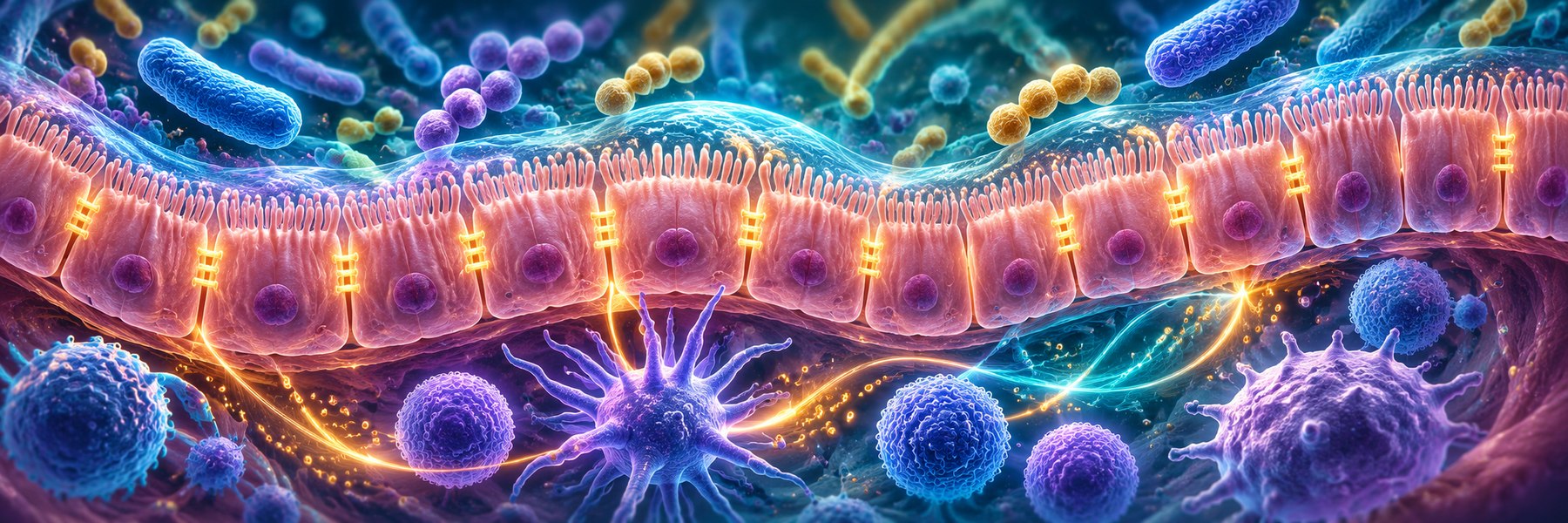
The gut lining is just one layer of cells thick in many places, but its defenses are layered. Mucus separates many microbes from epithelial cells. Tight junctions regulate movement between those cells. Antimicrobial peptides, secretory IgA antibodies, and local immune cells add further protection.
Increased intestinal permeability is a measurable physiological feature in some diseases, but the phrase “leaky gut” is not a specific diagnosis and should not be used to explain every episode of bloating, fatigue, or food intolerance. The important research question is whether a proposed intervention actually improves validated markers of barrier function and meaningful patient outcomes.
Inflammation: Defend Against Threats Without Prolonging Damage
The immune system uses inflammatory signals to respond to infections and injury. Molecules such as TNF-alpha, interleukins, and the NF-kappaB signaling network help organize that response. In inflammatory bowel disease, immune activity can become persistently dysregulated and damage the lining it is meant to protect.
KPV and thymosin alpha-1 are interesting for different reasons: KPV is studied for effects on intracellular inflammatory signaling, while thymosin alpha-1 is investigated for the balance between immune activation and tolerance. Neither has demonstrated reliable treatment of human inflammatory bowel disease.
Microbiome Signaling: A Two-Way Conversation
Gut microbes produce metabolites, including short-chain fatty acids, from components of the diet. Those metabolites can influence the epithelial barrier and immune-cell behavior. At the same time, mucus, immune responses, and antimicrobial peptides help determine which microbes thrive.
This is a two-way ecosystem, not simply a contest between “good” and “bad” bacteria. Research into LL-37 explores how an endogenous antimicrobial peptide participates in microbial defense while sometimes also contributing to excessive inflammation. A compound can influence microbial communities indirectly without being proven to “rebalance the microbiome” in people.
Gut–Brain–Immune Communication: Nerves Participate Too
The gastrointestinal nervous system helps regulate motility, secretion, blood flow, and immune activity. Vasoactive intestinal peptide (VIP) is released by enteric neurons and acts on receptors involved in the communication between intestinal nerves, epithelial cells, and immune cells.
A key emerging idea is that successful mucosal recovery may depend on all four processes together: an effective barrier, appropriately regulated inflammation, healthy microbial communication, and coordinated nerve–immune signaling.
3. Compounds Researchers Are Exploring
BPC-157: A Broad Preclinical Interest in Gastrointestinal Repair
Explore the BPC-157 research profile.
BPC-157 is a synthetic 15-amino-acid peptide associated with a sequence described from gastric proteins. Animal experiments have examined it in models of gastrointestinal ulcers, experimentally induced intestinal inflammation, and other forms of tissue injury.
Investigators have reported effects involving cellular migration, blood-vessel-related signaling, and protection of injured tissues. Those findings make BPC-157 an intriguing candidate for studying how damaged mucosa might recover.
The limitation: Despite extensive animal research, no rigorous human trial has established that BPC-157 heals intestinal permeability, treats Crohn’s disease or ulcerative colitis, or improves gastrointestinal symptoms. In its 2026 compounding review, the FDA described important gaps in human safety information, formulation quality, and immune reactions. The opportunity is real as a research question, not yet a proven treatment. FDA safety background.
KPV: Targeting Inflammatory Signaling at the Mucosal Surface
Explore the KPV research profile.
KPV is the three-amino-acid Lys-Pro-Val fragment of alpha-melanocyte-stimulating hormone. Its scientific appeal is unusually specific: laboratory research has shown that KPV can enter certain intestinal and immune cells through the PepT1 transporter and influence NF-kappaB and MAPK-related inflammatory responses.
Mouse colitis experiments have reported reductions in inflammation and tissue injury. A 2026 study of an engineered oral KPV delivery system also found improved colitis outcomes and mucosal measures in mice, while underscoring how much the delivery formulation can change a peptide’s behavior.
The opportunity: KPV could inform future therapies designed to act locally within inflamed intestinal tissue. The limitation: No adequate human clinical trials establish effectiveness, dose, or long-term safety. An experimental oral prodrug delivered in nanoparticles is not interchangeable with unmodified KPV purchased online.
VIP: The Link Between Gut Nerves, Secretion, and Immunity
VIP, or vasoactive intestinal peptide, is a naturally occurring 28-amino-acid neuropeptide released by neurons in the intestinal tract and elsewhere. It participates in intestinal fluid movement, smooth-muscle activity, blood flow, and immune regulation.
Researchers are particularly interested in VPAC receptor signaling, its interaction with innate lymphoid cells, and effects on the epithelium. A 2026 experimental colitis report described protective findings in organoid and mouse models, though a conference abstract cannot substitute for a full human clinical trial.
The opportunity: VIP suggests ways to coordinate repair through the nervous and immune systems, rather than addressing inflammation alone. The limitation: Human treatment of gut disorders with VIP or aviptadil is not established or FDA-approved; VIP’s physiological actions may also cause flushing, low blood pressure, altered intestinal secretion, or diarrhea. Scientific background.
LL-37: The Antimicrobial Peptide with a Double-Edged Role
Explore the LL-37 research profile.
LL-37 is the active cathelicidin peptide produced by human cells, including immune and epithelial cells. It can interact with microbes and host immune pathways, placing it directly at the intersection of intestinal defense and inflammation.
The most important insight is that its effects depend on context. Under some experimental conditions LL-37 supports host defense or healing; under others, excessive activity may contribute to inflammatory signaling or tissue injury. A 2026 review of LL-37 in intestinal disease highlights these opposing effects, along with challenges involving delivery, degradation, and toxicity.
The opportunity: Understanding LL-37 could lead to more selective therapies that preserve antimicrobial protection without amplifying inflammation. The limitation: There is no established human treatment for IBD or gut dysbiosis using LL-37, and increasing it is not automatically beneficial.
Thymosin Alpha-1: Immunomodulation Rather Than Simple Immune Stimulation
Thymosin alpha-1 (Tα1) is a 28-amino-acid peptide studied for effects on immune-cell signaling and regulation. Its digestive-health interest centers on a crucial idea: the intestinal immune system needs tolerance and coordination, not just stronger immune activation.
In a 2020 mouse study, Tα1 reduced intestinal injury in an experimental model involving immune-checkpoint-related colitis, with evidence of improved barrier integrity and changes in immune-tolerance pathways. That is a meaningful mechanistic finding, but the model does not establish treatment of ordinary human Crohn’s disease, ulcerative colitis, or food sensitivity.
The opportunity: Tα1 offers a research window into mucosal immune tolerance, particularly in complex inflammatory settings. The limitation: Although some thymosin alpha-1 products have been used clinically in countries outside the United States for other indications, it is not FDA-approved as a treatment for intestinal disease, and U.S. compounded forms raise quality and safety considerations. FDA discussion.
Thymosin Beta-4: Cell Migration, Epithelial Healing, and Fibrosis
Explore the full-length thymosin beta-4 profile.
Full-length thymosin beta-4 (Tβ4) is an endogenous 43-amino-acid peptide associated with actin regulation, cellular movement, and tissue-repair pathways. Those mechanisms make it a compelling addition to the gut-healing discussion.
A 2026 study of recombinant human Tβ4 found that treatment reduced inflammation, epithelial injury, and fibrosis-related measures in mouse colitis models. The research also examined the peptide’s relationship with mineralocorticoid receptor signaling.
The opportunity: Tβ4 may help connect mucosal healing to the longer-term challenge of intestinal remodeling and fibrosis. The limitation: These were preclinical results, not proof of benefit in patients with IBD; the full-length peptide also should not be conflated with short fragments sold as “TB-500.”
Teduglutide: A Real-World Example of Peptide-Based Intestinal Adaptation
Teduglutide (Gattex) is a GLP-2 analogue and one of the clearest examples of a peptide therapy successfully translated into a specific digestive-disease treatment.
By activating GLP-2 pathways, teduglutide supports intestinal adaptation and absorption. It is FDA-approved for adults and children at least 1 year old with short bowel syndrome who depend on parenteral support. It is not approved as a treatment for “leaky gut,” IBS, ulcerative colitis, or general digestive optimization. The prescribing information includes precautions concerning abnormal tissue growth, polyps, and other potential adverse effects.
The opportunity: Teduglutide demonstrates that carefully targeted peptide biology can make a measurable clinical difference when the population and outcome are precisely defined. Official prescribing information.
Larazotide Acetate: Lessons from a Barrier-Targeting Clinical Program
Larazotide is an eight-amino-acid investigational peptide designed to influence tight-junction regulation in the intestine, particularly in celiac disease.
A 2015 randomized trial in adults with celiac disease reported better gastrointestinal symptom outcomes than placebo at one tested dose, although higher doses did not show the same effect. That result made the concept of targeting intestinal permeability especially intriguing.
But the subsequent Phase 3 trial was discontinued in June 2022 after an interim analysis indicated that substantially more participants would be needed to establish a clear effect. Larazotide is not an approved treatment and does not replace a strict gluten-free diet for celiac disease. Trial-program update.
The opportunity: Larazotide illustrates both the promise of barrier-targeted therapy and the difficulty of turning an appealing mechanism into a dependable clinical benefit.
4. Comparing the Compounds
| Compound | Main mechanism | Primary digestive research interest | Evidence level / status | What remains unknown |
|---|---|---|---|---|
| BPC-157 | Tissue-protection, migration, vascular signaling | Experimental ulcers and mucosal recovery | Extensive animal data; very limited human evidence; not FDA-approved | Human healing benefit, dosing, safety, and quality |
| KPV | PepT1 uptake; NF-kappaB / MAPK modulation | Colitis-related inflammation and local delivery | Cell and animal research; no established human treatment trials | Clinical effectiveness and formulation-specific safety |
| VIP | VPAC signaling; enteric neuroimmune communication | Barrier function, secretory cells, colitis models | Mechanistic, organoid, and animal research; not FDA-approved for gut disease | Human efficacy and cardiovascular/secretory tolerability |
| LL-37 | Antimicrobial defense and immune signaling | Microbial interface and mucosal inflammation | Laboratory and animal; no established human GI indication | When effects are protective versus harmful |
| Thymosin alpha-1 | Immune-cell regulation and tolerance pathways | Immune-mediated gut injury | Preclinical intestinal research; human use studied in other diseases | Direct human IBD benefit, formulation safety |
| Thymosin beta-4 | Actin regulation; epithelial movement; fibrosis pathways | Colitis injury and tissue remodeling | New 2026 animal-model evidence; not approved for GI healing | Human mucosal and fibrosis outcomes |
| Teduglutide | GLP-2 receptor activation; intestinal adaptation | Short bowel syndrome with parenteral support | FDA-approved for a specific indication | Not a general treatment for permeability, IBD, or IBS |
| Larazotide | Experimental tight-junction regulation | Celiac-related barrier signaling and symptoms | Human Phase 2; Phase 3 discontinued; not approved | Reproducible clinical benefit in larger studies |
What this comparison shows: The evidence spans genuinely different stages of development. Teduglutide has a defined approved use; larazotide reached human trials but did not complete Phase 3; KPV, VIP, LL-37, BPC-157, and the thymosins remain primarily experimental for intestinal outcomes. Strong animal mechanisms do not erase the need for human safety and efficacy studies.
5. Where the Science Is Heading
Better Ways to Deliver Peptides to the Intestinal Lining
The digestive system is a difficult place to deliver peptide medicines because stomach acid, digestive enzymes, mucus, and transport barriers can break down or limit exposure. New experimental approaches include colon-targeted nanoparticles, protective hydrogels, and locally acting formulations.
KPV research is particularly illustrative: engineered delivery systems in mice may produce different results from ordinary free peptide. Future treatments may be designed around where a compound acts rather than simply how much enters the bloodstream.
Treating the Barrier, Immunity, and Microbiome as One System
A future breakthrough might protect epithelial cells while also shaping immune responses and supporting a more stable microbial environment. But microbiome research is still working to identify which changes actually cause disease versus which are consequences of it.
Future human trials should measure endoscopic healing, intestinal permeability using validated methods, symptom improvement, inflammation, and quality of life rather than relying only on changes in blood markers or an unvalidated microbiome score.
Moving from General “Gut Healing” Claims to Specific Diseases
Crohn’s disease, ulcerative colitis, celiac disease, IBS, and short bowel syndrome are not interchangeable. They differ in anatomy, immune mechanisms, clinical risks, and established treatments.
Teduglutide succeeded for a clearly defined absorption problem. Larazotide faced difficulties demonstrating benefits for celiac symptoms. These examples point toward a future of precise indications, thoughtful trial design, and disease-specific outcomes rather than universal “gut repair” promises.
Identifying the Right Balance of Immune Defense
LL-37 illustrates why simply boosting antimicrobial activity may not be the answer. Thymosin alpha-1 illustrates why immune regulation is more complex than turning the immune system up or down. VIP adds another layer of nerve–immune signaling.
Researchers are learning that the healthiest gut is not the one with the least immune activity. It is the one that can respond strongly when needed, maintain tolerance when appropriate, and return to balance afterward.
The Next Questions
Key priorities include determining whether a compound improves real human digestive outcomes, whether its effects depend on formulation or delivery route, how it interacts with existing treatments, and whether long-term immune changes introduce unintended risks. Independent replication and pharmaceutical-quality manufacturing will be essential.
The promise is significant: more targeted medicines could someday help certain patients recover mucosal function while avoiding some limitations of less selective approaches. The pathway to that future runs through careful clinical trials, not through treating experimental combinations as established protocols.
6. Explore the Compounds and Research
Direct Peptide Perspectives profiles:
- BPC-157: Gastrointestinal protection and experimental tissue repair
- KPV: Intestinal inflammation, PepT1, and targeted delivery
- LL-37: Antimicrobial defense and immune signaling
- Thymosin Beta-4: Epithelial migration and remodeling
Related research and clinical resources:
- VIP: Intestinal neuroimmune signaling
- Thymosin alpha-1: Experimental immune-mediated colitis
- Teduglutide: FDA-approved GLP-2 therapy for short bowel syndrome
- Larazotide: Human celiac trial and tight-junction research
VIP, thymosin alpha-1, teduglutide, and larazotide did not have verifiable public Peptide Perspectives directory profiles when this article was prepared; the links above therefore go to published research or official clinical information rather than an unverified site URL.
The Bigger Possibility
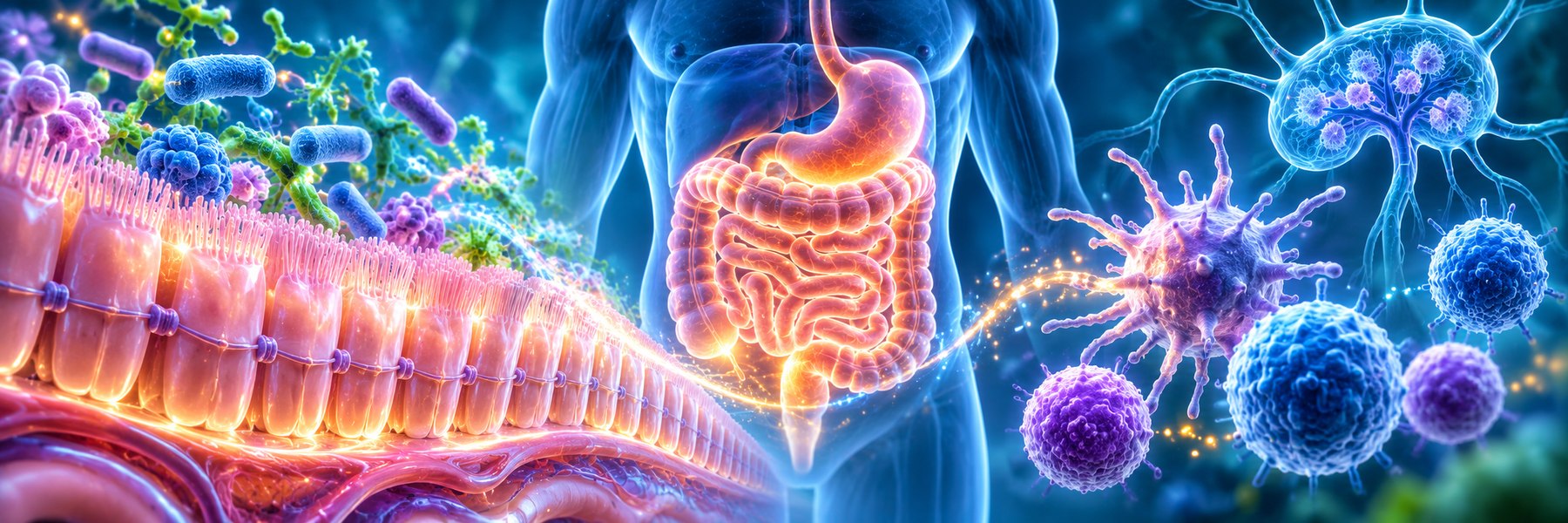
The gut is not merely a tube for processing food. It is a living interface where microbes, nerves, immune cells, and intestinal tissue continuously negotiate a healthy balance.
Peptide research is giving scientists new ways to explore that interface, from protecting the lining to understanding inflammation and cellular communication. The most promising future is not necessarily a single compound that “fixes the gut,” but more precise treatments that restore function in specific disorders and help the immune system do its job well.
Peptide Perspectives provides educational research coverage, not personal medical advice. BPC-157, KPV, VIP, LL-37, thymosin alpha-1, and thymosin beta-4 are not FDA-approved treatments for IBD, celiac disease, IBS, or general digestive repair. Symptoms such as persistent diarrhea, bleeding, unexplained weight loss, severe abdominal pain, or suspected malabsorption warrant medical assessment. Established treatment for diagnosed digestive disease should not be replaced with unapproved research peptides.