
Beyond simply raising testosterone, researchers are learning how the brain, pituitary gland, and testes coordinate fertility, sexual health, energy, and physical function. Peptide medicines and experimental signals offer very different ways to influence that system.
1. The Big Picture: Men’s Hormonal Health Is More Than a Testosterone Number
Testosterone plays an important role in male reproductive development, sexual function, muscle and bone maintenance, and red blood cell production. But the healthiest hormonal system is not necessarily the one producing the highest testosterone number. Hormonal health depends on a coordinated feedback network, as well as good sleep, metabolic health, emotional well-being, and reproductive goals.
Testosterone commonly declines gradually with age, but this is far from uniform. Obesity, certain medications, chronic illness, disrupted sleep, and pituitary or testicular disorders can all influence levels. Low energy or a change in libido does not automatically mean testosterone deficiency. The Endocrine Society’s July 2026 statement emphasizes diagnosis based on symptoms and repeatedly low, accurately measured testosterone, with reversible contributors considered first.
Peptides are especially interesting because the body already uses peptide hormones to coordinate reproduction. Gonadotropin-releasing hormone (GnRH) tells the pituitary gland when to release luteinizing hormone (LH) and follicle-stimulating hormone (FSH). Kisspeptin helps regulate GnRH neurons. Human chorionic gonadotropin (hCG) can imitate LH at the testes. Other peptide therapies act on FSH or on a separate growth hormone system.
This science already has real clinical applications. hCG, selected FSH preparations, and specialized pulsatile GnRH treatment have roles in certain reproductive disorders. Newer kisspeptin research is helping scientists understand how to activate the hormonal axis upstream. Growth hormone secretagogues offer another avenue for studying body composition and recovery, but they are not established treatments for low testosterone.
The central opportunity is precision: identifying which part of the endocrine system is not functioning as expected and choosing a treatment whose mechanism actually fits the problem.
2. The Biological Pathways: How Male Hormones Communicate
The Hypothalamus–Pituitary–Testes Axis
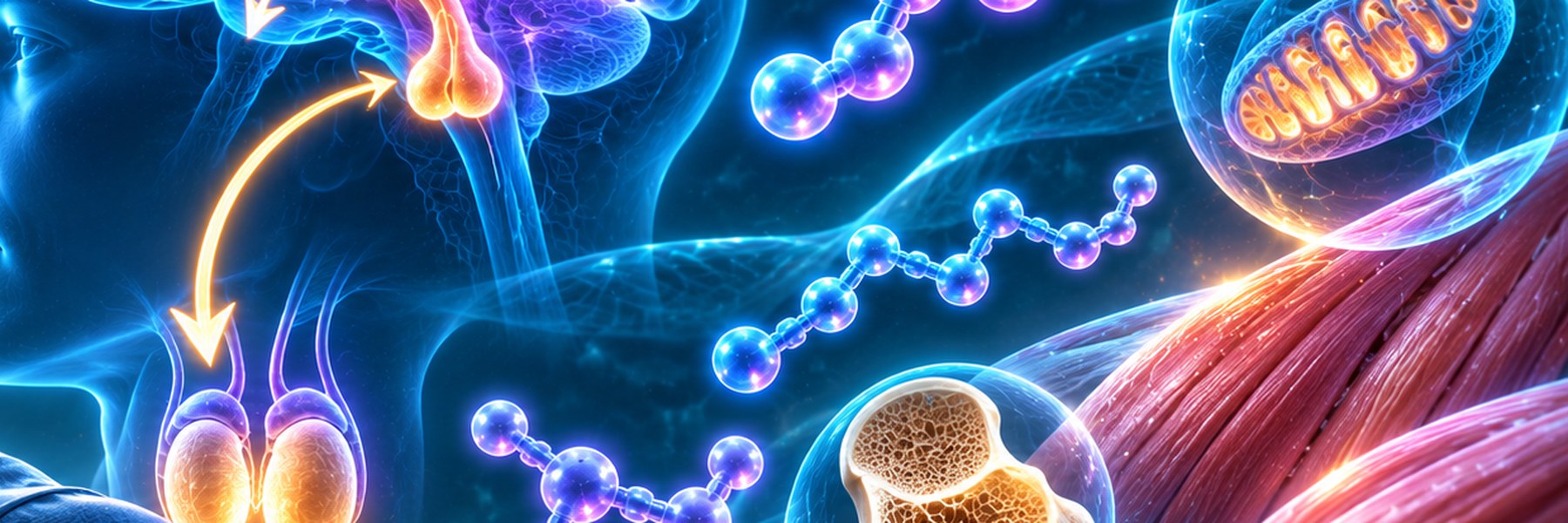
At the top of the reproductive signaling network, specialized neurons in the hypothalamus release GnRH in pulses. GnRH travels to the pituitary gland, prompting secretion of LH and FSH. These hormones then act on different cells within the testes.
- LH stimulates Leydig cells to produce testosterone.
- FSH primarily acts on Sertoli cells, which support developing sperm.
- Testosterone and estradiol provide negative feedback to the hypothalamus and pituitary, helping regulate the system.
- Inhibin B, produced by Sertoli cells, also contributes to feedback control of FSH.
The pattern of the signal matters. Brief, repeated GnRH pulses sustain pituitary responses. Prolonged stimulation by certain long-acting GnRH agonists can instead suppress LH and FSH following an initial surge. The same receptor system can therefore be used to restore reproductive activity or, in a very different clinical setting, suppress it.
Testosterone Production Is Not the Same as Sperm Production
Healthy sperm production depends on high local testosterone concentrations within the testes and Sertoli-cell support. A normal blood testosterone measurement does not guarantee normal sperm production, and increasing blood testosterone does not necessarily improve fertility.
One of the most important clinical distinctions is between primary hypogonadism, where the testes cannot respond adequately, and secondary or hypogonadotropic hypogonadism, where the hypothalamus or pituitary provides inadequate stimulation. Measuring LH and FSH alongside testosterone helps distinguish these situations.
External testosterone can reduce pituitary LH and FSH through feedback and may markedly suppress sperm production. That is why male infertility guidelines advise against exogenous testosterone for men who are pursuing current or near-future fertility.
Sexual Desire, Erections, and Hormones Are Related but Distinct
Testosterone matters for sexual health, but libido and erectile function also depend on neurological signaling, blood flow, sleep, mood, medications, and relationships. Kisspeptin has been studied in human sexual-brain-processing experiments. Bremelanotide (PT-141) acts on melanocortin signaling involved in sexual desire and arousal. Neither should be described as a proven way to increase testosterone or sperm counts in men.
Growth Hormone Signaling Is Another Axis
Growth hormone is primarily regulated through GHRH, somatostatin, and ghrelin-receptor signaling, leading to changes in growth hormone and IGF-1. Sermorelin acts on GHRH receptors; ipamorelin acts on ghrelin receptors. This axis intersects with metabolism and body composition but is not the same as the hypothalamus–pituitary–testes axis.
Raising growth hormone or IGF-1 does not establish improved testosterone levels, fertility, athletic recovery, or healthy aging.
3. Compounds Researchers Are Exploring
hCG: Directly Stimulating the Testes
Explore hCG on Peptide Perspectives.
Human chorionic gonadotropin (hCG) is a glycoprotein hormone with LH-like action. It binds the LH/chorionic gonadotropin receptor on testicular Leydig cells, stimulating testosterone production even when the pituitary is not supplying enough LH.
Unlike most experimental compounds discussed in men’s hormone forums, hCG has established human clinical uses. FDA-labeled products such as Pregnyl include indications for selected male hypogonadotropic conditions. In fertility care, clinicians may combine hCG with FSH because LH-like stimulation alone does not fully replace Sertoli-cell support.
Research potential: hCG illustrates the possibility of supporting endogenous testicular testosterone production in appropriately selected patients, rather than replacing testosterone from outside the body.
Limitations: It will not reliably correct primary testicular failure; estradiol-related effects, breast tenderness, gynecomastia, edema, and other reactions can occur. It is not FDA-approved as a general anti-aging or weight-loss therapy.
Kisspeptin: Activating Reproductive Hormones Upstream
Explore Kisspeptin-10 on Peptide Perspectives.
Kisspeptin is an endogenous peptide signaling family that activates the KISS1 receptor and helps regulate GnRH neurons. Researchers study kisspeptin-10 and kisspeptin-54 as tools for understanding the body’s reproductive hormone pulse generator.
A 2026 placebo-controlled study involving a small number of healthy men found that intermittent kisspeptin-10 exposure could sustain changes in gonadotropin secretion over 12 days, while responses to continuous exposure differed. This is an exciting demonstration of how the timing of a peptide signal can shape hormonal responses.
In a separate randomized crossover study of 32 men completing testing, kisspeptin-54 influenced brain responses to sexual stimuli and some measures of arousal. Those findings are not evidence of restored fertility or long-term testosterone normalization.
Research potential: Kisspeptin could inspire more physiologic and individualized approaches to reproductive endocrine disorders.
Limitations: Trials remain small; chronic safety, practical delivery, fertility outcomes, and long-term benefits remain uncertain. Kisspeptin is not FDA-approved for men’s testosterone optimization or infertility.
Gonadorelin (GnRH): Reproducing the Natural Pulse
Explore Gonadorelin on Peptide Perspectives.
Gonadorelin is a synthetic form of native GnRH, a ten-amino-acid peptide. Rather than acting directly on the testes, it stimulates the pituitary to release LH and FSH, provided the pituitary can respond.
The most compelling clinical application is specialized pulsatile GnRH therapy in men with hypothalamic GnRH deficiency. Research has shown restoration of testosterone and sperm production in carefully selected patients using programmed infusion pumps. A 2025 retrospective study reported improved gonadotropins and spermatogenesis in men with congenital hypogonadotropic hypogonadism.
Research potential: It provides a direct example of replacing a missing physiological pattern, not merely adding a chemical.
Limitations: Frequent pulsatile administration is not equivalent to occasional injections. Use of a brief gonadorelin dose alongside testosterone replacement has not been shown to reliably preserve fertility. Specialized pulsatile therapy is not an FDA-approved general male anti-aging treatment.
FSH and FSH-Containing Gonadotropins: Supporting Sperm Development
Explore the FDA-approved follitropin alfa prescribing information.
Follicle-stimulating hormone (FSH) is a glycoprotein hormone that acts on Sertoli cells in the testes. Clinical fertility therapy may use recombinant FSH, such as follitropin alfa, or FSH-containing human menopausal gonadotropin (hMG) preparations in appropriate circumstances.
For certain men with hypogonadotropic hypogonadism, FSH can be used with hCG to stimulate sperm production. This has substantial clinical evidence, including FDA-approved indications for selected products.
Research potential: FSH demonstrates why a treatment focused on testosterone alone may miss a crucial part of reproductive function.
Limitations: Treatment is specialist-directed, can take months, and is not effective for every cause of infertility. It is not intended for general energy, sexual performance, or anti-aging enhancement.
Long-Acting GnRH Agonists: Why More Stimulation Can Mean Less Testosterone
Explore FDA information about leuprolide.
Leuprolide and related GnRH agonists initially stimulate GnRH receptors but, with sustained exposure, suppress pituitary LH and FSH and therefore reduce testicular testosterone production. They are used clinically in defined conditions, including androgen-sensitive prostate cancer.
This may sound counterintuitive in an article about testosterone health, but it demonstrates a foundational lesson: the pattern and duration of receptor activation can reverse the endocrine outcome.
Research potential: GnRH agonists and antagonists help scientists study precise hormonal control and provide established therapies when suppressing testosterone is medically appropriate.
Limitations: They are not testosterone-boosting treatments; sustained androgen deprivation can affect bone density, metabolic health, sexual function, and other outcomes. Their use requires an appropriate medical indication.
Sermorelin: The Growth Hormone Axis, Not the Testosterone Axis
Explore Sermorelin on Peptide Perspectives.
Sermorelin is a 29-amino-acid GHRH fragment that stimulates growth hormone release through pituitary GHRH receptors. It has a historical FDA-approved product record for specialized endocrine uses, but the former Geref products were discontinued.
Research into GHRH signaling is relevant to IGF-1 regulation, sleep-associated endocrine changes, and body-composition biology. It is important, however, to distinguish growth hormone release from the reproductive LH/FSH/testosterone pathway.
Research potential: Sermorelin helps clarify how one endocrine axis can be pharmacologically activated without necessarily correcting another.
Limitations: No strong human evidence shows that sermorelin restores testosterone, preserves fertility, or produces broad healthy-aging benefits in otherwise healthy men. Safety and product-quality questions apply to unapproved formulations.
Ipamorelin: A Different Route to Growth Hormone Signaling
Explore Ipamorelin on Peptide Perspectives.
Ipamorelin is a synthetic peptide acting at the growth hormone secretagogue receptor, often called the ghrelin receptor. Human pharmacology studies show that it can stimulate GH secretion, giving researchers another tool to investigate endocrine pulse dynamics.
It works differently from sermorelin, even though both influence the GH axis. Related research compounds such as CJC-1295 (No DAC) are also studied for GHRH signaling, but none should be confused with direct LH or hCG action.
Research potential: Comparing GHRH and ghrelin-receptor pathways could improve understanding of endocrine timing, metabolism, and physiological GH regulation.
Limitations: Elevated GH is not evidence of higher testosterone, sperm production, improved libido, or superior recovery. There are no established FDA-approved anti-aging or male fertility indications for ipamorelin.
PT-141 (Bremelanotide): Sexual Desire Is Not a Testosterone Test
Explore PT-141 on Peptide Perspectives.
Bremelanotide (PT-141) is a melanocortin receptor agonist. Its principal research interest concerns central sexual desire and arousal signaling, not stimulation of testosterone synthesis in the testes.
The FDA-approved product Vyleesi is indicated for a specific form of hypoactive sexual desire disorder in premenopausal women. It is explicitly not indicated for men or for improving sexual performance. Research in men has explored related sexual-response pathways, but evidence does not establish routine use in male sexual disorders.
Research potential: PT-141 helps separate the brain’s sexual-motivation pathways from circulating testosterone levels, a distinction that may eventually lead to better-targeted therapies.
Limitations: It is not a testosterone or fertility treatment. Its known safety issues include nausea and transient blood-pressure increases, and the approved product is contraindicated in people with uncontrolled hypertension or known cardiovascular disease.
4. Comparing the Compounds
| Compound | Main target | Primary research or clinical interest | Evidence level / U.S. status | Key limitation |
|---|---|---|---|---|
| hCG | LH/CG receptor on Leydig cells | Testicular testosterone and selected infertility care | Established human treatment; FDA-labeled products | Does not replace FSH or fix primary testicular failure |
| Kisspeptin-10 | KISS1 receptor upstream of GnRH | LH/FSH pulse control, reproductive signaling | Small human trials; investigational | No established long-term testosterone or fertility benefit |
| Gonadorelin | Pituitary GnRH receptor | Pulsatile restoration of LH/FSH in selected disorders | Specialized human clinical evidence; no routine U.S. male anti-aging indication | Must reproduce appropriate pulses; not equivalent to occasional dosing |
| FSH / follitropin alfa | Sertoli-cell FSH receptor | Spermatogenesis, usually alongside hCG | Established approved clinical use in selected men | Does not treat all infertility or directly maximize testosterone |
| Leuprolide | Pituitary GnRH receptor, prolonged agonism | Testosterone suppression for defined diseases | FDA-approved for specified indications | Chronic exposure suppresses testosterone and fertility |
| Sermorelin | Pituitary GHRH receptor | Growth hormone release | Human endocrine history; former U.S. products discontinued | Not shown to correct low testosterone or infertility |
| Ipamorelin | Ghrelin/GHS receptor | GH secretion and endocrine physiology | Human pharmacology; not FDA-approved for male hormone optimization | GH response does not prove testosterone, fertility, or recovery benefits |
| PT-141 | Central melanocortin receptors | Sexual desire and arousal signaling | FDA approval applies only to a defined female indication | Not approved for men; does not increase testosterone or sperm production |
The essential distinction: A laboratory rise in LH, a higher serum testosterone reading, an increase in sperm count, improved sexual symptoms, and a higher quality of life are different outcomes. A compound that improves one cannot automatically be assumed to improve the others.
5. Where the Science Is Heading

Restoring Physiologic Signaling Rather Than Chasing a Number
One exciting direction is learning how to reproduce the timing and feedback of healthy endocrine systems. Kisspeptin’s early human trials and specialized pulsatile GnRH treatment show why hormonal rhythms matter as much as absolute concentrations.
Future trials could test more practical ways to deliver appropriate signals, while measuring durable clinical outcomes rather than short-lived hormone spikes.
Fertility-Preserving Treatment as a Distinct Goal
For men who want biological children, preserving or restoring sperm production may be more important than maximizing testosterone. hCG, FSH, and specialized GnRH treatment already demonstrate that fertility-focused endocrine medicine requires its own goals and monitoring.
New research will need to evaluate sperm production, time to conception, pregnancy outcomes, and safety, not only changes in blood testosterone.
Better Understanding of Age-Related Hormonal Changes
Aging affects the testes and other tissues, but declining testosterone is not always a disease. Researchers are examining how obesity, insulin resistance, sleep quality, inflammation, medications, and chronic illness interact with the endocrine system.
The 2026 Endocrine Society statement emphasizes individualized diagnosis and the importance of weight loss when obesity-related hypogonadism is the likely cause. This complements, rather than competes with, future peptide-based research.
Separating Reproductive and Growth Hormone Pathways
Sermorelin, ipamorelin, and related GHRH/GHS compounds are often discussed beside testosterone therapies. Carefully designed research must establish whether changes in GH or IGF-1 produce meaningful improvements in any intended outcome, without assuming they influence LH, FSH, or sperm production.
Longer-Term Safety and More Reliable Outcomes
Any endocrine intervention can affect feedback loops. Clinically important outcomes include fertility, sexual well-being, cardiovascular and metabolic health, red blood cell counts, bone health, and symptoms, as appropriate to the treatment.
For suspected low testosterone, a clinician may evaluate repeat morning testosterone alongside LH, FSH, prolactin when indicated, and other tests based on the history. If fertility is a goal, semen analysis may be more informative than testosterone alone. Decisions about any treatment should incorporate risk factors such as sleep apnea, blood pressure, prostate health, and relevant medications.
The next step forward is precision endocrine care, using a validated diagnosis, well-characterized products, appropriate delivery, and outcomes that genuinely matter to patients.
6. Explore the Compounds and Research
Direct Peptide Perspectives profiles
- hCG: LH-like signaling and testicular testosterone production
- Kisspeptin-10: Upstream reproductive hormone control
- Gonadorelin: GnRH pulses and LH/FSH signaling
- Sermorelin: Growth hormone-releasing hormone signaling
- Ipamorelin: Ghrelin-receptor growth hormone signaling
- CJC-1295 (No DAC): Related GHRH analogue research
- PT-141 (Bremelanotide): Sexual desire and melanocortin signaling
Established clinical and emerging research resources
- FDA labeling: FSH therapy for selected male infertility conditions
- FDA labeling: Leuprolide and testosterone suppression
- 2026 kisspeptin-10 human hormone study
- 2023 male kisspeptin-54 sexual desire study
- 2025 specialist pulsatile GnRH fertility research
- Endocrine Society: Testosterone therapy and diagnostic guidance
The Bigger Possibility
The future of men’s hormonal health may not be defined by a single drug that pushes testosterone higher. It may be shaped by better ways to recognize where a signal is missing, restore it when appropriate, and protect fertility and overall health along the way.
hCG and FSH already demonstrate the clinical value of targeted reproductive hormones. Pulsatile GnRH shows why the natural rhythm of a signal matters. Kisspeptin research points toward new upstream possibilities. Growth hormone secretagogues and melanocortin peptides help clarify different, sometimes overlapping aspects of well-being, without being substitutes for testosterone or fertility treatment.
The most promising future is one where hormone treatment is tailored to the person’s biology and goals, not to a number alone.
Peptide Perspectives provides educational research information, not individualized medical advice. Many compounds discussed here are unapproved for general male hormone optimization or healthy aging. Clinical testosterone or fertility concerns require individualized medical evaluation, and research-only peptide products may lack demonstrated human safety, identity, and purity. Exogenous testosterone can suppress sperm production, and therapies that change hormone feedback should not be self-directed.