
Peptide Perspectives | Stacking & Synergy Series | Research goal: Fertility & Reproductive Function
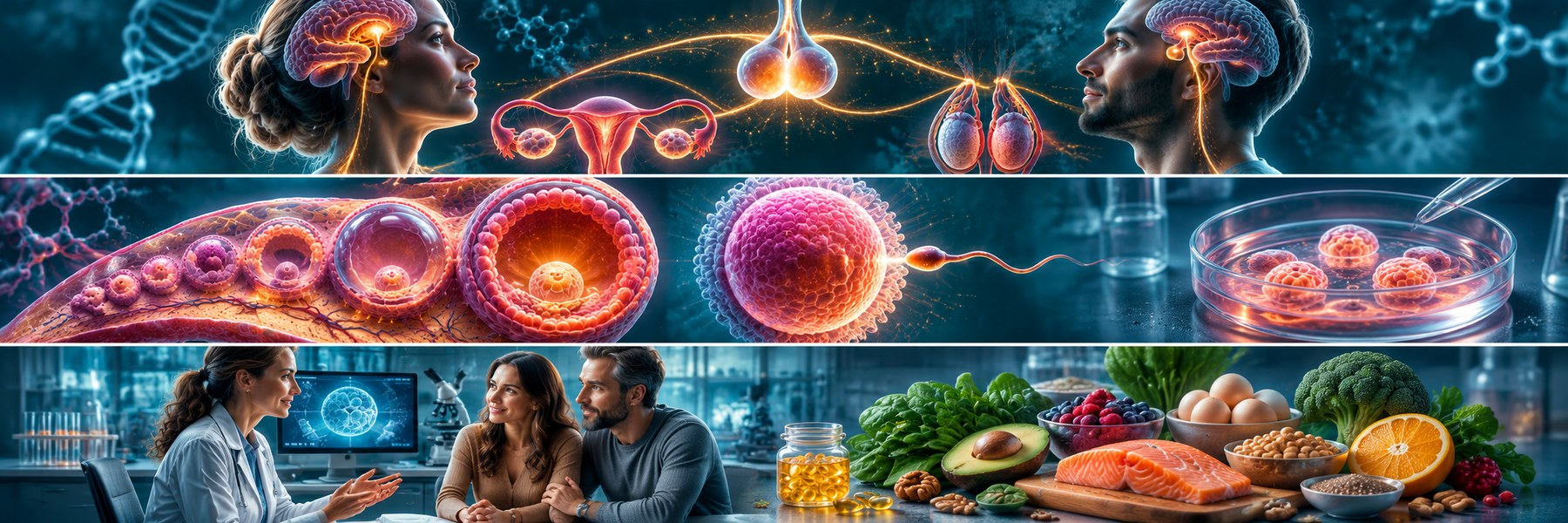
Fertility is not controlled by a single hormone, nutrient, or organ. It depends on a carefully timed conversation among the brain, pituitary gland, ovaries or testes, and reproductive tissues. That conversation influences the maturation of eggs, the production of sperm, ovulation, testosterone, and the hormonal support required for pregnancy.
The science of reproductive medicine offers a particularly revealing example of when a combination can be helpful. Clinicians already use selected gonadotropins and hormonal triggers together to address specific physiological problems. At the same time, emerging peptides such as kisspeptin offer new possibilities for understanding how those signals can be coordinated more precisely.
The key distinction is clinically established fertility treatment versus a plausible but unvalidated peptide stack. Increasing LH, FSH, or testosterone is not, by itself, proof of better egg quality, more pregnancies, or more live births. Fertility interventions require a diagnosis, carefully timed monitoring, and a plan tailored to the person or couple.
Research and medical disclaimer: This article is educational. It is not a protocol for self-administering gonadotropins, kisspeptin, or research peptides. Fertility hormones can cause ovarian hyperstimulation, multiple pregnancy, ovarian cysts, or disturbances of reproductive function. Pregnancy and fertility care require qualified reproductive specialists.
1. The big picture: why reproductive fertility is a coordination challenge
A successful conception involves multiple, distinct events. In people with ovaries, follicles must be recruited, a dominant follicle may develop, an egg must mature, and ovulation or egg retrieval must occur at the right moment. In people with testes, healthy spermatogenesis depends on sufficient intratesticular testosterone, Sertoli-cell support, and the function of the seminiferous tubules. Both pathways depend on coordinated signals from the hypothalamus and pituitary.
This means there is no single universal “fertility stack.” The treatment for absent ovulation due to polycystic ovary syndrome (PCOS) differs substantially from treatment for obstructed fallopian tubes, diminished ovarian reserve, low sperm production from pituitary hormone deficiency, or genetic causes of infertility. Some problems require medications. Others require procedures, surgery, donor gametes, or assisted reproductive technology rather than an additional peptide.
What should a successful intervention accomplish? Ideally, it should improve meaningful outcomes such as ovulation when appropriate, mature egg yield, sperm production, clinical pregnancy, or live birth, while keeping complications acceptably low. Hormone concentrations and laboratory biomarkers are important tools, but they are intermediate measurements.
2. How the hypothalamic-pituitary-gonadal axis works
The reproductive hormone network is commonly called the hypothalamic-pituitary-gonadal (HPG) axis.
- Kisspeptin signaling helps stimulate hypothalamic neurons that release gonadotropin-releasing hormone (GnRH). It is an upstream regulator of reproductive hormone activity.
- Pulsatile GnRH signals the anterior pituitary to release luteinizing hormone (LH) and follicle-stimulating hormone (FSH). The pattern of stimulation matters: continuous exposure to some GnRH agonists eventually suppresses pituitary responsiveness.
- FSH supports follicular growth and granulosa-cell function in ovaries. In testes, it acts principally through Sertoli cells that support developing sperm.
- LH supports ovarian steroid production, ovulation-related maturation, and corpus luteum function. In testes, LH stimulates Leydig-cell testosterone production.
- hCG activates the LH receptor. This is why it can act as an ovulation or oocyte-maturation trigger in certain female fertility protocols, and why it can stimulate testosterone production in selected men with gonadotropin deficiency.
- Estradiol, progesterone, inhibins, and testosterone provide feedback and coordinate reproductive tissue function.
These signals are not simply additive. Raising one hormone at the wrong time can interrupt a cycle, and raising testosterone with an external testosterone product can suppress the very signals needed for sperm production.
Female and male reproductive pathways: similar hormones, different outcomes
In ovarian fertility care, FSH-driven follicle growth and precise trigger timing are often central. In male hypogonadotropic hypogonadism, hCG may stimulate intratesticular testosterone and additional FSH may be needed for sperm production. These are different uses of overlapping biological signals, not interchangeable treatment plans.
3. Peptide combinations and clinical strategies researchers are examining
A. FSH + hCG: established, diagnosis-dependent combination
What it targets: FSH receptors and LH receptors at different points in ovarian or testicular biology.
In controlled ovarian stimulation, exogenous FSH is used to support multiple follicle development, while hCG may be used later as a maturation trigger. In male hypogonadotropic hypogonadism, hCG can stimulate testosterone production inside the testes while FSH can support spermatogenesis. Those are two distinct clinical contexts, not one standardized schedule.
Why the combination makes sense: In each setting, the drugs support physiologically complementary roles. Here, combination therapy is not merely theoretical. It is established in selected treatment pathways under specialist care.
Limitations and risks: The specific dose and timing depend on reproductive diagnosis, ultrasound findings, hormone levels, semen results, and treatment objectives. Risks include ovarian hyperstimulation syndrome (OHSS), multifetal pregnancy in some female treatment settings, or inadequate response in certain male conditions. More gonadotropin stimulation does not guarantee higher-quality eggs or sperm.
B. GnRH agonist + hCG: dual-trigger approaches in IVF
What it targets: An endogenous LH/FSH surge through a GnRH agonist and LH receptor activity through hCG.
In selected assisted-reproduction protocols, a GnRH agonist and hCG may both be used around final oocyte maturation. This approach is called a dual trigger and is different from using a GnRH agonist during earlier stages of ovarian stimulation to prevent premature ovulation.
What evidence supports: Clinical research has explored whether dual triggers improve mature egg yield or pregnancy outcomes in particular populations. But the evidence does not support using dual trigger routinely in everyone. The updated 2025 ESHRE guideline advises against routinely adding a GnRH agonist to hCG in predicted normal responders and low responders, and generally discourages the addition in high responders, where OHSS risk is important. An agonist-only trigger with a freeze-all strategy may be preferable for some high-risk patients.
Limitations and risks: hCG exposure can increase OHSS risk. Hormonal timing and luteal-phase support matter. A dual trigger is not automatically safer or more effective than a single appropriately selected trigger.
C. Kisspeptin + hCG: an investigational upstream/downstream pairing
What it targets: Kisspeptin stimulates upstream hypothalamic reproductive signaling; hCG directly activates the LH receptor.
Kisspeptin is one of the most interesting emerging reproductive peptides because its biology offers a way to influence the reproductive hormone cascade closer to the brain. Human research has already established that kisspeptin-54 can trigger oocyte maturation during IVF in investigational settings. In a phase 2 study of 60 women at high risk of OHSS, egg maturation occurred in 95% of participants, though this was not a definitive comparative efficacy trial.
What remains hypothetical: The separate biological actions of kisspeptin and hCG do not establish that giving both is superior to an established trigger. Combining an endogenous gonadotropin response with direct LH-receptor stimulation could introduce redundant effects or additional risk, depending on timing.
Research opportunity: Determine whether precisely selected hormone-response profiles predict greater benefit from an investigational kisspeptin-based trigger, rather than simply adding hCG by default.
D. Kisspeptin + GnRH-related therapy: testing signaling at adjacent steps
What it targets: Kisspeptin stimulation upstream of GnRH and drug effects at GnRH receptors or on the pituitary response.
At first glance, targeting two neighboring steps might seem to offer tighter control over reproduction. But physiology is more complicated. A GnRH antagonist can block signaling that kisspeptin normally relies on; a sustained GnRH agonist regimen may suppress downstream gonadotropin release after an initial flare.
Evidence: Human studies support kisspeptin’s biological activity and selected IVF applications, while GnRH therapies are well established for specific reproductive procedures. That does not mean their concurrent use has established additive fertility benefits.
Key consideration: These pathways may overlap or even counteract one another. Whether a sequence of interventions makes sense depends entirely on the protocol, not on the number of peptides used.
E. hCG + FSH in male hypogonadotropic hypogonadism: a second clinical example
Although this uses the same component classes as Combination A, the underlying goal is different. In men whose hypothalamus or pituitary produces insufficient gonadotropin signals, hCG can restore testicular LH-like stimulation. FSH may be added to support sperm development when indicated. Specialist treatment can sometimes restore spermatogenesis, but response may take months and varies with the underlying disorder and testicular development.
This strategy does not apply universally to low sperm counts, and it does not correct all genetic, obstructive, or primary testicular causes of infertility. In men who wish to preserve fertility, exogenous testosterone monotherapy is generally inappropriate because it may suppress sperm production.
F. Letrozole-based ovulation induction, with or without specialist-directed gonadotropin treatment: a clinical comparator
Not every useful fertility combination consists of peptides. For many women with PCOS-related anovulatory infertility, letrozole is a first-line ovulation-induction medication, often used without gonadotropins. Where a response is inadequate or additional diagnoses are present, specialist-directed alternatives may include gonadotropin stimulation or assisted reproductive procedures.
This comparator matters because successful infertility treatment begins with the underlying diagnosis. A familiar non-peptide medication may have stronger clinical support than an experimental research stack.
G. Progesterone support after selected assisted-reproduction cycles: a different hormonal objective
Progesterone support is common in selected IVF protocols because endometrial receptivity and early pregnancy support are separate objectives from growing follicles or triggering egg maturation. This is not an argument for adding progesterone to every fertility plan. Rather, it illustrates that different phases of treatment may need different interventions.
4. Comparing the approaches: mechanism, evidence, and limitations
| Approach | Main pathway | Evidence maturity | Most important limitation |
|---|---|---|---|
| FSH + hCG in selected female protocols | Follicle growth and LH-receptor activation | Established specialist treatment | OHSS, multiple pregnancy and monitoring requirements |
| hCG + FSH for male hypogonadotropic hypogonadism | Intratesticular testosterone and Sertoli-cell support | Established for selected diagnoses | Not universally effective for male-factor infertility |
| GnRH agonist + hCG dual trigger | Endogenous LH/FSH release plus LH-receptor activation | Human trials; selective clinical use | Not routinely superior; OHSS risk varies |
| Kisspeptin + hCG | Upstream reproductive signaling plus LH-receptor activation | Investigational pairing | No validated combined safety or pregnancy advantage |
| Kisspeptin + GnRH-related therapy | Neighboring HPG-axis signals | Mechanistic hypothesis | Can overlap, interfere or suppress signaling |
| Letrozole-based ovulation induction | Ovarian estrogen feedback and ovulation | Guideline-supported in selected anovulation | Does not treat every cause of infertility |
| Progesterone after selected IVF cycles | Luteal/endometrial support | Established in selected protocols | Not an egg- or sperm-producing treatment |
Important: The existence of human evidence for an individual agent is not evidence for every combination containing it. The best studies assess clinical pregnancy and live birth, along with complications, not just transient hormone levels or egg counts.
5. Complementary supplements and reproductive nutrition
Nutrition can support reproductive health, particularly when it corrects a deficiency or supports a healthy pregnancy. But fertility nutrition and fertility treatment are not the same thing. A supplement that improves an antioxidant marker or semen parameter has not necessarily improved pregnancy or live birth rates.
| Supplement or nutrient | Why it is discussed | Evidence-based interpretation and cautions |
|---|---|---|
| Folic acid / folate | Early embryo development and DNA synthesis | 400 mcg/day folic acid before conception and during early pregnancy helps prevent neural-tube defects; it is not a universal treatment for infertility |
| CoQ10 | Mitochondrial electron transport and antioxidant pathways | Small studies explore egg or sperm-related markers; conclusive live-birth benefit is not established |
| Zinc | Reproductive enzyme function and normal hormone biology | Correct documented inadequacy; excess zinc can cause copper deficiency and other harms |
| Selenium | Selenoprotein antioxidant systems and thyroid function | Adequacy matters, but excessive supplementation can be toxic; fertility-outcome data remain inconsistent |
| Vitamin D | Bone, metabolic and reproductive signaling | Correct deficiency when identified; broad supplementation does not reliably improve conception outcomes in all populations |
| Omega-3 fatty acids | Membrane composition and inflammatory signaling | Supports overall nutrition; evidence for fertility improvement from supplements alone is insufficient |
| Myo-inositol | Insulin-related signaling, especially in PCOS | May help selected metabolic measures, but international PCOS guidelines classify use for infertility as experimental |
| Iron, when deficient | Oxygen transport and maternal health | Evaluate and treat deficiency; excessive iron is not beneficial and may be harmful |
| Vitamin B12 | DNA synthesis and neurological function | Important particularly with restrictive diets, malabsorption or deficiency |
| Iodine and choline | Thyroid and fetal nervous-system development | Important in pregnancy planning, with individualized intake and avoidance of excess iodine |
| Protein and adequate energy intake | Hormone production, metabolism and overall nutritional resilience | Undernutrition can disrupt reproductive cycles; extreme dieting can undermine fertility |
The importance of folic acid
Folic acid is different from the more speculative “fertility supplements” because it has a proven preventive benefit for early fetal development. The CDC recommends 400 micrograms of folic acid daily for people who can become pregnant. Higher amounts may be indicated for certain risk histories under clinical supervision, but should not be guessed from a supplement stack.
CoQ10, antioxidants, and the evidence problem
Antioxidants are frequently promoted for sperm and egg quality because reproductive tissues are sensitive to oxidative stress. That makes their mechanisms plausible, but trials need to demonstrate improved fertility, not just improved laboratory measurements.
In the 2025 SUMMER randomized trial, a combined antioxidant supplement did not improve ongoing pregnancy rates in men undergoing fertility care compared with placebo. The AUA/ASRM male infertility guideline similarly finds the clinical utility of many fertility supplements uncertain.
Myo-inositol in PCOS
Myo-inositol is widely discussed because insulin signaling can be relevant to PCOS. Still, international evidence-based guidance does not establish its use as an effective fertility therapy. It is better understood as a research-informed, optional, condition-specific discussion with a clinician than as a required addition to a fertility stack.
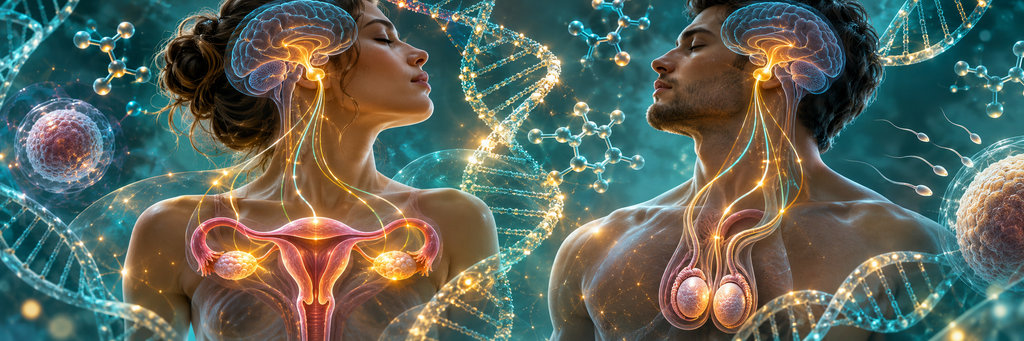
6. Special focus: male and female infertility require different strategies
When the challenge involves ovulation or egg development
For someone with ovaries, clinicians may evaluate menstrual patterns, ovulation, ovarian reserve, tubal factors, uterine anatomy, age-related changes, and metabolic conditions such as PCOS. An ovulation-induction medication may be appropriate when ovulation is absent. IVF may be considered when the issue involves tubal disease, multiple causes, or other clinical considerations. Even within IVF, the safest trigger strategy differs according to response and OHSS risk.
When the challenge involves sperm production
Male evaluation commonly includes semen testing, medical history, examination, and selected hormone or genetic studies. Low sperm production can reflect pituitary or hypothalamic signaling problems, testicular dysfunction, prior medication exposures, obstruction, varicocele, or other causes. hCG and FSH can help some men with hypogonadotropic hypogonadism, but are not a remedy for every semen abnormality.
A critical distinction: Exogenous testosterone can improve serum testosterone levels while simultaneously lowering LH and FSH, potentially reducing or stopping sperm production. More testosterone in the bloodstream can therefore mean less fertility in some circumstances.
Why timing and monitoring are inseparable from treatment
Reproductive hormone treatments affect feedback loops that change across the menstrual cycle and over months of sperm development. Monitoring may include ultrasound follicle counts, estradiol and progesterone, gonadotropin measurements, semen analyses, pregnancy testing, and assessments for adverse effects. A combination that is effective in one phase of treatment can be inappropriate in another.
Safety considerations before any reproductive peptide combination
- Ovarian hyperstimulation syndrome: Gonadotropins and hCG can cause an exaggerated ovarian response; severe cases may involve fluid shifts, clots, and organ complications.
- Multiple gestation: Certain ovarian stimulation strategies increase the chance of multifetal pregnancy, with implications for maternal and infant health.
- Unknown pregnancy safety: Research peptides such as kisspeptin are not validated as over-the-counter fertility treatments, and experimental exposure around conception creates additional concerns.
- Hormone feedback suppression: Exogenous testosterone and improperly timed GnRH therapies may suppress reproductive signaling rather than support it.
- Product quality: Unregulated peptide preparations may have uncertain identity, potency, sterility, and contaminants.
- Delays in diagnosis: Experimenting with multiple agents can postpone appropriate evaluation of tubal, uterine, genetic, endocrine, or male-factor causes.
The central research challenge is not merely to increase one hormone. It is to find treatment sequences that improve live birth while minimizing risk and burden.
7. Where the science is heading
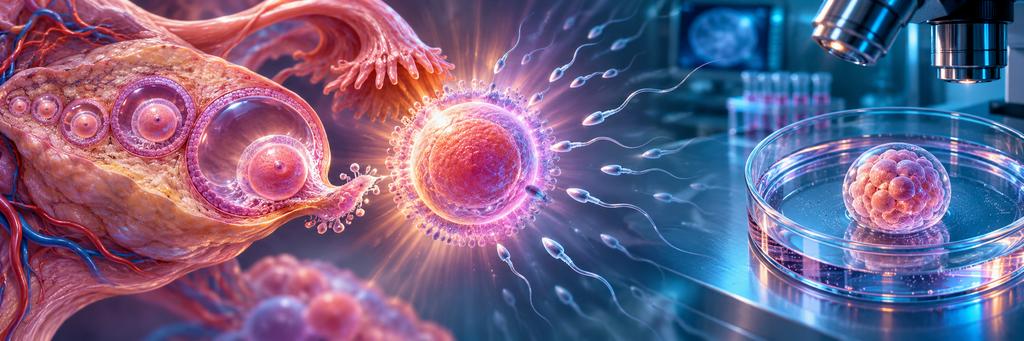
Kisspeptin research illustrates a promising direction: instead of bypassing the brain-to-gonad network entirely, researchers may be able to influence upstream reproductive timing under carefully controlled conditions. Future trials could explore biomarker-guided trigger selection, lower OHSS risk, improved mature egg yield, and patient-specific dosing strategies.
Other major opportunities include more personalized gonadotropin therapy for male hypogonadotropic hypogonadism, better selection of ovulation-induction strategies for PCOS, and high-quality research distinguishing changes in sperm markers from real-world fertility outcomes.
To establish a new combination as clinically useful, research would need direct comparisons against standard care, adequate safety monitoring, meaningful pregnancy and live-birth outcomes, and reproducible results across diverse populations. A greater number of hormonal pathways does not necessarily mean a greater likelihood of conception.
8. Explore the compounds
- Kisspeptin — upstream reproductive neuropeptide signaling and experimental IVF research.
- Human chorionic gonadotropin (hCG) — LH-receptor activity and selected fertility protocols; use the directory search if the compound profile is not published.
- Triptorelin — GnRH agonist mechanisms and reproductive endocrine research.
- GnRH analogs — agonist and antagonist clinical applications; check the directory for individual profiles.
- Follicle-stimulating hormone (FSH) — ovarian follicular development and spermatogenesis; search directory for profile availability.
Directory-note: individual compound URLs should be verified on the live Peptide Perspectives website before publication; the directory links are safe fallbacks where profiles are not confirmed.
Research references and further reading
- AUA/ASRM Diagnosis and Treatment of Infertility in Men, guideline.
- ASRM: Prevention of Moderate and Severe Ovarian Hyperstimulation Syndrome.
- ESHRE 2025 Ovarian Stimulation Guideline Update.
- Kisspeptin-54 Triggers Egg Maturation in IVF.
- Kisspeptin-54 in Women at High Risk for OHSS.
- International Evidence-Based PCOS Guideline.
- SUMMER Randomized Trial of Antioxidants and Male Fertility.
- CDC: Folic Acid Facts for Clinicians.
Conclusion: The most compelling reproductive combinations are not the most complicated ones. They are those that address a verified fertility problem, act at the right physiological steps, and are supported by meaningful clinical outcomes. Emerging peptides such as kisspeptin offer genuine scientific promise, but the path from hormonal signaling to safer, more successful conception requires careful research and individualized medical care.