
The skeleton is not a fixed framework. It is living tissue that continuously renews itself. From FDA-approved bone-building peptides to experimental fracture-repair signals, researchers are discovering how to preserve skeletal strength and help people remain active as they age.

1. The Big Picture: Strong Bones Support a Lifetime of Movement
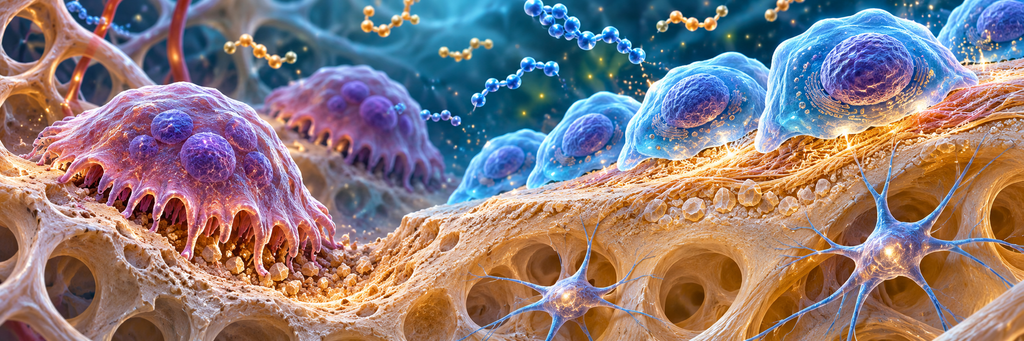
We often think of bones as the body’s permanent scaffolding. In reality, the skeleton is dynamic. Every day, specialized cells remove small areas of aging bone and replace them with new tissue. This carefully coordinated process helps bones adapt to movement, repair microscopic damage, and maintain the strength needed for walking, lifting, and everyday independence.
With aging, especially after menopause, bone breakdown may outpace bone formation. Bone can become more porous and vulnerable to fractures, sometimes without warning symptoms. Osteoporosis is particularly concerning because a fracture of the hip or spine can lead to pain, loss of mobility, and long-term changes in independence. Age, prior fractures, long-term glucocorticoid use, hormonal changes, nutritional deficiencies, and certain medical conditions all affect skeletal health.
Peptide medicine has already made meaningful progress here. Teriparatide and abaloparatide are FDA-approved bone-building peptide drugs. In carefully selected people with osteoporosis at high fracture risk, their clinical trials have shown more than improved laboratory markers or bone scans: they have demonstrated fewer fractures. A separate approved biologic, romosozumab, targets the bone-regulation protein sclerostin and offers another way to build bone.
At the exploratory end of the field, BPC-157, growth hormone secretagogues such as ipamorelin and CJC-1295, IGF-1-related compounds, and oral collagen peptides are being investigated through very different research approaches. Some have encouraging animal findings, others small human studies, and some have no controlled human bone-outcome data at all.
The most important distinction is that raising bone mineral density (BMD), healing an existing fracture, and preventing a future fracture are different accomplishments. New therapies must ultimately demonstrate that they make the skeleton safer and people’s lives better, not merely change a promising cellular signal.
2. The Biological Pathways: How Bone Builds, Breaks Down, and Repairs Itself
Osteoblasts and Osteoclasts: The Construction and Recycling Teams
Osteoblasts form new bone matrix, including type I collagen, and support its mineralization. Osteoclasts remove older bone by resorbing mineralized tissue. Osteocytes, former osteoblasts embedded in bone, act as sensors that help coordinate responses to mechanical loading and tissue damage.
Healthy bone remodeling requires these cells to work together. Osteoporosis develops when the balance, structure, and quality of bone become unfavorable. A drug that stimulates bone formation is called anabolic; one that primarily slows breakdown is antiresorptive. Both approaches can reduce fracture risk in appropriate patients, and many treatment plans use them in sequence.
PTH and PTHrP: Why Timing Changes the Effect
Parathyroid hormone (PTH) helps control calcium and skeletal mineral balance. Continually excessive PTH exposure can favor bone resorption. In contrast, intermittent pharmaceutical PTH-receptor stimulation can favor bone formation. Teriparatide, the active 1–34 portion of human PTH, and abaloparatide, an analogue related to PTH-related protein (PTHrP), both activate the PTH1 receptor in clinically useful ways.
This is a powerful example of peptide biology: the pattern, duration, receptor activity, and formulation matter as much as the general hormone family.
Wnt and Sclerostin: Signals That Regulate Bone Formation
The Wnt/β-catenin pathway contributes to osteoblast activity and skeletal development. The protein sclerostin, made mainly by osteocytes, restrains part of this bone-building signal. Romosozumab is a monoclonal antibody that blocks sclerostin, increasing bone formation and decreasing resorption over parts of its treatment course. It is a protein biologic, not a short peptide, but belongs in the comparison because it demonstrates another clinically successful regenerative pathway.
Growth Hormone and IGF-1: Supporting Growth Is Not the Same as Preventing Fractures
Growth hormone (GH) from the pituitary can increase circulating insulin-like growth factor-1 (IGF-1), which participates in bone growth and tissue metabolism. GH release can be influenced through the GHRH pathway or the ghrelin receptor. CJC-1295 and ipamorelin exploit these pathways experimentally.
A rise in GH or IGF-1 does not prove a reduction in fractures, and experimental IGF-1 analogues do not become osteoporosis drugs simply because endogenous IGF-1 is important for skeletal biology.
Fracture Healing: More Than Making New Bone
After a fracture, the body moves through overlapping phases of inflammation, formation of a soft callus, mineralized hard-callus formation, and remodeling. Blood supply, stable alignment, adequate nutrition, and mechanical conditions all matter. Research on BPC-157 and other candidate signals asks whether they can influence these processes.
A compound that speeds a radiographic sign of healing may still fail to improve pain, strength, return to activity, or the frequency of nonunion. Healing an existing fracture and preventing future osteoporosis-related fractures require separate evidence.
3. Compounds Researchers Are Exploring
Teriparatide: An Approved Peptide That Builds Bone
Explore the current Forteo (teriparatide) prescribing information.
Teriparatide is the synthetic active 34-amino-acid fragment of human parathyroid hormone. Its established use is in selected patients with osteoporosis at high fracture risk, including postmenopausal women and certain men, as well as some patients with glucocorticoid-associated osteoporosis.
In a pivotal randomized human trial, the approved teriparatide regimen reduced new vertebral fractures by approximately 65% and nonvertebral fragility fractures by approximately 53% compared with placebo. These relative risk reductions describe specific trial populations, not the chance of avoiding a fracture for any individual.
Teriparatide has also been investigated for fracture healing. A randomized study of 102 women with wrist fractures reported an exploratory signal at one studied dose, while its prespecified primary comparison was not significant. A 2026 systematic review found that teriparatide might shorten time to fracture union in certain settings, although additional prospective trials are needed.
Why it is promising: Teriparatide proves a peptide can produce clinically meaningful new bone formation and fracture reduction. It also provides an important starting point for future fracture-repair trials.
Limitations: It is not generally FDA-approved simply to speed healing of an existing fracture. Careful prescribing is needed with disorders of calcium metabolism, certain skeletal malignancy risks, and other listed precautions. Treatment duration is normally limited; use beyond two years is reserved for selected people who remain or become high risk.
Abaloparatide: A PTHrP-Inspired Approach to Bone Formation
Explore the current Tymlos (abaloparatide) prescribing information.
Abaloparatide is a synthetic peptide analogue of PTH-related protein that activates the PTH1 receptor. It is FDA-approved to treat postmenopausal women with osteoporosis at high fracture risk and to increase bone density in men with osteoporosis at high fracture risk, with the wording of the labeled benefit differing by population.
In the randomized ACTIVE Phase 3 trial, which enrolled 2,463 postmenopausal women, abaloparatide reduced new vertebral and nonvertebral fractures compared with placebo over 18 months and improved BMD at the lumbar spine and hip. A teriparatide arm provided useful context, but the trial was not designed to establish overall superiority of one medicine over the other.
Why it is promising: Abaloparatide shows how scientists can adjust a peptide hormone’s receptor behavior and translate that work into a validated fracture-prevention medicine.
Limitations: Lightheadedness, changes in blood or urine calcium, and other adverse effects require clinical oversight. Its label advises against more than two years of lifetime treatment because safety and efficacy beyond that duration have not been evaluated. It is not a general bone-rejuvenation supplement.
Romosozumab: Blocking Sclerostin to Build Bone
Explore the current Evenity (romosozumab) prescribing information.
Romosozumab is a monoclonal antibody, not a short peptide. It inhibits the protein sclerostin to change the balance between bone formation and resorption. It is FDA-approved for postmenopausal women with osteoporosis at high risk for fracture.
In the large FRAME randomized trial, new vertebral fractures occurred in approximately 0.5% of treated participants versus 1.8% of placebo participants over 12 months, a relative reduction of about 73%. Treatment is limited to a 12-month course and is usually followed by an antiresorptive drug to preserve the gains.
Why it is promising: Romosozumab demonstrates how insights into the molecular brakes on bone formation can produce substantial clinical benefits.
Limitations: It has an important boxed warning for possible heart attack, stroke, and cardiovascular death and should not be initiated after a heart attack or stroke within the preceding year. It also requires attention to calcium status and other risks. It is not an interchangeable alternative to every PTH analogue.
BPC-157: Experimental Repair Signals, Not Proven Human Bone Regeneration
Explore BPC-157 on Peptide Perspectives.
BPC-157 is a synthetic 15-amino-acid peptide studied in animal models of tissue injury, including some models involving bone, ligaments, and tendon-to-bone healing. Investigators have explored changes in vascular-associated signaling, inflammation, and tissue organization.
These studies provide a scientific reason to ask questions about fracture repair, but they have not established clinical efficacy. A 2025 orthopedic systematic review found predominantly preclinical musculoskeletal research, and a 2026 orthopedic review emphasized the lack of validated human bone-healing protocols or controlled orthopedic efficacy trials.
Why it is promising: BPC-157 may help reveal local signals involved in repair and the interactions among connective tissue, blood supply, and healing bone.
Limitations: There is no reliable human evidence that it restores bone density, unites a fracture, prevents osteoporosis, or reduces future fractures. It is not FDA-approved, and research-grade vial quality, sterility, dosing, and long-term safety are not established.
Ipamorelin: Growth Hormone Secretagogue Research in Bone Models
Explore Ipamorelin on Peptide Perspectives.
Ipamorelin is a synthetic peptide that activates the ghrelin or growth hormone secretagogue receptor, stimulating GH release. Scientists have explored whether this could influence bone formation in circumstances where growth signaling is disrupted.
A 2001 study in adult rats investigated glucocorticoid-associated bone and muscle losses. In that model, animals receiving ipamorelin alongside glucocorticoids had a greater periosteal bone formation rate than those receiving glucocorticoids alone.
Why it is promising: These observations suggest that the GH secretagogue pathway can influence bone-cell activity under certain experimental conditions and could inform future research on skeletal effects of altered GH signaling.
Limitations: A rat periosteal measurement does not show that ipamorelin prevents human osteoporosis, strengthens the hip, or speeds fracture healing. There are no adequate human fracture-prevention trials, and ipamorelin is not FDA-approved for bone health.
CJC-1295: Raising GH and IGF-1 Is Not a Bone Outcome
Explore CJC-1295 with DAC and CJC-1295 without DAC.
CJC-1295 describes related experimental analogues of growth hormone-releasing hormone (GHRH). The long-acting DAC-containing compound and products marketed as CJC-1295 without DAC have materially different exposure profiles and should not be equated.
In small controlled human pharmacology studies, CJC-1295 with DAC raised GH and IGF-1 levels for several days. That demonstrates endocrine activity, not bone formation or fracture prevention.
Why it is promising: Understanding patterns of GH release may help scientists explore how the growth axis contributes to bone turnover and skeletal health in specific endocrine disorders.
Limitations: No credible randomized human evidence shows that CJC-1295 prevents fractures, increases clinically meaningful bone strength, or speeds fracture healing. Neither version is FDA-approved for osteoporosis, and the DAC data cannot be transferred to the no-DAC peptide.
IGF-1 and Its Experimental Analogues: Growth Signals Need Precision
Explore IGF-1 LR3 and IGF-1 DES.
Insulin-like growth factor-1 (IGF-1) is an important hormone and local growth signal involved in childhood skeletal growth, osteoblast activity, and the relationship between muscle and bone. Its biology makes it highly relevant to understanding bone repair.
There is an FDA-approved recombinant human IGF-1 medicine, mecasermin, for specific severe childhood growth disorders, not osteoporosis or routine fracture healing. Research-market IGF-1 LR3 and IGF-1 DES are engineered analogues with different molecular properties; they are not interchangeable with approved mecasermin.
Why it is promising: IGF-1 signaling can help researchers study where local growth signals might enhance bone formation or callus maturation, especially in combination with tissue engineering.
Limitations: Human fracture-prevention benefits from IGF-1 LR3 or DES have not been established. Systemic IGF-1 effects can create risks including hypoglycemia and unwanted tissue growth, and experimental analogues lack validated human bone-use safety data.
Oral Collagen Peptides: Human BMD Findings Without Proven Fracture Reduction
Explore the randomized collagen-peptide bone-density study.
Hydrolyzed collagen peptides are mixtures of short dietary protein fragments taken orally. They differ fundamentally from a single engineered injectable peptide. Because type I collagen forms much of bone’s organic framework, nutritional collagen research has investigated whether particular formulations influence bone turnover.
In a 12-month randomized placebo-controlled study of 131 postmenopausal women, a specific collagen peptide formulation produced modest but statistically significant improvements in bone-density measures compared with placebo. The study was relatively small and did not establish prevention of fractures.
Why it is promising: Collagen peptides provide a more accessible route to studying interactions among nutrition, matrix components, and bone remodeling, with at least some human BMD evidence.
Limitations: Findings from one formulation cannot be applied to every collagen powder. Bone-density changes do not prove fewer fractures, and collagen is not a replacement for adequate dietary protein, calcium, vitamin D when needed, exercise, or prescription osteoporosis treatment.
4. Comparing the Compounds
| Compound | Primary mechanism | Main bone-related interest | Evidence / regulatory status | Key limitation |
|---|---|---|---|---|
| Teriparatide | Intermittent PTH1-receptor agonism | Bone formation and prevention of vertebral/nonvertebral fractures | Large human trials; FDA-approved for defined high-risk osteoporosis indications | Fracture-healing use not generally approved; duration and patient-selection restrictions |
| Abaloparatide | PTHrP-inspired PTH1-receptor agonism | Bone formation and osteoporosis | Phase 3 fracture trials; FDA-approved, with indication wording varying by sex | Limited duration; calcium and orthostatic adverse effects; not a universal preventive drug |
| Romosozumab | Sclerostin inhibition; Wnt-related bone formation | Rapid BMD improvement and fracture prevention | Large human trials; FDA-approved for selected postmenopausal women | Not a peptide; cardiovascular boxed warning and 12-month limit |
| BPC-157 | Experimental vascular, inflammatory and repair signaling | Fracture and connective-tissue healing hypotheses | Animal research; not FDA-approved | No controlled human bone-healing or fracture-prevention evidence |
| Ipamorelin | Ghrelin-receptor GH release | Bone formation in glucocorticoid-exposed animal models | Rat studies and endocrine pharmacology; not FDA-approved | No human skeletal-strength or fracture benefit established |
| CJC-1295 | GHRH receptor, GH/IGF-1 secretion | Endocrine effects on bone metabolism | Small human hormonal studies with DAC; not FDA-approved | Higher GH/IGF-1 is not a demonstrated bone outcome; DAC variants differ |
| IGF-1 LR3 / DES | Experimental IGF-1 receptor growth signaling | Osteoblast and callus biology | Primarily mechanistic/preclinical for analogues; not FDA-approved | Cannot extrapolate approved mecasermin’s pediatric indication to bone use |
| Collagen peptides | Dietary collagen fragments; matrix/nutrition hypotheses | Modest changes in BMD | Small randomized human studies; supplement category | No proven fracture reduction; formulation-specific results |
The comparison in one sentence: Teriparatide, abaloparatide, and romosozumab have demonstrated fracture-related clinical benefits; BPC-157 and experimental GH-related compounds have not. Bone density, tissue appearance, and hormone levels are informative but must not be confused with validated reductions in fractures.
5. Where the Science Is Heading

Bone-Building Treatment Is Becoming More Strategic
Clinical osteoporosis care is increasingly focused on matching the treatment to fracture risk and using drugs in the right order. For some people at very high risk, an anabolic or bone-building drug followed by an antiresorptive medicine may produce better long-term BMD gains than beginning with an antiresorptive alone. A joint bone-health task force statement emphasizes goal-directed treatment and thoughtful sequencing.
Stopping therapy requires planning. In particular, stopping denosumab without an appropriate follow-on plan can cause rapid bone loss and vertebral fractures. Sequence and continuity of care are part of the science, not just practical details.
Fracture Healing Requires Better Trials
Teriparatide offers an encouraging starting point because it has been studied in people with actual fractures. The 2026 systematic review suggests it may shorten union time in certain contexts, but results vary and more prospective studies are needed.
Future trials should measure not only X-ray healing but also nonunion rates, time to weight-bearing, pain, return to activity, and function. Those outcomes will determine whether a new therapy truly improves recovery.
Regenerative Research May Become More Local and Precise
Bone growth involves coordinated cells, blood supply, collagen matrix, mineralization, and mechanical stability. Researchers are studying biomaterial scaffolds, controlled-release peptide signals, bone graft technologies, and growth-factor delivery to focus biological effects where tissue is injured. Some selected bone-graft products already incorporate established biological materials, but their surgical indications should not be generalized to ordinary osteoporosis.
The promise is not that any growth-related peptide can rebuild a broken bone. It is that targeted signaling and the right local environment might one day improve healing for difficult fractures or skeletal defects.
The Growth Hormone Axis Needs Functional Proof
Ipamorelin, CJC-1295, and experimental IGF-1 analogues invite fascinating research questions. But the field still needs properly designed human studies showing better bone microarchitecture or fewer fractures, not simply a rise in GH or IGF-1. The endocrine system has broad effects, and increasing one signal can have consequences elsewhere.
Screening and Prevention Remain Powerful
The 2025 U.S. Preventive Services Task Force recommendation recommends screening women 65 and older, and younger postmenopausal women with elevated fracture risk, using bone-density testing. It found insufficient evidence to determine the balance of routine screening benefits and harms for men overall; individual men with risk factors may still need evaluation.
DXA scans, fracture history, clinical risk assessment, and evaluation for secondary causes, including medication effects and disorders that impair nutrient absorption, help guide care. Weight-bearing and resistance exercise, fall prevention, sufficient dietary protein, adequate calcium, and vitamin D when needed remain essential partners to medical treatment.
The Best New Treatment Will Help People Stay Independent
Bone research is advancing toward a broader definition of success: fewer fractures, stronger mobility, less disability after injury, and more years of confident movement. A lab finding is most meaningful when it can be connected to those outcomes in carefully conducted clinical trials.
6. Explore the Compounds and Research
Peptide Perspectives compound profiles
- BPC-157: Experimental bone and connective-tissue repair
- Ipamorelin: GH secretagogue and bone research hypotheses
- CJC-1295 with DAC: Long-acting GHRH signaling
- CJC-1295 without DAC: Short-acting modified GHRH research
- IGF-1 LR3: Experimental growth-factor signaling
- IGF-1 DES: Modified IGF-1 research
- GHK-Cu: Collagen and extracellular-matrix biology, not proven bone repair
- Sermorelin: Another GHRH-pathway research compound
Established medicines and clinical research
- Teriparatide (Forteo): Official prescribing information
- Abaloparatide (Tymlos): Official prescribing information
- Romosozumab (Evenity): Official prescribing information
- ACTIVE trial: Abaloparatide and fracture prevention
- Teriparatide and fracture healing: 2026 systematic review
- Ipamorelin: Glucocorticoid-related bone formation in rats
- Collagen peptides: Randomized BMD study
- Goal-directed osteoporosis therapy and treatment sequencing
As of November 2026, dedicated public Peptide Perspectives pages for teriparatide, abaloparatide, and romosozumab could not be verified in the live directory, so their links point to official clinical information rather than invented profile pages.
The Bigger Possibility
The future of skeletal health is not simply about adding more calcium to bone. It is about understanding how osteoblasts, osteoclasts, hormones, mechanical loading, blood vessels, and the extracellular matrix coordinate a resilient skeleton.
Teriparatide and abaloparatide demonstrate that peptide signaling can translate into fewer fractures. Romosozumab shows that blocking an inhibitory bone signal can also work. BPC-157, ipamorelin, CJC-1295, and IGF-1 analogues raise more preliminary questions about repair and growth-related biology, while collagen peptides suggest a narrower nutritional research path.
The real promise is more years of confident movement, fewer disabling fractures, and better recovery when injuries happen, demonstrated through reliable clinical evidence.
Peptide Perspectives publishes educational research, not individualized medical advice. Teriparatide, abaloparatide, and romosozumab have specific FDA-approved indications and meaningful contraindications. BPC-157, CJC-1295, ipamorelin, and IGF-1 LR3/DES are not FDA-approved for osteoporosis or fracture repair. Research-use products may lack verified purity, potency, sterility, or long-term human safety. A suspected fragility fracture, unexplained loss of height, or risk factors for osteoporosis deserve appropriate professional assessment. Do not replace established osteoporosis treatment with experimental peptides.