If you have spent any time in health, fitness, longevity, or weight-loss communities lately, you have probably heard the word peptides.
For some people, peptide therapy has become associated with dramatic weight loss. For others, it means recovery, improved energy, better metabolic health, or the hope of aging more successfully. Still others are following emerging research into peptides that may influence inflammation, tissue repair, brain function, immune activity, or mitochondrial health.
The excitement is easy to understand.
Peptides are involved in an enormous number of processes throughout the human body, and researchers are increasingly learning how to use peptide-based medicines to influence some of those processes in very targeted ways.
But what exactly is peptide therapy, and why are so many people saying it has changed their lives?
First, What Is a Peptide?

A peptide is essentially a short chain of amino acids.
Amino acids are often called the building blocks of proteins. When relatively small numbers of amino acids are linked together, they can form peptides that act as biological messengers.
Your body already produces thousands of peptides naturally.
Some help regulate:
- Hunger and fullness
- Blood sugar
- Hormone signaling
- Inflammation
- Immune responses
- Digestion
- Blood pressure
- Tissue growth and repair
- Sleep and circadian rhythms
- Brain signaling
Think of peptides as part of the body’s internal communication network.
A peptide may bind to a particular receptor on a cell and essentially deliver a message:
Eat less. Release insulin. Produce a hormone. Reduce a signal. Activate a pathway.
Researchers have spent decades studying these signaling molecules and developing medications that mimic, modify, or enhance their effects.
That is where peptide therapy comes in.
What Is Peptide Therapy?
Peptide therapy is the use of naturally occurring or laboratory-designed peptides to influence specific biological processes in the body.
Some peptide medicines have been used in conventional medicine for decades.
Insulin, for example, is a peptide hormone.
Other peptide-based medications are used in areas such as endocrinology, fertility treatment, osteoporosis, cancer care, and metabolic disease.
More recently, peptide therapies have gained enormous public attention because of medications that target metabolic pathways associated with appetite, insulin regulation, and body weight.
Drugs such as semaglutide and tirzepatide have introduced millions of people to the idea that manipulating peptide-related signaling pathways can produce profound physiological changes.
For many patients, these medications have done far more than move a number on a scale.
They have changed their relationship with food, improved metabolic markers, increased mobility, and helped them regain parts of their lives that obesity or metabolic disease had made more difficult.
That success has fueled interest in the much broader world of peptide research.
Why Peptide Therapy Feels Different
Traditional medications often work by broadly blocking or stimulating a biological process.
Peptide therapies can sometimes be more targeted because many peptides interact with very specific receptors.
Imagine the body as an enormous building filled with thousands of locked doors.
A peptide may function like a key designed to fit only a particular lock.
When the correct peptide reaches the correct receptor, it can trigger a specific biological response.
That does not mean peptides are automatically safer or better than other medications. Biology is extraordinarily complicated, and changing one pathway can sometimes affect several others.
But the ability to target particular signaling systems is one of the reasons peptide-based drug development has become such an important area of biomedical research.
The Weight-Loss Revolution Put Peptides on the Map
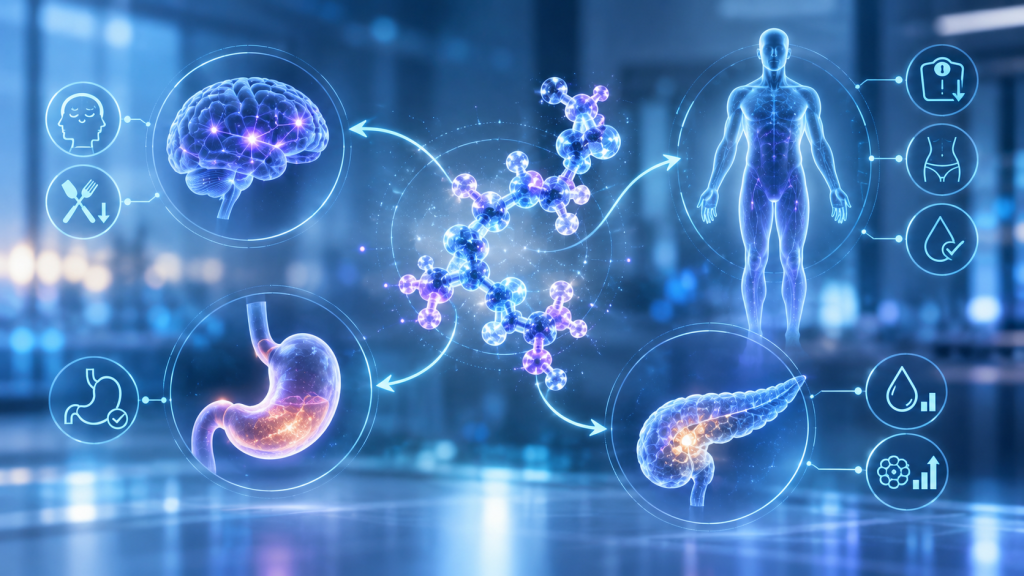
Perhaps no development has increased public awareness of peptide-based medicine more than GLP-1 therapies.
GLP-1 is a naturally occurring peptide hormone involved in appetite, digestion, and blood sugar regulation.
Medications that act on the GLP-1 pathway can:
- Increase feelings of fullness
- Reduce appetite
- Slow stomach emptying
- Improve insulin secretion when glucose is elevated
- Improve blood sugar control
Newer medications can target multiple pathways simultaneously.
Tirzepatide, for example, targets both GLP-1 and GIP receptors.
Investigational medications such as retatrutide have gone even further by targeting GLP-1, GIP, and glucagon receptors.
For some individuals, the results have been extraordinary.
People who spent decades battling obesity have described experiencing something they never thought possible: the persistent mental chatter about food becoming quieter.
Others have been able to walk farther, sleep better, lower medications under medical supervision, participate more actively with their families, or pursue activities their weight once made difficult.
That is one reason the phrase “life changing” appears so frequently in conversations about peptide-based obesity treatments.
But Weight Loss Is Only One Part of the Story
The peptide research world extends far beyond obesity.
Researchers are exploring peptides involved in areas such as:
Tissue Repair and Recovery
Some experimental peptides are being studied for their potential roles in wound healing, angiogenesis, inflammation, or tissue signaling.
This category has attracted significant interest among athletes and people recovering from injuries.
However, many of the peptides discussed in online recovery communities have not been approved by the FDA for treating injuries in humans, and high-quality clinical evidence may still be limited.
That distinction matters.
Promising laboratory findings are not the same thing as proven human therapies.
Mitochondrial Health
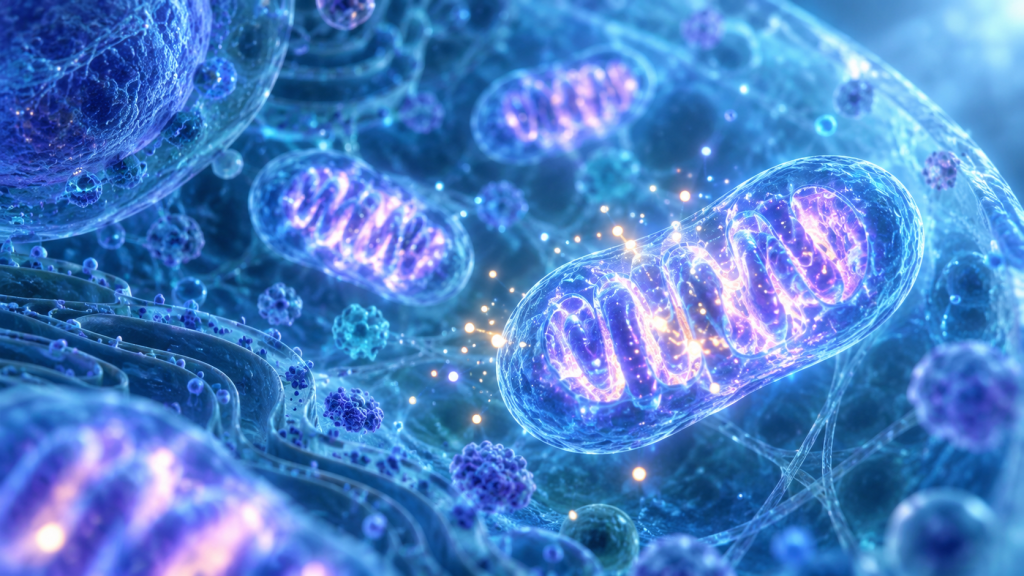
Mitochondria are the structures inside our cells responsible for producing much of the energy our bodies use.
Researchers are investigating peptides that interact with mitochondrial function because mitochondrial dysfunction has been associated with aging and numerous diseases.
One example is elamipretide, also known in research literature as SS-31, which has been studied for its effects on mitochondrial membranes and cellular energy production.
This area is particularly fascinating because improving mitochondrial function could theoretically influence many tissues throughout the body.
The science is still evolving.
Brain and Cognitive Function
Peptides also play important roles in the nervous system.
Researchers have investigated peptide-related compounds for their potential effects on:
- Memory
- Learning
- Neuroprotection
- Anxiety
- Stress responses
- Sleep
Some compounds frequently discussed in peptide communities, including Semax and Selank, have been studied internationally but do not have the same regulatory status or depth of clinical evidence as widely approved medications in the United States.
Interest is high, but stronger research is still needed.
Immune Function and Inflammation
The immune system communicates through an incredibly complex network of signaling molecules, including peptides.
Scientists are studying peptide-based approaches that could potentially influence inflammatory pathways or immune responses.
This is one of the areas where peptide research may eventually have broad implications for autoimmune disease, inflammatory conditions, infections, and tissue repair.
But again, much of this research remains experimental.
Why People Become So Passionate About Peptides
Spend time in a peptide community and you will quickly discover something interesting.
People often have stories.
Someone may describe losing 80 pounds after years of struggling.
Another person may talk about finally having enough energy to exercise.
Someone recovering from an injury may believe a particular peptide accelerated their recovery.
Another person may describe improved sleep, mental clarity, or reduced inflammation.
These personal experiences are powerful.
They are also one of the reasons communities around peptide therapy have grown so rapidly.
But personal experience and scientific evidence are not the same thing.
That does not mean someone’s experience is meaningless.
It simply means we have to separate three different categories:
What someone experienced.
What researchers believe might be happening.
What controlled clinical studies have demonstrated.
Those three things can overlap, but they are not always identical.
That distinction is one of the most important principles for anyone exploring peptide therapy.
The Research Is Moving Faster Than the Public Conversation
One of the most exciting aspects of peptide science is the speed at which the field is developing.
Researchers are investigating new peptide medications for obesity, diabetes, muscle preservation, cardiovascular disease, liver disease, neurological disorders, and other conditions.
Scientists are also developing new methods of delivering peptides.
Traditionally, many peptide medications have required injections because peptides can be broken down in the digestive system.
Researchers are now exploring:
- Longer-lasting formulations
- Oral delivery systems
- Nasal delivery
- Implantable systems
- Modified peptides that remain active longer
- Multi-receptor drugs
The next generation of peptide-based medications could look very different from what exists today.
There Is Also a Wild West Side of the Peptide World
The growing popularity of peptides has created an enormous online marketplace.
That creates risk.
Some compounds sold online are labeled “for research use only” and are not approved medications.
Products purchased outside regulated pharmaceutical channels may have uncertainties involving:
- Purity
- Sterility
- Accurate concentration
- Contamination
- Storage conditions
- Manufacturing quality
Even when a compound itself has legitimate scientific research behind it, the quality of an unregulated product can be a completely separate question.
That is why medical oversight and sourcing matter.
Peptide therapy should not be viewed as automatically harmless simply because peptides occur naturally in the body.
Insulin is natural too, and incorrect insulin dosing can be dangerous.
Biologically powerful substances deserve respect.
The Most Interesting Part May Be What Comes Next
We may still be in the early stages of peptide medicine.
The success of modern metabolic therapies has shown what can happen when scientists learn how to precisely manipulate the body’s own signaling systems.
Future peptide-based medicines may potentially help physicians address conditions that are difficult to treat today.
Researchers are asking increasingly ambitious questions.
Can peptide therapies help preserve muscle during weight loss?
Can they improve mitochondrial function?
Can they help repair damaged tissue?
Can they influence neurodegenerative disease?
Can multiple peptide pathways be targeted simultaneously?
Can peptide medicines help people remain healthier longer rather than simply live longer?
Some of these ideas may eventually become important medical breakthroughs.
Others may fail during clinical trials.
That is how science works.
A Better Way to Talk About Peptide Therapy
The peptide conversation does not need to fall into two extremes.
We do not have to say:
“Peptides are miracle drugs.”
And we do not have to say:
“There is nothing interesting here until every question has been answered.”
There is a much more useful position.
Be curious.
Look at the research.
Listen to people’s experiences.
Understand the difference between anecdotal evidence and clinical evidence.
Recognize when a therapy is FDA-approved and when it is experimental.
Ask questions about risks as seriously as you ask questions about benefits.
And be willing to update your opinion when better research becomes available.
Why Peptide Perspectives Exists
That philosophy is exactly what Peptide Perspectives is about.
There is an enormous gap between academic research papers and the conversations happening every day among people actually exploring these therapies.
We want to help bridge that gap.
Here we will explore emerging peptide research, break complicated science into understandable language, examine what the evidence actually shows, and hear the real-world experiences of people whose lives have been affected by peptide-based therapies.
Sometimes those experiences will be remarkable.
Sometimes the science will be promising but incomplete.
And sometimes we may discover that the hype has moved faster than the evidence.
All three are worth talking about.
Because peptide medicine is evolving quickly, and the best way to understand where it is going is to approach it with both curiosity and healthy skepticism.
The peptide revolution may already be changing medicine.
The most interesting question is what happens next.
Peptide Perspectives provides educational information and discussion of emerging research. Content should not be considered medical advice. Some peptides discussed in research or online communities are investigational and have not been approved by the U.S. Food and Drug Administration for human use. Decisions about prescription medications or medical treatment should be made with an appropriately licensed healthcare professional.