
Peptide Stacking & Synergy, Article 01. What combinations have real clinical evidence, where do nutritional supplements fit, and when do overlapping pathways introduce unnecessary risks?
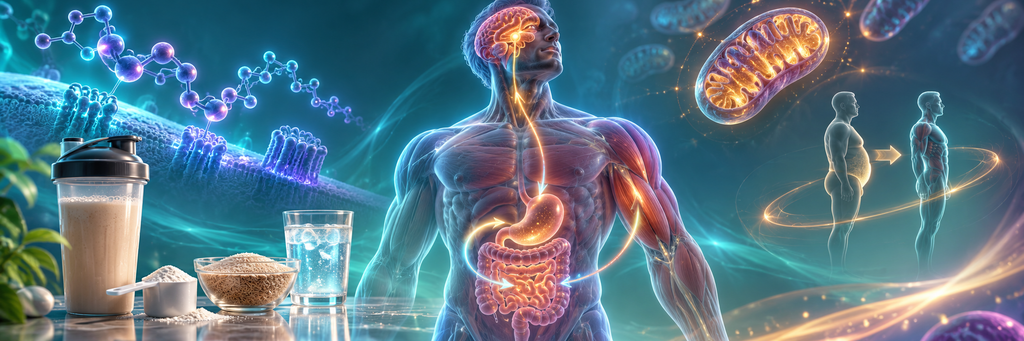
1. The Big Picture: Better Body Composition, Not Simply a Lower Number
Weight-loss science has entered a new era. GLP-1-based medicines can produce clinically meaningful weight reduction, while investigational medicines are exploring additional appetite and energy-regulation pathways. But the most useful question is not simply how many pounds can be lost. It is how much body fat is reduced while strength, physical function, adequate nutrition, and long-term health are protected.
Substantial weight loss commonly includes decreases in both fat and lean mass. Lean mass is not identical to skeletal muscle, because it also includes water and other fat-free tissues. Nevertheless, loss of strength and functional capacity is important to avoid, particularly among older adults and people with limited muscle reserves. That makes muscle-preservation strategies central rather than optional.
This first entry in the Peptide Perspectives Stacking & Synergy series compares three widely discussed combinations: semaglutide with cagrilintide (CagriSema), tirzepatide with MOTS-C, and retatrutide with cagrilintide. Their evidence bases are profoundly different. One has been evaluated directly in Phase 3 clinical trials. The second is mechanistically intriguing but not clinically validated as a combination. The third adds considerable hormonal overlap without demonstrated clinical benefit.
In parallel, we examine four practical nutritional tools: protein, creatine, psyllium fiber, and electrolytes when appropriate. The purpose is to distinguish genuine complementarity from the assumption that more compounds necessarily mean better results.
2. The Biological Pathways: Where Stacking Could Make Sense
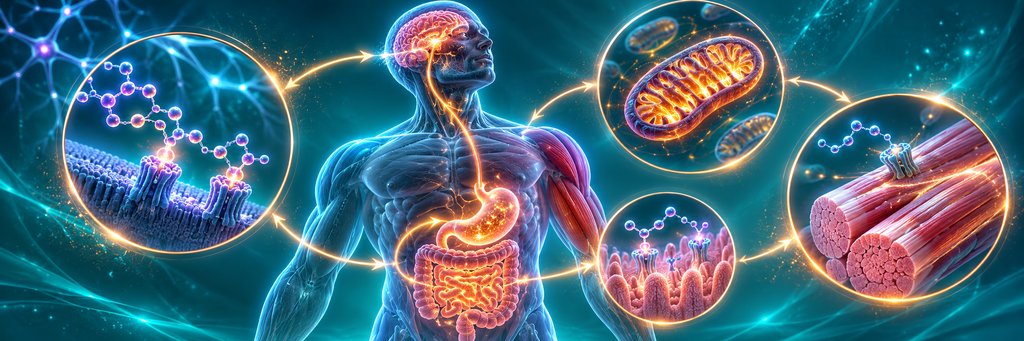
Appetite regulation: GLP-1, GIP, and amylin
GLP-1 signaling influences appetite, glucose-dependent insulin secretion, and gastric emptying. GIP participates in nutrient-responsive metabolic regulation. Amylin acts through a related but distinct satiety system. Combining GLP-1 and amylin receptor activity can target complementary aspects of fullness, although it can also compound gastrointestinal adverse effects.
Energy metabolism: glucagon, AMPK, and mitochondria
Glucagon-receptor activity affects hepatic fuel handling and energy metabolism. AMPK acts as a cellular energy sensor and interacts with pathways involved in glucose utilization and metabolic adaptation. MOTS-C, a mitochondrial-derived peptide, has generated preclinical interest in these systems. A plausible mechanism, however, is not proof that administered MOTS-C increases human fat loss or improves the outcome of GLP-1 treatment.
Muscle preservation: protein, exercise, and phosphocreatine
Maintaining muscle depends on sufficient amino acids, resistance exercise, adequate overall nutrition, and recovery. Creatine supports rapid ATP regeneration during demanding muscular work and can improve resistance-training performance. None of these processes is interchangeable with appetite suppression. They are complementary goals with largely independent evidence bases.
3. The Three Peptide Stacks
Stack A: Semaglutide + Cagrilintide (CagriSema)
Evidence category: Direct Phase 3 human combination evidence.
Semaglutide is a GLP-1 receptor agonist. Cagrilintide is a long-acting amylin analogue. Studied together as CagriSema, the compounds engage distinct but partially overlapping appetite pathways.
In the REDEFINE 1 Phase 3 trial, the combination achieved an estimated mean body-weight reduction of approximately 22.7% at 68 weeks under the hypothetical treatment-adherence estimand, compared with approximately 16.1% for semaglutide alone, 11.8% for cagrilintide alone, and 2.3% for placebo. Other estimands produced different results. These are group averages, not guaranteed outcomes for individuals.
This study provides a rare example of measured combination benefit rather than a hypothesis built from two separate studies. But increased appetite suppression does not necessarily protect skeletal muscle. Protein adequacy and resistance training remain relevant regardless of how much weight the combination produces.
Key limitation: Gastrointestinal effects, including nausea, vomiting, and constipation, occurred frequently. In a combination that can substantially reduce food intake, hydration and nutritional adequacy deserve active attention. The product’s regulatory status should be checked at the time of publication rather than inferred from the clinical trial alone. This is not an invitation to combine independently obtained experimental preparations.
Best research-supported complement: Clinician-supervised use within approved or studied contexts, combined with adequate protein, progressive resistance exercise, and consideration of creatine when appropriate. Psyllium may help certain people meet fiber needs if gastrointestinal tolerability allows.
Stack B: Tirzepatide + MOTS-C
Evidence category: Established clinical evidence for tirzepatide; preclinical and mechanistic evidence for MOTS-C; no validated human combination benefit.
Tirzepatide activates GIP and GLP-1 receptors and has strong human evidence for weight and metabolic outcomes in approved indications. MOTS-C is a mitochondrial-derived peptide studied for cellular energy-stress signaling, AMPK-related mechanisms, and metabolic adaptation.
The proposed complementarity is intuitively appealing: target energy intake and endocrine metabolic regulation with tirzepatide while exploring cellular energy signaling with MOTS-C. But the inference jumps across different levels of evidence. Laboratory and animal observations for MOTS-C have not established clinically meaningful fat loss, better muscle preservation, or improved exercise performance from administering it to humans. Neither have they established that adding MOTS-C to tirzepatide is safe.
Key limitation: MOTS-C lacks an established human therapeutic dose, validated safety profile for this pairing, and approved obesity indication. Experimental preparations may also introduce purity and sterility concerns. The combination is best regarded as a future research hypothesis, not a recommended treatment stack.
More evidence-based alternative: Preserve the established weight-loss treatment strategy while supporting strength and nutritional intake with resistance training, sufficient protein, and potentially creatine. Those additions do not require assuming an unproven peptide-drug interaction.
Stack C: Retatrutide + Cagrilintide
Evidence category: Human clinical evidence for retatrutide and for cagrilintide-containing programs separately; no validated efficacy or safety for this particular combination.
Retatrutide activates GLP-1, GIP, and glucagon receptors. Cagrilintide adds amylin-receptor activity. It may be tempting to call this a four-pathway strategy, but receptor count is not an outcome measure.
Retatrutide has demonstrated substantial weight reduction in late-stage clinical research. Cagrilintide has shown clinically meaningful satiety-related activity, including in its studied combination with semaglutide. Results from separate trials cannot establish that the two drugs work better together, and this pairing lacks a demonstrated benefit-risk profile.
The main concern is pathway overlap. Both can substantially influence hunger and gastrointestinal function. The combined effects on nausea, vomiting, constipation, nutritional intake, dehydration, and other safety outcomes are unknown. If intake becomes too restricted, the strategy can work against the goal of preserving muscle.
Research conclusion: This is a candidate for carefully designed controlled trials, not a self-directed stacking recommendation. When substantial weight reduction is already achievable with one studied treatment, adding an untested second appetite-directed compound demands exceptionally clear proof of incremental benefit.
4. Nutritional Supplements: Which Additions Are Most Defensible?
Protein: The foundation for maintaining lean tissue
Adequate protein provides the amino acids required for muscle protein synthesis and repair. Reduced appetite can make it difficult to consume enough food, and a protein powder can be a convenient way to close the gap. Whey, casein, soy, and appropriately formulated plant-based products can all help. The objective is total protein adequacy, not the assumption that a specific powder amplifies a peptide’s pharmacological effect.
Individual targets should account for age, activity, body composition, kidney function, and medical history. For people with substantial obesity, simply multiplying actual body weight by a fixed target can produce impractical recommendations; reference or adjusted weight may be more suitable under professional guidance. Protein is most useful alongside resistance exercise and adequate overall energy intake.
Creatine: Stronger exercise support, not direct fat burning
Creatine monohydrate increases muscle phosphocreatine availability, helping replenish ATP during demanding short bursts of exercise. Controlled studies and meta-analyses support its role in improving training performance and certain strength and lean-mass outcomes, especially when paired with resistance training. A 2024 review of randomized studies provides one evidence starting point.
Creatine does not have convincing evidence as a direct enhancer of GLP-1-specific fat loss. It can increase body weight through additional water stored in muscle, which is not the same as fat gain. People with known kidney disease or unusual renal laboratory results should discuss supplementation and monitoring with their clinician rather than assume it is appropriate.
Psyllium fiber: A digestive and cardiometabolic adjunct
Psyllium is a gel-forming soluble fiber with human evidence for benefits involving LDL cholesterol, stool regulation, and certain glucose measures. Evidence that it directly increases weight loss is mixed. In people eating less food while using an appetite-directed medicine, it may help close a dietary fiber gap, provided it is tolerated.
Psyllium requires adequate fluid and can worsen bloating or fullness. It should be avoided or medically assessed in people with swallowing problems, suspected bowel obstruction, or severe gastrointestinal motility concerns. Some oral medications must be taken separately because fiber can affect absorption.
Electrolytes: Replace actual losses, not imagined deficiencies
Sodium, potassium, and magnesium participate in fluid regulation, nerve function, and muscle contraction. They can be relevant when vomiting, diarrhea, heavy sweating, or inadequate intake creates fluid or electrolyte losses. But routinely adding electrolyte products is not a proven fat-loss or muscle-preservation strategy.
Formulations vary substantially. High sodium may be undesirable for some people with hypertension, while supplemental potassium can be hazardous in kidney disease or when combined with certain blood-pressure medicines. Persistent symptoms should prompt clinical assessment rather than reliance on flavored electrolyte drinks.
5. Comparison: Mechanisms, Evidence, and Limitations
| Option | Primary pathway or role | Evidence supporting that component or stack | Main limitation |
|---|---|---|---|
| Semaglutide + cagrilintide | GLP-1 plus amylin satiety signaling | Direct Phase 3 combination evidence | GI effects; nutritional adequacy; product-specific regulatory status |
| Tirzepatide | GLP-1 plus GIP | Strong human trials; approved uses | GI effects and lean-tissue losses during major weight reduction |
| MOTS-C | Mitochondrial and AMPK-associated signaling | Preclinical and mechanistic; limited human observation | No validated human combination benefit or dosing |
| Retatrutide | GLP-1, GIP, and glucagon | Late-stage human trials as a single investigational drug | No proven benefit when stacked with cagrilintide |
| Retatrutide + cagrilintide | Multiple metabolic and appetite systems | No validated direct combination trials | Unknown interactions and potentially overlapping GI effects |
| Protein | Amino acid supply, muscle synthesis | Strong nutritional and exercise evidence | Does not independently guarantee muscle retention |
| Creatine | Muscle phosphocreatine and exercise performance | Strong human exercise evidence | Not a proven GLP-1-specific fat-loss enhancer |
| Psyllium | Gel-forming fiber, digestive and lipid/glucose effects | Human trials for specific endpoints | Tolerability, water requirements, medication spacing |
| Electrolytes | Fluid and electrical balance | Established replacement role when losses occur | Excess sodium or potassium may be harmful |
6. Which Stack Is Best Supported for the Goal?
For the strongest clinically studied peptide combination: CagriSema is the clear research leader among these three because the two agents were tested together in Phase 3 trials. Its effectiveness must be weighed against gastrointestinal adverse effects and the exact regulatory and clinical context.
For preserving strength and muscle: The most defensible practical combination is an appropriately prescribed and monitored weight-management medicine plus resistance exercise and adequate protein, with creatine as a possible exercise-support adjunct. This is not a claim that creatine or protein directly increases the medicine’s pharmacological weight-loss effect.
For mitochondrial research: Tirzepatide plus MOTS-C presents a testable scientific hypothesis, but experimental interest should not be confused with validated clinical synergy.
For the most uncertain stacking approach: Retatrutide plus cagrilintide raises the greatest concern about overlapping effects and unknown interaction risks. A stronger appetite-suppression effect is not necessarily a better overall health result.
Stacking warning: Combining compounds that influence overlapping appetite, gastric-emptying, glucose, or cardiovascular systems can increase adverse effects, complicate attribution and monitoring, and introduce unexpected interactions. More compounds do not necessarily produce stronger or safer results.
7. Monitoring the Outcomes That Matter
Meaningful monitoring goes beyond scale weight. Depending on the individual and treatment, clinical teams may track waist measurement, dietary intake, hydration, adverse effects, blood pressure, glucose-related biomarkers, strength, walking or lifting performance, and sometimes body-composition measures. Body-composition results require careful interpretation because changes in lean mass can reflect water as well as muscle.
Persistent vomiting, inability to maintain hydration, severe abdominal pain, fainting, or substantial weakness call for prompt medical evaluation. Supplements also deserve medication-interaction review, especially when kidney function, blood-pressure treatment, or gastrointestinal motility is relevant.
8. Where the Science Is Heading

The next scientific opportunity is not merely to combine more agents. It is to test whether a combination can reduce fat while preserving muscle function, improving nutritional health, and remaining tolerable over time. Future controlled trials should measure fat and muscle compartments, strength, functional capacity, long-term maintenance, adverse events, and quality of life rather than relying only on average percent weight reduction.
CagriSema shows that distinct appetite pathways can be successfully studied together. MOTS-C highlights interesting questions about mitochondrial metabolic adaptation, but those questions require human interventional evidence. Retatrutide demonstrates how powerful a multi-receptor drug can be before additional compounds are introduced.
The optimistic possibility is more precise treatment, not necessarily more treatment: selecting a pathway for the underlying clinical need, then surrounding it with the nutritional and physical supports that make weight reduction healthier and more sustainable.
9. Explore the Compounds and Research
- Semaglutide: GLP-1 signaling
- Cagrilintide: amylin-based satiety research
- Tirzepatide: dual incretin signaling
- MOTS-C: mitochondrial-derived metabolic signaling
- Retatrutide: triple-receptor metabolic research
Selected starting points for deeper exploration: REDEFINE 1 CagriSema Phase 3 trial, retatrutide clinical trial research, creatine and resistance training research, and clinical research on GLP-1-based obesity treatment and lean mass.
The Bigger Possibility
The best weight-loss strategy is not automatically the one with the most compounds. It is the one that produces an appropriate, evidence-supported improvement in body composition and metabolic health while protecting strength, nutrition, and quality of life. That is the goal worth building the next generation of stacking research around.
Peptide Perspectives provides educational research information, not individualized medical advice. Investigational combinations such as tirzepatide plus MOTS-C and retatrutide plus cagrilintide lack validated controlled human combination evidence and should not be self-directed. Consult a qualified clinician about prescribed therapies, side effects, supplement interactions, and nutritional needs.