
From the cartilage that cushions our knees to the tendons that make movement possible, researchers are exploring how peptides influence tissue maintenance, inflammation, and repair. The opportunity is exciting, but stronger tissue, less pain, and better mobility are not always the same outcome.
1. The Big Picture: Protecting the Freedom to Move
Walking up a flight of stairs, reaching overhead, kneeling in a garden, and returning to a favorite activity all depend on more than strong muscles. Cartilage, tendons, ligaments, joint fluid, bones, nerves, and muscle must work together. When one part becomes irritated or injured, everyday movement may become painful, stiff, or less reliable.
Osteoarthritis is often described as wear and tear, but that is incomplete. It is a condition involving the whole joint: changes in cartilage and underlying bone, inflammation in the joint lining, and adaptations in surrounding tissues. Tendon and ligament injuries present different problems. Their collagen fibers have to withstand repeated loading, and effective healing requires not merely producing new material but organizing it to transmit force.
Peptide research offers several intriguing approaches. Cartalax explores small-peptide signals associated with cartilage-cell differentiation. BPC-157 is being investigated for tissue repair in animal models. GHK-Cu relates to collagen and extracellular-matrix biology. Thymosin beta-4 participates in cell movement and tissue remodeling. Other candidates, including KPV, TPX-100, sprifermin, and oral collagen peptides, broaden the picture from inflammation to cartilage-specific research and human symptom outcomes.
The field is moving beyond one central question, “Can this molecule help tissue heal?” Researchers increasingly ask whether it can improve joint structure, reduce symptoms, preserve strength, and help people move better over time. Those outcomes need to be studied separately. No research peptide in this article has been established as a general FDA-approved treatment to reverse osteoarthritis.
2. The Biological Pathways: How Joints Stay Resilient
Cartilage: A Living Cushion with Limited Repair Capacity
Articular cartilage is the smooth tissue covering the ends of bones inside many joints. Its specialized cells, chondrocytes, maintain a matrix rich in type II collagen and aggrecan. These materials provide tensile strength and help cartilage retain water so it can handle compression.
Unlike many other tissues, mature articular cartilage has little direct blood supply. This limits its capacity for spontaneous repair after substantial injury. Researchers therefore study how to preserve existing matrix, influence chondrocyte behavior, and support formation of appropriate cartilage-like tissue.
Tendons and Ligaments: Strength Depends on Organization
Tendons connect muscle to bone; ligaments connect bones and help stabilize joints. Their collagen structure is dominated by type I collagen, arranged into fibers that carry tension. Healing requires inflammation to resolve, cells to migrate, and fibers to become progressively aligned under appropriate mechanical loading.
A compound that increases collagen synthesis in a skin culture does not necessarily strengthen a human Achilles tendon or anterior cruciate ligament. How the collagen is organized, loaded, and integrated matters as much as the amount produced.
Inflammation and Joint Pain: The Difference Between Signals and Symptoms
The synovium, or joint lining, releases fluid and contributes to local immune responses. During disease or injury, signals such as IL-1β, TNF-α, NF-κB, and matrix metalloproteinases (MMPs) can influence pain sensitivity and matrix turnover.
Some inflammation is necessary for repair, and MMPs also play normal roles in remodeling. Turning these signals down indiscriminately is not necessarily beneficial. KPV is explored for selected anti-inflammatory pathways, while thymosin beta-4 interacts with actin and cell-migration biology.
Bioregulators, Growth Factors, and Cartilage Differentiation
SOX9, aggrecan, type II collagen, and COMP are among the proteins researchers measure when evaluating cartilage-forming activity. Cartalax research has examined such markers in cultured human mesenchymal stem cells. Sprifermin, a recombinant version of FGF18, approaches the problem through growth-factor signaling, while TPX-100 is a synthetic peptide derived from a bone-matrix-related protein.
These pathways are scientifically interesting, but laboratory marker changes and MRI cartilage measurements do not, by themselves, prove that someone can walk farther or climb stairs with less pain.
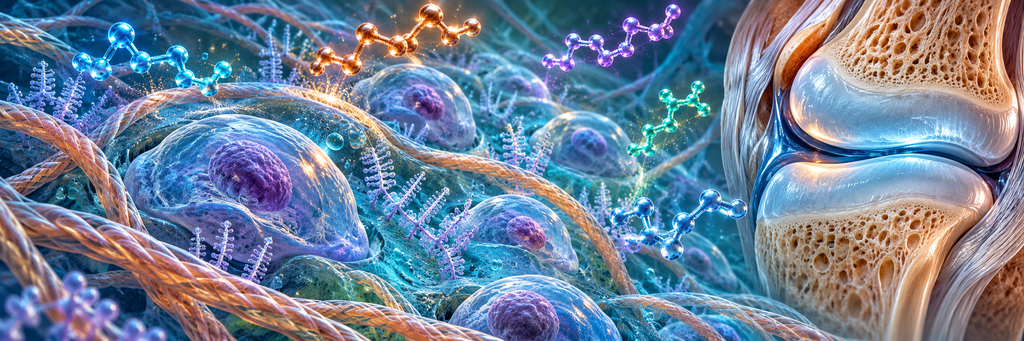
3. Compounds Researchers Are Exploring
Cartalax (AED): A Bioregulator Linked to Cartilage-Cell Research
Explore Cartalax on Peptide Perspectives.
Cartalax is a synthetic three-amino-acid peptide, Ala-Glu-Asp (AED), associated with the Khavinson bioregulator research tradition. Its attraction lies in an unusually compact structure and experimental interest in cell differentiation and aging-associated signaling.
In a 2023 study of cultured human mesenchymal stem cells, AED exposure increased expression and production of several cartilage-associated markers, including SOX9, aggrecan, type II collagen, and COMP. The experiments involved cells in a laboratory, not cartilage regeneration in a person’s knee. A separate chondrocyte research literature examines senescence-associated signaling, but the work remains concentrated in a small research network.
Why it matters: Cartalax offers a testable hypothesis about whether short peptides can influence how cartilage-forming cells maintain their matrix.
What is still unknown: There is no reliable controlled human trial demonstrating that Cartalax increases joint cartilage thickness, reduces osteoarthritis pain, or improves mobility. Its pharmacokinetics, long-term safety, and effective clinical delivery have not been established.
BPC-157: A Broad Preclinical Tissue-Repair Candidate
Explore BPC-157 on Peptide Perspectives.
BPC-157 is a synthetic 15-amino-acid peptide studied in animal models of tendon, ligament, muscle, and gastrointestinal injury. Investigators have reported changes in healing-related cell behavior, tissue organization, and vascular-associated signaling.
Its human evidence is far less developed than its online reputation suggests. An October 2026 systematic review found three small human studies totaling 30 participants, but only one was directly relevant to knee symptoms: an uncontrolled retrospective series of 16 people. All included studies had major design limitations and overall evidence certainty was very low.
Why it matters: Injury models make BPC-157 a useful research lead for understanding repair signals and whether those signals could eventually translate to better function.
What is still unknown: No controlled human trial shows that BPC-157 rebuilds cartilage, repairs a tendon, or prevents joint surgery. Human dosing, injection safety, purity, sterility, and long-term risks remain unestablished.
GHK-Cu: Collagen and Extracellular-Matrix Remodeling
Explore GHK-Cu on Peptide Perspectives.
GHK-Cu is a copper-binding tripeptide complex studied for its influence on fibroblast activity, collagen-associated pathways, and extracellular-matrix remodeling. Copper also participates in enzymes necessary for normal connective-tissue structure.
Much of the compound’s more developed research comes from skin and wound-healing models, not orthopedic trials. Because tendons and ligaments rely on collagen, this biology provides an interesting mechanistic bridge to musculoskeletal research. However, collagen production in skin is different from producing mechanically aligned tendon fibers or the type II collagen matrix characteristic of articular cartilage.
Why it matters: GHK-Cu illustrates how peptide signals can influence the cellular environment in which connective tissues are maintained and remodeled.
What is still unknown: There is no strong clinical evidence that GHK-Cu injections restore joint cartilage or improve tendon strength, and topical cosmetic findings cannot establish systemic orthopedic benefits.
Thymosin Beta-4: Cell Migration, Actin, and Tissue Remodeling
Explore full-length Thymosin Beta-4 on Peptide Perspectives.
Thymosin beta-4 (Tβ4) is a naturally occurring 43-amino-acid peptide that binds actin and is involved in cellular movement and remodeling. Researchers have investigated it in wound healing and experimental tissue-injury settings.
Its cartilage story is more complex than simply “stimulating regeneration.” A chondrocyte study found that Tβ4-associated responses under mechanical loading included increased MMP-9, an enzyme involved in matrix remodeling. Such findings suggest biological activity but do not establish that more Tβ4 protects cartilage from deterioration.
Why it matters: Understanding cell migration and the balance between matrix formation and breakdown may help researchers design better repair interventions.
What is still unknown: Full-length Tβ4 has no established human joint-repair indication, and products sold as TB-500 fragments are not necessarily equivalent to the full-length peptide. No controlled orthopedic trial validates a Tβ4-based treatment for mobility.
KPV: Investigating Inflammatory Signals Around Injured Tissue
Explore KPV on Peptide Perspectives.
KPV (Lys-Pro-Val) is a tripeptide fragment of alpha-melanocyte-stimulating hormone. Laboratory work has found effects on NF-κB and MAPK pathways and certain inflammatory responses, with much of the most direct research occurring in intestinal and immune-cell models.
Inflammation is part of osteoarthritis, tendon disorders, and many musculoskeletal conditions. That makes KPV relevant as a mechanistic comparison to the peptides being studied for cell migration and matrix formation. But results from colitis research cannot be assumed to apply to an inflamed knee or tendon.
Why it matters: Future joint therapies may need to regulate harmful inflammatory responses without disrupting the inflammation necessary for healing.
What is still unknown: No controlled human trial shows that KPV relieves arthritis, improves joint range of motion, or regenerates cartilage. Its joint-specific evidence is indirect.
TPX-100: A Cartilage-Related Peptide Tested in Human Knees
Explore TPX-100 clinical research.
TPX-100 is an investigational synthetic peptide derived from a sequence associated with matrix extracellular phosphoglycoprotein (MEPE). Unlike many popular research peptides, it has been assessed in human knee-osteoarthritis clinical studies.
A clinical-trial review describes a Phase 2 program in which treated knees showed improvement in WOMAC pain scores, while the prespecified MRI cartilage-thickness outcome did not significantly improve at the reported follow-up points. Exploratory later analyses suggested possible differences in bone shape, but those findings need prospective confirmation.
Why it matters: TPX-100 shows that peptide research can progress from plausible joint biology to measurements of actual symptoms in people.
What is still unknown: Whether the pain finding is reproducible in larger, independent trials and whether the compound can meaningfully modify the long-term structure or function of the joint. It is not FDA-approved for osteoarthritis.
Sprifermin (FGF18): More Cartilage on MRI Is Not the Whole Story
Explore the FORWARD randomized clinical trial.
Sprifermin is a recombinant form of fibroblast growth factor 18 (FGF18), a larger protein biologic rather than a conventional short peptide. It is included because it tests one of the most important concepts in regenerative joint medicine: changing cartilage structure.
In the large FORWARD knee osteoarthritis trial, certain sprifermin treatment groups had statistically significant improvements in femorotibial cartilage thickness on MRI after two years. However, the investigators did not find a significant corresponding benefit in overall WOMAC symptoms compared with placebo.
Why it matters: Structural modification is a meaningful scientific achievement and may provide clues for future disease-modifying treatments.
What is still unknown: Whether cartilage-thickness changes translate into fewer symptoms, better function, or delayed joint replacement for selected patients. Sprifermin is investigational and not FDA-approved for knee osteoarthritis.
Oral Collagen Peptides: A Nutrition-Based Comparison with Human Symptom Studies
Read the randomized-trial meta-analysis.
Hydrolyzed collagen peptides are mixtures of collagen fragments taken by mouth. Unlike a single precisely defined injectable research peptide, they are a nutritional category with varying sources, processing methods, and formulations.
A 2024 meta-analysis of 11 randomized trials involving 870 participants reported improvements in pooled knee-osteoarthritis pain and function measures. A 2025 placebo-controlled trial of 80 adults with mild-to-moderate knee osteoarthritis found symptom improvements over six months but no significant change in joint-space width.
Why it matters: This is an example of peptide-related research with human symptom data, making it a useful comparator for experimental regenerative claims.
What is still unknown: How consistent the benefits are across products, whether any effects are clinically important for a given person, and whether collagen supplementation changes joint structure. A 2026 VA/DoD guideline found evidence insufficient to make a routine-use recommendation for or against collagen supplements in knee or hip osteoarthritis.
4. Comparing the Compounds
| Compound | Primary mechanism | Main research interest | Evidence level | Key limitation |
|---|---|---|---|---|
| Cartalax | Short-peptide effects on cartilage-related gene and protein expression | Chondrogenesis and aging-associated cell signaling | Preliminary human-cell laboratory experiments | No proven human cartilage repair or mobility benefit |
| BPC-157 | Experimental tissue protection, cell migration, vascular-associated signaling | Tendon, ligament, and injury recovery | Animal studies; very limited uncontrolled human studies | No validated orthopedic efficacy or long-term safety |
| GHK-Cu | Copper-associated fibroblast and matrix remodeling | Collagen and connective-tissue biology | Cell/tissue research; some skin studies | No evidence of human joint or tendon restoration |
| Thymosin beta-4 | Actin-associated movement and matrix turnover | Tissue remodeling and repair | Preclinical musculoskeletal research | MMP responses are context-dependent; no proven joint therapy |
| KPV | NF-κB/MAPK-associated inflammatory modulation | Joint inflammation hypotheses | Primarily laboratory and animal research outside joints | No controlled clinical arthritis or mobility data |
| TPX-100 | MEPE-derived peptide signaling | Knee pain and joint structure | Human Phase 2 program | Symptom signals but no significant primary cartilage-thickness outcome |
| Sprifermin / FGF18 | Cartilage growth-factor signaling | MRI cartilage thickness | Randomized human osteoarthritis trial | Structural change without clear average symptom improvement |
| Oral collagen peptides | Nutritional collagen fragments; mechanisms not fully characterized | Knee pain and function | Multiple small randomized human trials | Variable products; no established cartilage regrowth |
Evidence perspective: A cell-culture increase in SOX9, a faster-healing rat tendon, an increase in MRI cartilage thickness, and less difficulty climbing stairs are all meaningful in different ways. They do not demonstrate the same level of clinical benefit. An effective joint treatment should ideally help people feel and function better, with acceptable long-term safety.
5. Where the Science Is Heading
Measuring Functional Mobility, Not Just Molecular Changes
Future trials need to measure what matters in daily life: walking speed, stair-climbing ability, pain with activity, joint stability, range of motion, and participation in valued activities. Structural MRI, ultrasound, and cartilage composition measurements can help explain how a treatment works, but they should complement, not replace, clinical outcomes.
The contrast between TPX-100 and sprifermin demonstrates why this matters. One program reported signals of symptom improvement without meeting a cartilage-thickness endpoint; the other improved MRI cartilage thickness without a clear overall symptom benefit. The eventual goal is both better function and healthier tissue.
Developing Better Cartilage-Targeted Delivery
Cartilage has little direct blood supply, and injected molecules may leave the joint or break down before reaching target cells. Researchers are exploring hydrogels, scaffolds, targeted intra-articular delivery, and engineered peptide materials to retain biological signals where they are needed.
However, a specialized intra-articular formulation tested in a clinical trial cannot be equated with an unregulated peptide injected elsewhere in the body.
Understanding the Potential of Bioregulators
Cartalax sits at the intersection of short-peptide bioregulation and cartilage-forming cell research. It invites questions about whether small molecular sequences can influence cartilage-related gene expression and cellular aging. Other bioregulators may be studied for broader connective-tissue aging, but tissue-specific clinical results must be demonstrated rather than inferred from a compound’s name.
Independent laboratory replication, rigorous chemical characterization, animal models of loaded joints, and controlled human trials would all be needed to establish a therapeutic role.
Combining Regeneration Research with Rehabilitation Science
Movement itself is a biological signal. Appropriate mechanical loading helps tendons and muscles adapt, while joint-focused exercise can improve symptoms, strength, and confidence even when cartilage has not regenerated.
The September 2026 American College of Rheumatology guidance continues to emphasize exercise, self-management, and weight management when appropriate, alongside individualized medication and other care. These remain better-supported foundations than unapproved peptide protocols.
What Actual Cartilage Repair Already Looks Like
There is an established example of regenerative joint care, although it is not a peptide injection. The FDA-approved cell-based product MACI uses a person’s cultured chondrocytes on a collagen membrane for selected symptomatic full-thickness knee cartilage defects in adults. It is not a universal treatment for diffuse osteoarthritis, and it requires specialized surgery and rehabilitation.
Explore the FDA’s description of MACI.
This distinction is encouraging: cartilage repair is clinically possible in selected circumstances, but translating that success into a broadly effective therapy for age-related osteoarthritis is a different challenge.
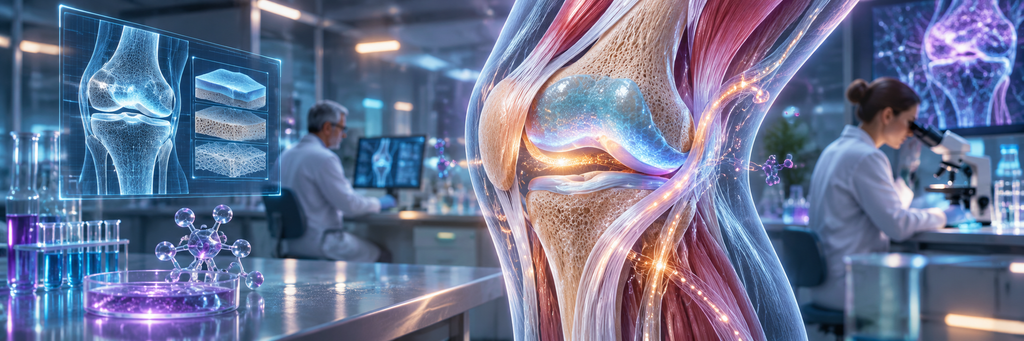
6. Explore the Compounds
Direct Peptide Perspectives profiles
- Cartalax: Cartilage bioregulation and aging-associated cell research
- BPC-157: Experimental tendon, ligament, and tissue-repair signaling
- GHK-Cu: Copper-associated collagen and extracellular-matrix remodeling
- Thymosin Beta-4 (Full Length): Actin, cell migration, and tissue remodeling
- KPV: Inflammatory signaling and experimental immune modulation
Additional clinical and scientific research
- Cartalax (AED): Human stem-cell cartilage-marker study
- BPC-157: 2026 systematic review of human evidence
- TPX-100: Review of clinical knee-osteoarthritis findings
- Sprifermin: FORWARD randomized cartilage-thickness trial
- Collagen peptides: Randomized-trial meta-analysis
- 2026 ACR osteoarthritis management guidance
TPX-100, sprifermin, and oral collagen peptide formulations are linked to clinical research because dedicated public Peptide Perspectives compound profiles could not be verified for those subjects.
The Bigger Possibility
Movement is one of the clearest expressions of healthy aging. The ability to take a walk, play a sport, work in a garden, and move confidently through daily life relies on tissues that are constantly responding to the demands placed upon them.
Cartalax invites researchers to explore cartilage-cell regulation. BPC-157 and thymosin beta-4 raise questions about repair and tissue remodeling. GHK-Cu connects the discussion to the extracellular matrix, while KPV highlights inflammatory balance. Human studies of TPX-100, sprifermin, and collagen peptides reveal both opportunities and the complexity of turning cellular or structural findings into better mobility.
The real promise is a future in which treatments can preserve tissue health and make it easier for people to move, recover, and stay independent for longer.
Peptide Perspectives provides research education, not individualized medical advice. Cartalax, BPC-157, GHK-Cu, thymosin beta-4, KPV, TPX-100, and sprifermin are not FDA-approved treatments to reverse osteoarthritis or restore general joint mobility. Investigational products may lack reliable identity, purity, sterility, and long-term safety data. Persistent swelling, locking, severe joint pain, inability to bear weight, or loss of function warrants appropriate clinical assessment, and established rehabilitation or treatment should not be replaced with unapproved peptides.