
From protecting delicate filtration vessels to supporting energy-demanding kidney cells, peptide research is opening new ways to think about renal health. Some peptide medicines already reduce the risk of kidney disease progression in specific patients, while mitochondrial peptides, protective signals, and bioregulators remain promising but experimental areas of investigation.
1. The Big Picture: Protecting the Filters That Support the Entire Body
The kidneys quietly handle one of the body’s most demanding jobs. They filter blood, remove metabolic waste, maintain fluid and electrolyte balance, help regulate blood pressure, and participate in red blood cell production and bone-mineral health. Each kidney contains roughly a million tiny filtering units, called nephrons, supported by an intricate network of blood vessels and energy-hungry cells.
Kidney health is also closely connected to the heart and metabolism. High blood pressure and diabetes can damage filtration vessels over time, while impaired kidney function increases cardiovascular risk. Acute kidney injury may occur during severe illness, dehydration, exposure to certain medications, or interruptions in blood flow.
The goal of renal research is not simply to lower a creatinine number. It is to protect kidney function, reduce protein leakage into urine, slow structural damage, and ultimately prevent kidney failure and its complications.
This is where peptide science has become particularly interesting. Semaglutide, a GLP-1 receptor agonist, has already demonstrated reduced major kidney outcomes in people with type 2 diabetes and chronic kidney disease (CKD), leading to a specific FDA-approved kidney indication for Ozempic in January 2025. Tirzepatide has reported favorable kidney outcomes in large diabetes trials, although it does not have the same U.S. kidney-specific indication. Meanwhile, SS-31, ARA-290, MOTS-c, and kidney-related Klotho biology illuminate more experimental approaches to mitochondrial stress, tissue protection, and cellular regulation.
These are not interchangeable strategies. A medication shown to slow CKD progression in thousands of patients has a different evidence level from a peptide that protects a rat kidney during an experimental injury. Both can contribute to scientific progress, but they answer different questions.
2. The Biological Pathways: How Kidneys Filter, Adapt, and Become Injured
The Glomerulus: A Delicate Filtration Network
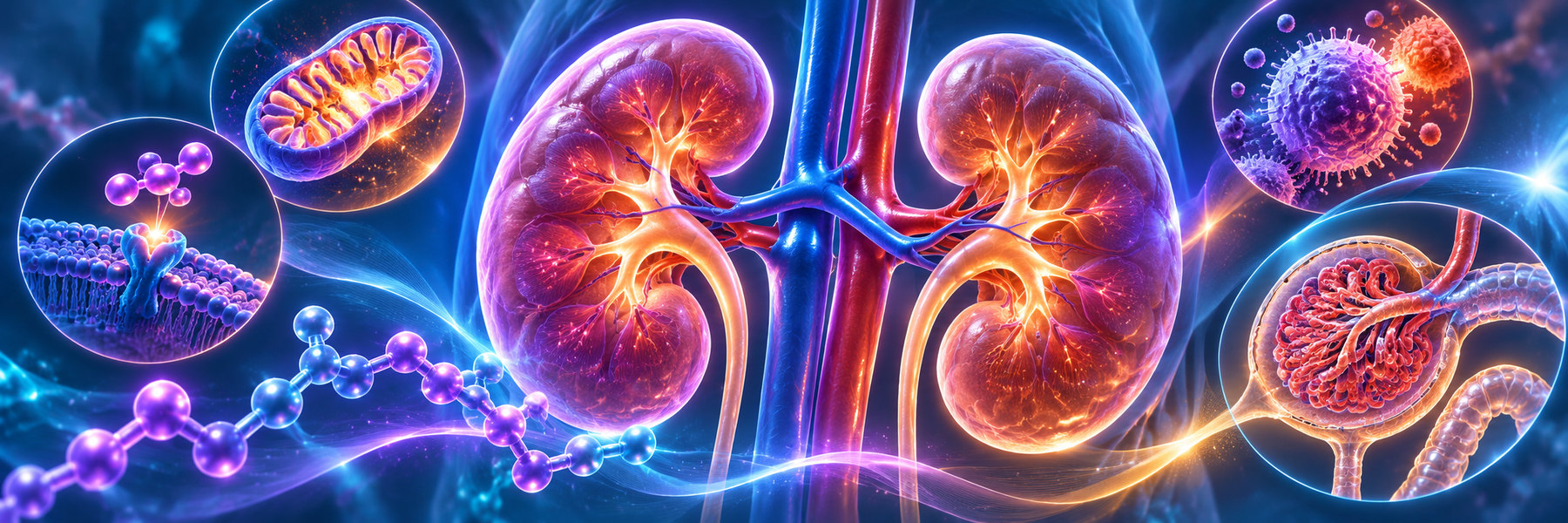
Blood enters the glomerulus, a bundle of tiny capillaries that filters water and small molecules while normally retaining most proteins and blood cells. Its filtration barrier includes specialized endothelial cells, a basement membrane, and podocytes.
When this barrier is damaged, albumin may appear in the urine. That makes the urine albumin-to-creatinine ratio (uACR) an important measure of kidney risk, even when blood creatinine appears relatively normal.
Tubular Cells: The Energy-Intensive Recycling System
After blood is filtered, kidney tubules reclaim much of the water, electrolytes, and useful nutrients. This constant transport requires large amounts of ATP, making tubular cells especially dependent on healthy mitochondria.
A shortage of oxygen, severe metabolic stress, or toxic exposure can disrupt these cells. SS-31 is being studied for mitochondrial membrane protection, while MOTS-c research explores how metabolic signals may influence lipid handling and the response to cellular stress.
Inflammation and Fibrosis: When Injury Becomes Persistent
Immune signals help the kidneys respond to infection and tissue injury. But excessive or prolonged inflammation can promote fibrosis, the accumulation of scar-like matrix that makes normal kidney function harder to maintain.
ARA-290 has been investigated in experimental ischemia–reperfusion injury for tissue-protective and anti-inflammatory effects. BPC-157 has also been examined in selected animal injury models. These observations do not yet show prevention or treatment of human CKD.
Blood Pressure, Metabolism, and Hormone Signals
The kidneys help regulate blood pressure through fluid balance and the renin–angiotensin–aldosterone system. In turn, elevated blood pressure can damage renal blood vessels and filtration units.
GLP-1 receptor agonists can influence glucose regulation, body weight, and broader cardiometabolic pathways. Their kidney benefits are therefore being investigated as part of a connected heart–kidney–metabolic system, rather than as simple direct repair of damaged nephrons.
Klotho, a protein produced substantially in the kidneys, also helps coordinate phosphate and mineral metabolism through signaling involving FGF23. Understanding this pathway may provide new insights into kidney aging and resilience.
What Kidney Measurements Actually Tell Us
Serum creatinine is a useful blood test, but it is influenced by muscle mass and other factors. Clinicians use it to calculate estimated glomerular filtration rate (eGFR), and sometimes use cystatin C to improve the estimate. The uACR adds information about filtration-barrier injury. Persistent abnormalities over at least three months help establish CKD; a single unusual laboratory result does not automatically mean chronic kidney disease.
3. Compounds Researchers Are Exploring
Semaglutide: A Peptide Medicine with Proven Kidney Outcomes
Explore Semaglutide on Peptide Perspectives.
Semaglutide is a GLP-1 receptor agonist with established clinical uses for selected metabolic conditions. Its place in kidney research is especially important because scientists have moved beyond laboratory markers to test actual kidney outcomes.
In the FLOW randomized trial, 3,533 adults with type 2 diabetes and CKD received semaglutide or placebo on top of standard care. Over a median 3.4 years, the risk of the primary composite kidney or cardiovascular-death outcome was 24% lower in the semaglutide group. The average annual decline in eGFR was also slower.
In January 2025, the FDA approved an additional indication for Ozempic to reduce sustained eGFR decline, kidney failure, and cardiovascular death in adults with type 2 diabetes and CKD. This is a specific approved product and population, not evidence that every GLP-1 medicine treats every kidney disorder.
Why researchers are interested: Semaglutide proves that a peptide-based metabolic treatment can meaningfully reduce renal risk in a defined population. Researchers continue studying how much of that benefit comes from changes in glucose, weight, inflammation, or other biological pathways.
Important limitations: Gastrointestinal side effects, especially vomiting or diarrhea, can cause dehydration-related acute kidney injury. Kidney-protective benefits do not justify unsupervised use, and formulation, prescribing indication, and monitoring matter.
Official Ozempic kidney indication and safety information.
Tirzepatide: Dual Incretin Signaling and the Heart–Kidney–Metabolic Connection
Explore Tirzepatide on Peptide Perspectives.
Tirzepatide activates both GIP and GLP-1 receptors. Its effects on weight and glucose regulation make it an important research subject for understanding how metabolic improvement relates to kidney protection.
Earlier diabetes trials showed favorable changes in urine albumin levels and kidney-function decline. A 2026 prespecified exploratory analysis of SURPASS-CVOT provided a newer comparison: among people with type 2 diabetes and established cardiovascular disease, a composite kidney outcome occurred in 6.0% of tirzepatide-treated participants versus 7.6% receiving the active comparator dulaglutide over a median four years. This represented a 23% relative reduction in that exploratory composite outcome.
Why researchers are interested: Tirzepatide suggests that dual incretin signaling may offer kidney-related benefits beyond its established metabolic effects, and it provides a useful comparison with single-receptor GLP-1 medications.
Important limitations: This kidney analysis was not a stand-alone trial proving reversal of established kidney damage, and tirzepatide does not have an FDA-approved CKD-progression indication as of this article. Digestive adverse effects and volume depletion remain important concerns.
SS-31 (Elamipretide): Protecting the Kidney’s Mitochondrial Machinery
Explore SS-31 on Peptide Perspectives.
SS-31 (elamipretide) is a synthetic tetrapeptide that interacts with cardiolipin, an important lipid of the inner mitochondrial membrane. It is investigated for effects on mitochondrial structure, cellular energy regulation, and injury caused by loss and restoration of blood flow.
The kidney is a logical target for this approach because tubular cells use extraordinary amounts of energy. In a small Phase 2a pilot study involving 14 people undergoing stent treatment for severe renal-artery narrowing, those receiving elamipretide showed signals of less procedure-related renal hypoxia and improvements in selected blood-flow and kidney-function measurements. The study was too small to prove a routine treatment benefit.
Elamipretide received FDA accelerated approval in September 2025 as Forzinity for a specific indication in Barth syndrome, a rare mitochondrial disorder. That approval does not include CKD, acute kidney injury, or general kidney protection.
Why researchers are interested: SS-31 offers a well-defined approach to the mitochondrial injury that can follow reduced kidney blood flow.
Important limitations: Kidney evidence remains early, and the approved pharmaceutical product cannot be equated with nonpharmaceutical research-vial formulations.
ARA-290 (Cibinetide): Tissue Protection After Interrupted Blood Flow
Explore ARA-290 on Peptide Perspectives.
ARA-290, also called cibinetide, is an experimental peptide derived from a tissue-protective region of erythropoietin. It has been investigated for cellular protection without intentionally reproducing erythropoietin’s red-blood-cell-stimulating effects.
In pig models of renal ischemia–reperfusion, ARA-290 was associated with better measured filtration following injury and less interstitial fibrosis. Rat experiments also found that early treatment reduced selected inflammatory and injury measures, with timing making a difference.
Why researchers are interested: ARA-290 could help scientists understand whether a short peptide can support renal cells during the inflammatory response to a sudden interruption in blood supply, including situations relevant to transplantation research.
Important limitations: These are animal kidney studies, not evidence that ARA-290 improves creatinine or treats kidney disease in humans. Human ARA-290 trials in other conditions do not establish renal benefits. It remains investigational.
Klotho: A Kidney-Produced Longevity Signal
Explore Klotho and renal biology research.
Alpha-Klotho is a large protein, not a conventional short peptide. It is closely connected to the kidney, where it participates in FGF23 signaling, phosphate regulation, vitamin D metabolism, and mineral balance.
A 2026 kidney-focused review describes how different parts of the nephron contribute differently to Klotho biology. Laboratory and animal research has connected Klotho to oxidative stress, fibrosis, and aging-related pathways, making it a compelling candidate for future investigation.
The clinical picture is more complex. In a large prospective CKD cohort, higher circulating Klotho did not independently predict lower CKD progression or mortality after adjustment. That finding underscores the difference between biological importance and a clinically reliable blood marker.
Why researchers are interested: Understanding the kidney’s own Klotho system might uncover more targeted ways to protect vulnerable renal tissue or improve mineral regulation.
Important limitations: No Klotho replacement treatment has demonstrated prevention of human kidney failure in large controlled trials. The protein is not an approved kidney-rejuvenation therapy.
MOTS-c: Metabolic Signals, Lipid Handling, and Tubular Aging
Explore MOTS-c on Peptide Perspectives.
MOTS-c is a mitochondria-derived peptide investigated for its relationship to metabolic adaptation and cellular stress responses. Renal interest is increasingly focused on how kidney tubules manage lipids, mitochondrial function, and senescence-related changes during diabetic injury.
A 2026 experimental study involving kidney cells and diabetic mice reported that MOTS-c influenced a pathway involving LARS1 and lipophagy, a process that helps cells clear lipid droplets. Treated animals showed improvements in selected urine albumin and tubular-injury measures.
Why researchers are interested: This research connects mitochondrial communication to a potentially modifiable cellular process in diabetic kidney disease, opening questions about tissue-specific metabolic resilience.
Important limitations: The results are preclinical. No controlled human trial has shown that administered MOTS-c protects kidneys, slows CKD, or reverses renal aging. Human safety and appropriate formulations remain unknown.
BPC-157: Early Tissue-Protection Findings in Renal Injury Models
Explore BPC-157 on Peptide Perspectives.
BPC-157 is a synthetic 15-amino-acid peptide best known for animal studies of tissue repair and vascular-associated signaling. Its kidney-specific evidence is much narrower than its general tissue-repair reputation.
A 2025 rat study examined distant-organ damage after interrupted and restored blood flow in a leg. In that model, animals receiving BPC-157 had less of certain kidney tissue abnormalities and more favorable oxidative-stress-related markers.
Why researchers are interested: These observations add another experimental question about whether tissue-protective signals can influence secondary kidney injury after systemic stress.
Important limitations: This was not a human CKD or kidney-recovery trial. There is no reliable clinical evidence that BPC-157 lowers creatinine, treats renal inflammation, or prevents kidney failure. Identity, sterility, immunogenicity, and long-term safety of research products remain unresolved.
Vesugen (KED): A Vascular Bioregulator with Indirect Renal Relevance
Read the primary Vesugen endothelial research.
Vesugen, also known as Lys-Glu-Asp (KED), is a synthetic tripeptide associated with the Khavinson bioregulator research tradition. Its main research identity relates to vascular endothelial cells and cell-regulation hypotheses, not established kidney therapy.
In laboratory work, investigators reported changes in endothelial-cell proliferation-associated markers. Because healthy kidney filtration depends on an intricate network of blood vessels, this makes Vesugen conceptually relevant to renal vascular biology.
Why researchers are interested: Short bioregulators offer a way to test whether small molecular sequences influence endothelial responses that may become relevant to vascular aging.
Important limitations: No reliable human trial has shown that Vesugen improves kidney filtration, lowers albuminuria, protects nephrons, or prevents renal disease. Its proposed kidney relevance is indirect, and gene-regulation claims require independent replication.
4. Comparing the Compounds
| Compound | Primary mechanism | Main renal research interest | Evidence level / regulatory status | Important limitation |
|---|---|---|---|---|
| Semaglutide | GLP-1 receptor signaling and cardiometabolic regulation | Preventing major kidney outcomes in type 2 diabetes and CKD | Large randomized outcomes trial; Ozempic FDA kidney indication | Benefits depend on indication and product; dehydration-related AKI is a risk |
| Tirzepatide | Dual GIP and GLP-1 receptor signaling | Albuminuria, kidney events, metabolic CKD risk | Large human trials and 2026 exploratory kidney analyses; no kidney-specific FDA indication | Renal endpoint interpretation and applicability to other CKD causes remain uncertain |
| SS-31 / Elamipretide | Mitochondrial cardiolipin interaction | Ischemic kidney injury and mitochondrial preservation | Small human renal pilot; FDA accelerated approval for Barth syndrome only | No proven routine CKD or acute kidney injury treatment |
| ARA-290 | Experimental tissue-protective and inflammatory signaling | Ischemia–reperfusion and transplant-related kidney injury | Pig and rat studies; no human renal efficacy trials | Animal responses do not establish human renal benefit |
| Klotho | FGF23-related kidney mineral signaling and cellular stress biology | CKD biology, mineral metabolism, renal aging | Extensive biological and observational research; no approved renal replacement | Human biomarkers and therapeutic benefit remain uncertain; not a short peptide |
| MOTS-c | Mitochondrial-derived metabolic signaling, lipophagy | Diabetic tubular injury and lipid stress | Cell and mouse studies; investigational | No human kidney-function trials or validated safety regimen |
| BPC-157 | Experimental tissue-repair and oxidative-stress signaling | Secondary kidney injury after systemic ischemia | Limited animal studies; not FDA-approved | No convincing human renal evidence |
| Vesugen / KED | Experimental endothelial-cell signaling | Vascular biology potentially relevant to kidney perfusion | Early laboratory/bioregulator research | No demonstrated renal clinical effects |
How to interpret the evidence: Lower urine albumin in a mouse, improved blood flow in a 14-person pilot study, and fewer kidney-failure-related outcomes in a randomized trial of thousands of people are different levels of evidence. They should be understood as steps along a research pathway, not presented as equivalent proof of kidney protection.
5. Where the Science Is Heading
From Single Kidney Numbers to Long-Term Protection
An important advance is the shift from short-term laboratory changes to outcomes that matter: slower eGFR decline, lower sustained albuminuria, fewer episodes of kidney failure, fewer hospitalizations, and preserved quality of life.
Semaglutide’s FLOW study demonstrates why these outcomes matter. Future studies of experimental peptides will need to meet similarly meaningful standards rather than relying only on changes in creatinine over a few days.
Better Mitochondrial Protection During Acute Injury
Acute kidney injury and CKD often overlap, but they are not identical. A peptide that protects a kidney during a brief interruption in blood flow may not help a person with years of diabetes- or blood-pressure-related kidney damage.
SS-31 and ARA-290 provide different starting points for studying ischemia, oxygen delivery, mitochondrial membrane stability, and inflammatory injury. Future trials may focus on narrowly defined situations, such as specific surgical or vascular procedures, where the mechanism can be tested precisely.
The Promise and Limits of Bioregulators
Kidney research presents an opportunity to separate organ-specific signaling proteins, such as Klotho, from short synthetic bioregulators, such as Vesugen. Both may be scientifically interesting, but their evidence and biology are quite different.
A short peptide changing an endothelial-cell marker is not proof that it repairs nephrons. Likewise, a protein strongly associated with kidney physiology may not become a useful medication without reliable delivery, predictable effects, and rigorous human trials.
Future bioregulator research should prioritize molecular identity, reproducibility, tissue exposure, and functional outcomes over broad claims of organ rejuvenation.
Kidney Organoids and More Precise Research Models
Modern laboratory approaches, including kidney organoids, human cell-derived systems, and advanced imaging, may help researchers test how specific signals influence podocytes, tubular cells, and renal microvessels. These tools cannot replace human clinical trials, but they can improve the quality of questions those trials ask.
Researchers are also investigating biomarkers that could help identify the type and location of renal injury, moving toward treatment matched to the biology rather than the label “kidney dysfunction” alone.
The Foundation of Kidney Protection Is Already Improving
Evidence-based kidney care has made important progress. Depending on the individual diagnosis and risk profile, clinicians use blood-pressure management, ACE inhibitors or ARBs, SGLT2 inhibitors, nonsteroidal mineralocorticoid receptor antagonists such as finerenone, and appropriate GLP-1 receptor agonists, along with other treatments and monitoring.
These approaches have much stronger human outcome evidence than experimental renal peptides. The most promising future is one in which new therapies add meaningful benefits to proven care, rather than replacing it.
One safety point deserves special attention: some medications can protect kidneys over the long term yet still require careful monitoring during dehydration or acute illness. Persistent vomiting or diarrhea, especially in someone with CKD or taking a diuretic, can reduce blood volume and worsen kidney function. Decisions about medication changes require individualized clinical advice.
6. Explore the Compounds and Research
Direct Peptide Perspectives profiles
- ARA-290 (Cibinetide): Tissue protection and inflammation
- SS-31 (Elamipretide): Mitochondrial membrane protection
- Semaglutide: GLP-1 signaling and kidney outcomes
- Tirzepatide: Dual incretin signaling and cardiorenal research
- MOTS-c: Metabolic adaptation and renal cellular stress
- BPC-157: Experimental tissue protection
Related research and bioregulator resources
- Klotho: Kidney mineral metabolism and cellular aging
- Vesugen: Early endothelial-cell research
- FLOW: Semaglutide and major kidney outcomes
- Tirzepatide: 2026 SURPASS-CVOT kidney analysis
- SS-31: Human renal-artery revascularization pilot
- ARA-290: Renal ischemia–reperfusion research
- 2026 evidence-based CKD care guidance
Dedicated public Peptide Perspectives pages for Klotho and Vesugen could not be confirmed when this article was prepared, so those links point to published research rather than nonexistent directory pages.
The Bigger Possibility
The next generation of kidney treatment may involve more than helping damaged filters work harder. It may involve protecting the metabolic environment of renal cells, limiting inflammatory and vascular injury, and identifying the precise biological processes that lead to loss of function.
The field already has an important success in GLP-1-based treatment for selected patients with diabetic CKD. SS-31 and ARA-290 point toward mitochondrial and tissue-protective approaches; MOTS-c raises questions about cellular lipid metabolism; Klotho places the kidney at the center of a broader aging-related signaling system; and Vesugen illustrates the exploratory world of small bioregulators.
The most hopeful future is one where scientific discoveries help people maintain kidney function longer, avoid complications, and live healthier lives, supported by reliable clinical evidence.
Peptide Perspectives shares educational scientific research, not individualized medical advice. Semaglutide has specific FDA-approved kidney uses, but ARA-290, MOTS-c, BPC-157, Vesugen, and Klotho therapies are not FDA-approved to treat kidney disease; SS-31’s approval is limited to a separate rare mitochondrial condition. Research-only compounds may lack verified purity, sterility, or long-term safety. Persistent changes in creatinine or eGFR, blood or protein in urine, swelling, or reduced urination warrant medical assessment. Proven renal treatments should not be replaced with experimental peptides.