
What thymic peptides, immune bioregulators, and host-defense molecules may teach us about T cells, inflammatory balance, and protective immunity.
1. The Big Picture: An Immune System That Responds and Recovers
The immune system has a remarkable assignment: detect dangerous microbes, learn from past encounters, protect healthy tissues, and know when to stand down. When these jobs are coordinated, we can respond to threats without remaining trapped in an inflammatory state.
That is why immune resilience is a more useful goal than simply “boosting immunity.” More inflammation, a higher T-cell count, or stronger antimicrobial activity is not automatically better. Overactive responses can contribute to allergies, autoimmune disease, and tissue damage; inadequate responses can leave someone vulnerable to infection.
Peptides are especially interesting here because the body already uses them as communication molecules. Some influence how immune cells mature and exchange signals. Others participate directly in antimicrobial defense. Short bioregulators, including thymogen and Vilon, are being investigated for how a tiny sequence of amino acids might influence cellular behavior.
The field ranges from real human clinical trials to early laboratory experiments. Thymosin alpha-1 has been studied in serious illnesses and is marketed as a medicine in some countries, although it is not FDA-approved in the United States. Thymogen and Vilon have much less independently replicated clinical evidence. LL-37 is a well-characterized human host-defense peptide, but using it as an external treatment is another question altogether.
The most exciting future is not a universal peptide “immune booster.” It is the possibility of therapies tailored to an identifiable problem: impaired T-cell function, poorly regulated inflammation, an injured barrier, or an immune response that needs help returning to balance.
2. The Biological Pathways: How Protective Immunity Works
Innate Immunity: The First Responders
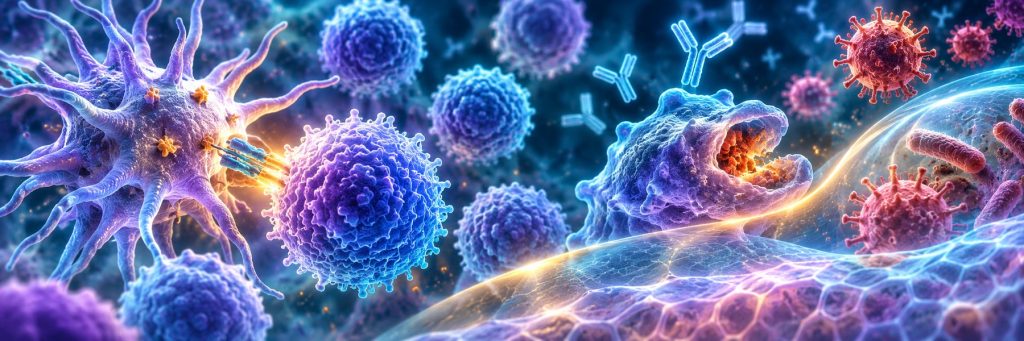
Skin, mucous membranes, antimicrobial peptides, neutrophils, macrophages, and other defenses respond quickly to potential threats. LL-37, a human cathelicidin peptide, is part of this layer of protection. It can interact with microbial membranes and immune-cell signaling pathways.
But innate defense is not a simple on/off switch. LL-37 can dampen some inflammatory signals and amplify others. Whether an effect helps or harms depends on the tissue, the pathogen, the concentration, and the surrounding immune environment.
Adaptive Immunity: Recognition, T Cells, and Memory
T cells recognize particular antigen fragments presented by other cells. CD4 helper T cells coordinate responses; CD8 cytotoxic T cells can eliminate infected cells; regulatory T cells help restrain damaging activity. B cells produce antibodies, and memory cells allow faster, more specific responses after certain infections or vaccinations.
The thymus is especially important early in life because it supports T-cell development and selection. It gradually becomes smaller and less active with age, although mature immune function depends on many tissues and processes beyond the thymus.
Thymosin alpha-1, thymogen, Vilon, and thymulin have been studied in relation to this broader network. They are not equivalent molecules, and a change in one T-cell marker does not prove better protection from infections.
Antigen Presentation: Teaching the Right Response
Dendritic cells help connect innate and adaptive immunity. They recognize patterns associated with pathogens, process antigens, and present them to T cells with signals that determine what sort of response follows.
Experimental thymosin alpha-1 work has explored dendritic-cell signaling and the balance between activation and tolerance. This is a compelling research direction because useful immune therapy may involve better decisions by immune cells, not simply stronger reactions.
Cytokines and Inflammation: Knowing When to Stop
Cytokines such as interleukins and interferons are messages immune cells use to coordinate their actions. They can be protective at the right place and time, but persistent signaling can injure healthy tissue.
KPV, a three-amino-acid fragment of alpha-MSH, is studied for its ability to influence NF-κB-related inflammatory pathways in cell and animal models. Thymosin beta-4 provides a different angle by influencing cellular movement and tissue repair, processes that help resolve injury after the immediate defense phase.
The essential concept is immune homeostasis: an effective response followed by an effective recovery.
3. Compounds Researchers Are Exploring
Thymosin Alpha-1: Coordinating Innate and Adaptive Signals
Thymosin alpha-1 (Tα1, thymalfasin) is a 28-amino-acid peptide with extensive research into T-cell function, dendritic-cell signaling, and immune regulation. Scientists have investigated it in viral hepatitis, critical illness, and other clinical settings.
Laboratory studies indicate that it may affect antigen presentation, cytokine patterns, and T-cell responses. A 2023 experimental study of human cells found changes in dendritic-cell and CD4/CD8 T-cell signaling relevant to cytomegalovirus.
Its human evidence also illustrates why optimism needs careful interpretation. In a large randomized Phase 3 sepsis trial published in 2025, thymosin alpha-1 did not significantly reduce 28-day mortality compared with placebo. Some meta-analyses including smaller studies have reported positive pooled results, but analyses limited to higher-quality or multicenter studies have been less convincing.
Why researchers are interested: Tα1 offers a practical model for testing whether immune modulation should be matched to a particular disease and immune profile rather than used as general enhancement. It is marketed in certain countries but is not FDA-approved in the United States.
Thymogen (Thymagen): A Two-Amino-Acid Thymic Bioregulator
Thymogen, also spelled Thymagen, is the synthetic dipeptide Glu-Trp (EW) associated with the thymus-derived peptide complex Thymalin. Its small size makes it especially interesting within the Khavinson bioregulator tradition.
Early studies reported changes in T-cell differentiation, lymphocyte activity, and some immune-related outcomes. An older randomized surgical study in selected patients described changes in immune markers and postoperative outcomes. A 2022 laboratory investigation also studied signaling changes in an immune-cell line exposed to Thymogen and related peptides.
Why researchers are interested: Thymogen is a useful candidate for asking whether very small peptide sequences can influence immune-cell maturation or recovery during defined stress states. Human data are limited, methods vary, and there is no established benefit for preventing ordinary infections in healthy adults. It is not FDA-approved.
Vilon: A Different Dipeptide with Thymocyte Research
Vilon is the synthetic dipeptide Lys-Glu (KE). Although it is often discussed alongside thymogen, its sequence and research findings are distinct.
In mouse thymocyte experiments, Vilon influenced cell proliferation and signaling involving sphingomyelin pathways. Other cultured thymic-cell studies investigated markers of T-cell differentiation. A separate human monocytic cell-line study reported a more modest response to Vilon than to some other bioregulators under its experimental conditions.
Why researchers are interested: Vilon helps scientists test whether short peptides can alter cell differentiation and intracellular signaling without functioning like conventional immune stimulants. Yet cell-culture results do not show improved immune resilience in people, and high-quality human clinical outcome trials are lacking.
LL-37: The Body’s Own Antimicrobial Peptide
LL-37 is an endogenous 37-amino-acid peptide derived from the cathelicidin precursor hCAP18. It is produced in several tissues and participates in direct microbial defense, immune-cell recruitment, and inflammatory signaling.
A 2025 scientific review describes both antimicrobial activity and significant pro-inflammatory and anti-inflammatory effects, depending on context. In a small randomized trial involving 34 people with venous leg ulcers, certain topical LL-37 formulations showed promising wound-healing measures, but the highest concentration did not outperform placebo.
Why researchers are interested: LL-37 may teach us how a naturally produced molecule can defend a tissue while also directing the immune response around it. The trial concerns local wound healing, not prevention of systemic infections. Injected LL-37 has no established safety or efficacy for immune enhancement and is not FDA-approved.
Thymulin: Zinc-Dependent T-Cell Biology
Thymulin is a natural nine-amino-acid hormone associated with thymic epithelial cells. Its biological activity depends on binding zinc, connecting micronutrient status with certain thymic immune signals.
A classic human zinc-deficiency investigation reported reduced thymulin activity that improved after zinc repletion. This is a compelling example of a real physiological relationship, but it is not a trial proving that administering thymulin prevents infections.
Why researchers are interested: Thymulin offers a window into T-cell differentiation, aging-related thymic changes, and the ways nutrition can alter immune signaling. Its therapeutic role remains unestablished in modern clinical trials.
KPV: Balancing Excessive Inflammatory Signaling
KPV is the Lys-Pro-Val tripeptide derived from alpha-melanocyte-stimulating hormone. Its main research focus is not producing more immune cells, but adjusting pathways that contribute to excessive inflammation.
Laboratory research has examined KPV’s effects on NF-κB signaling and immune-cell recruitment. A 2026 animal study explored an engineered oral KPV prodrug that accumulated in inflamed tissues and improved selected outcomes in mice with colitis and acute lung injury.
Why researchers are interested: Future immunomodulators may need to reduce damaging inflammation without compromising pathogen clearance. KPV is one tool for investigating that balance, but the promising mouse findings cannot be transferred to ordinary KPV preparations or assumed to work in people.
Thymosin Beta-4: From Host Defense to Tissue Recovery
Explore the full-length Thymosin Beta-4 profile.
Thymosin beta-4 (Tβ4) is a 43-amino-acid peptide best known for binding actin and affecting cell movement. It belongs in an immunity discussion because immune defense and tissue healing overlap: cells must migrate, damaged surfaces must recover, and inflammation must resolve.
In experimental bacterial corneal infection models, topical Tβ4 used alongside an antibiotic affected macrophage responses and tissue outcomes. Human trials have examined full-length Tβ4 eye drops for specific corneal-healing conditions, not generalized immunity.
Why researchers are interested: Tβ4 suggests that helping a tissue resolve injury may be another way of strengthening the overall host response. This does not establish systemic infection prevention, and short TB-500 fragments should not be treated as identical to the full-length peptide.
4. Comparing the Compounds
| Compound | Primary immune-related pathway | Main research question | Evidence level | Known limitations |
|---|---|---|---|---|
| Thymosin alpha-1 | Dendritic-cell signaling and T-cell responses | Can immune modulation improve defined illnesses or immune dysfunction? | Human trials and preclinical work; not FDA-approved | Large Phase 3 sepsis trial negative for its primary survival outcome; results vary by population |
| Thymogen (Glu-Trp) | Thymic/lymphocyte differentiation-related signaling | Can a short dipeptide affect immune-cell recovery? | Older small human studies and laboratory work | Limited modern replication; no established healthy-person prevention benefit |
| Vilon (Lys-Glu) | Thymocyte and intracellular signaling | Can KE influence T-cell-associated differentiation? | Mostly cell/animal and mechanistic studies | No reliable human infection or health outcomes; mechanisms incompletely characterized |
| LL-37 | Antimicrobial membrane activity and inflammatory signaling | Can local host defense be supported without worsening inflammation? | Mechanistic evidence and small human topical wound trial | Context-dependent toxicity and inflammation; no general systemic immune indication |
| Thymulin | Zinc-dependent thymic signaling | How does thymic activity relate to T-cell function and nutritional status? | Established physiology and small human mechanistic studies | No validated therapeutic immune-resilience regimen |
| KPV | NF-κB-related inflammatory modulation | Can excessive inflammation be restrained while preserving defense? | Cell and animal studies | No established human clinical efficacy; formulation matters |
| Thymosin beta-4 | Actin, cell migration, and injury-associated inflammation | Can local tissue recovery complement pathogen defense? | Preclinical immune studies; limited human ophthalmic healing trials | No proof of general immune enhancement or systemic infection prevention |
Reading the evidence: Human immune-marker changes, controlled clinical outcomes, cell-culture experiments, and animal models are not interchangeable. None of these compounds is FDA-approved in the United States specifically to make otherwise healthy people more resistant to everyday infection.
5. Where the Science Is Heading
From “Boosting” to Immune Precision
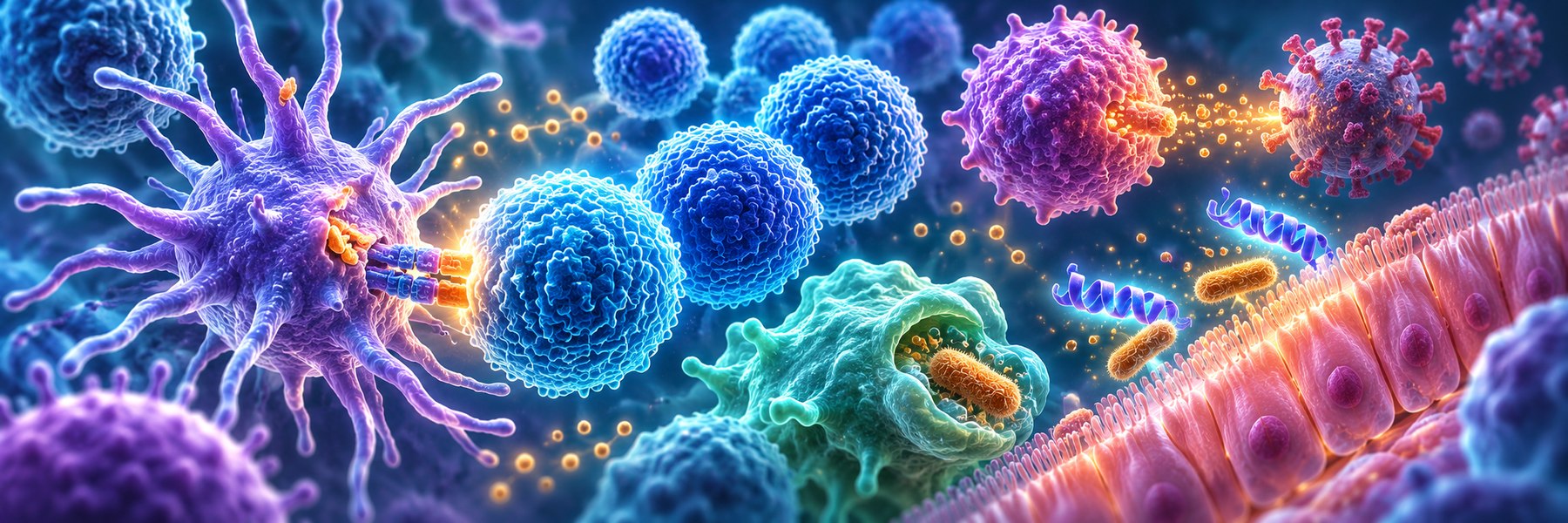
The most important advance may be learning who has an immune deficit, which pathway is altered, and what clinical outcome needs improvement. The 2025 Phase 3 thymosin alpha-1 trial demonstrates why a plausible mechanism does not guarantee benefit across a broad group of critically ill patients.
Future research may identify subgroups where specific immune patterns predict response, but those possibilities require prespecified, independently confirmed trials. A subgroup signal found after a negative trial is not proof of treatment efficacy.
Better Models of Thymic Aging
As the thymus changes with age, researchers are studying how new T cells are produced and how the existing T-cell repertoire remains diverse. Thymulin, thymogen, and Vilon provide different entry points into this biology, while their evidence remains far behind routine clinical interventions.
The question is not simply whether a peptide increases a laboratory T-cell count. It is whether it improves function, maintains appropriate tolerance, and produces fewer meaningful infections without unwanted immune activation.
Immunity and Tissue Barriers
LL-37, KPV, and thymosin beta-4 highlight the interaction between immune signaling and the condition of the tissues being defended. Skin, respiratory surfaces, and intestinal lining must be able to resist pathogens and recover from inflammation.
The next generation of peptide research may focus on local delivery, more selective immune effects, and endpoints such as wound closure, pathogen clearance, validated inflammation measures, and patient function rather than vague claims of “immune support.”
What Researchers Still Need to Answer
Major gaps include long-term safety, immune effects in people with autoimmune disorders or organ transplants, interactions with immunosuppressive therapies, product purity, the possibility of unwanted antibody responses, and whether any benefit persists after treatment.
Meanwhile, vaccination, adequate nutrition, sleep, physical activity, and appropriate management of medical conditions remain better-supported foundations of immune health than unapproved research peptides. The promise of peptide science is to add targeted options where evidence shows a genuine unmet need.
6. Explore the Compounds and Research
Published Peptide Perspectives profiles
- LL-37: Antimicrobial defense and inflammatory signaling
- KPV: Inflammation and mucosal immune biology
- Thymosin Beta-4: Cell migration and tissue recovery
- Glutathione: An additional research perspective on cellular redox defense
Research resources for compounds without a verified public directory page
- Thymosin Alpha-1: Large randomized human sepsis trial
- Thymogen: Thymic peptide research and human clinical literature
- Vilon: Thymocyte signaling study
- Thymulin: Zinc-dependent T-cell biology
The Bigger Possibility
A resilient immune system is not one that stays on high alert. It is one that recognizes threats, responds appropriately, protects healthy tissues, remembers what matters, and returns to balance.
Peptide research offers intriguing tools for understanding that coordination. Thymic peptides are informing questions about T-cell biology; short bioregulators help probe cell differentiation; and host-defense peptides such as LL-37 reveal how antimicrobial protection interacts with inflammation and healing.
The promising future is precision immunology: therapies that address a well-defined immune problem, demonstrate meaningful benefits in people, and preserve the body’s ability to defend itself without causing unnecessary harm.
Peptide Perspectives publishes research education, not individual medical advice. The investigational compounds discussed here are not substitutes for vaccinations, evaluation of frequent or serious infections, or prescribed treatment of immune conditions. People with autoimmune disease, active cancer, transplanted organs, or immune-modifying medications should not assume experimental immune peptides are safe.